Picking for acidity
Base Wine & Blending
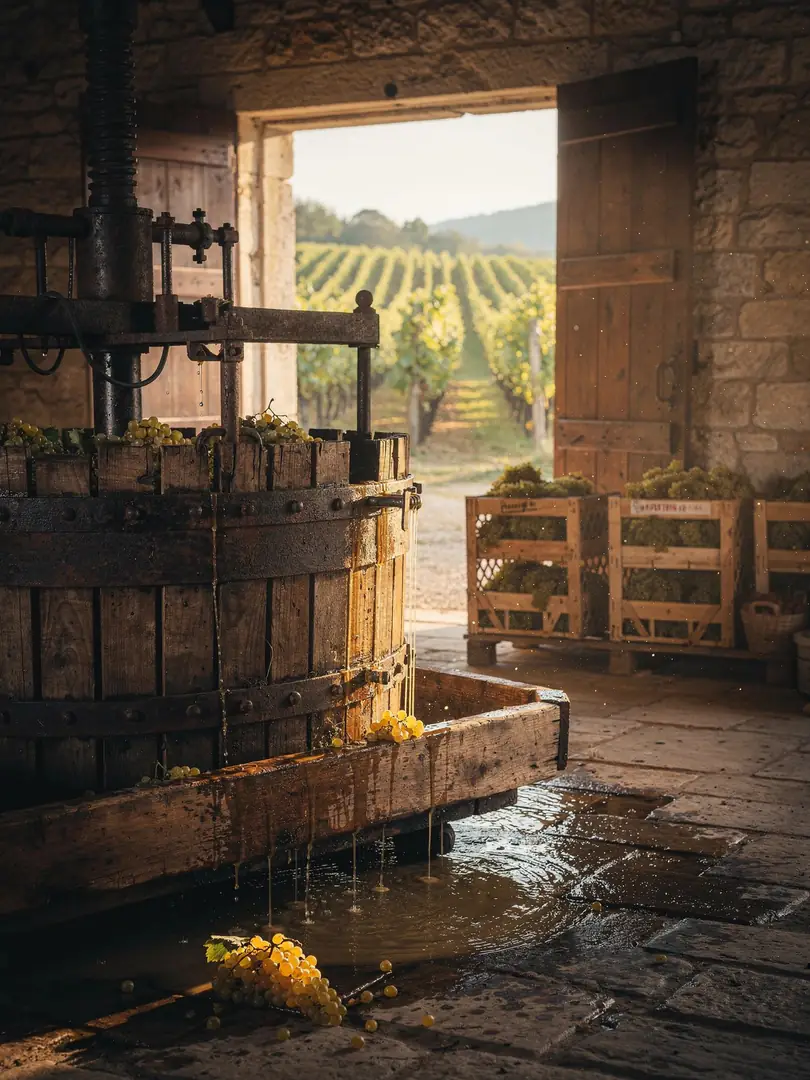
Harvest for sparkling wine begins earlier than for still wine, because the base wine needs acidity rather than sweetness. The grapes must arrive at the press house undamaged, so they don't burst in transit and lose juice that would otherwise oxidize too early and taste harsh.
Pressing is gentle. Whole clusters go into the press, and the juice runs off slowly so that barely any tannin from skins and stems makes its way into the must. For Montlouis Pétillant Originel, the rulebook explicitly requires hand harvesting and a pneumatic press, which uses an air cushion to apply very gentle pressure.
With mousseux, the process follows the standard path for any sparkling wine: a still base wine ferments first, then gets blended. This assemblage brings together wines from several parcels so the result tastes consistent from year to year. Since only one grape variety is involved, the blending here isn't about combining varieties but about combining soils, sites and ripeness levels.
There's no Blanc de Blancs or Blanc de Noirs here, since there's no red grape to pair with. The vintage, however, does matter. A Vouvray from a sunny year tastes riper and rounder, one from a cool year tighter. Putting a vintage on the label means forgoing any blend with older wines.
With Pét-Nat, the base wine looks quite different. Winemakers start fermentation in tank or barrel and halt it with cold temperatures, usually in the depths of winter. The still-fermenting, not-quite-finished wine then goes into the bottle, where it keeps working. Since nothing is adjusted along the way, everything depends on the condition of the grapes and how cold the winter turns out. If it gets too warm, the must ferments on too quickly. The Montlouis rulebook explicitly rules out any addition of sugar or yeast.