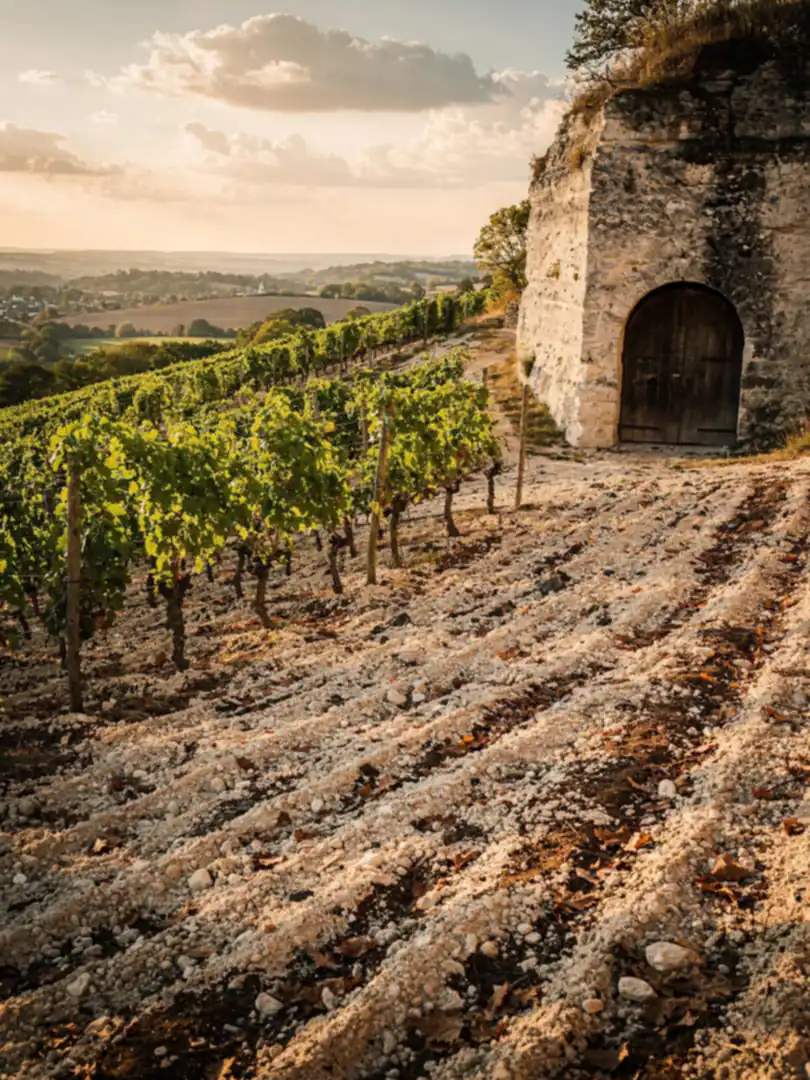
Tuffeau and pebbles
Soil & Climate
Beneath the vineyards of Vouvray lies soft, pale limestone called tuffeau. It dates back to the Cretaceous period, specifically the Turonian stage, and was so easy to cut that it became the building stone for the châteaux along the Loire. The old quarries are cellars today.
Depending on the slope, flinty clay, marl and chalky loam sit above this base. On the plateau above the Loire the soil is heavier, while on the slopes it turns stonier. The vines root deep, drawing water and lime from the subsoil even in dry summers.
The climate is Atlantic and temperate. The river and its tributaries bring moisture and cool nights, and in autumn a morning mist often settles over the valley. For sparkling wine that's a real asset: the grapes hold on to their acidity even with extended ripening, and vintages vary widely, giving each wine its own particular character.
Across the river, in Montlouis, the soil is lighter and sandier, with limestone underneath as well. Wines from here often come across leaner and tighter than those from the north bank. The difference is subtle, but easy to spot when tasting the two side by side.
The tuffeau cellars are the real gift to sparkling wine production. A room carved into rock stays evenly cool through summer and winter alike, exactly what the second fermentation in the bottle needs to proceed slowly and finely. These cellars are called troglodyte caves, because people once actually lived in some of them.
From the road, all you see are doors set into the rock face. Behind them, tunnels run deep into the hillside, where barrels and bottles rest undisturbed year after year. Montlouis has similar rock cellars too, where sparkling wine waits patiently on its lees.