Vintage instead of Reserve
Base Wine & Blend
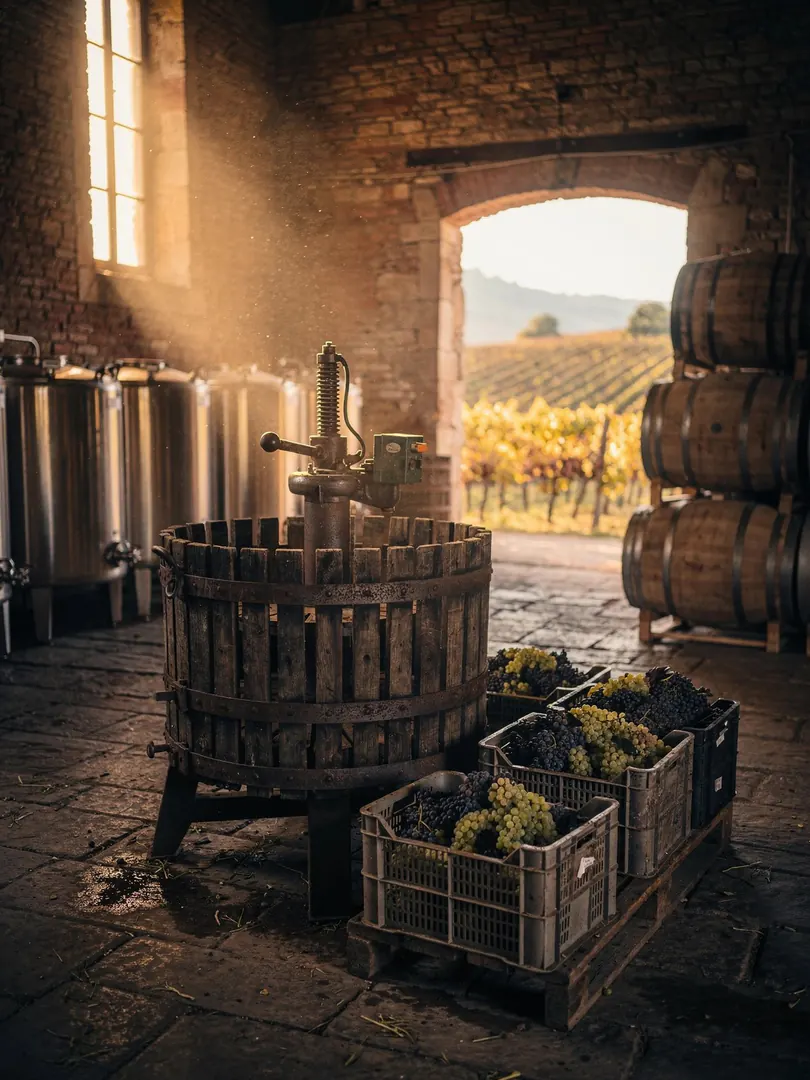
Early harvest is the first decision for a great sparkling wine. The grapes should arrive at the winery with plenty of acidity and moderate sugar, since the second fermentation in the bottle adds further alcohol. A lean, almost austere base wine isn't a flaw here—it's the goal.
Then comes pressing, done gently. Regulations allow less than 65 percent juice yield from the grape mass, all press fractions combined. In Champagne, the finest fraction is called the cuvée, and the later one the taille. Here, the final, harsh remainder stays in the pomace. This matters especially for Pinot Nero, so the skins don't impart color to the juice.
Pinot Nero and Chardonnay are usually fermented separately, parcel by parcel, and only blended into the cuvée in spring. This blending is called assemblage. The cellar master tastes through many barrels and tanks to build the wine he envisions. A touch of Chardonnay brings freshness to the Pinot, while a touch of Pinot adds depth to the Chardonnay.
Because Alta Langa always carries a vintage, it lacks the tool Champagne houses use to maintain a consistent house style year after year: reserve wines purchased from older vintages. The cellar master works essentially with the wines of a single harvest, and each vintage may taste different. A warm year yields a rounder wine, a cool one a leaner style.
This is how the styles emerge. Fontanafredda, for instance, presents a classic cuvée with La Cuvée Brut, while Coppo bottles a Luigi Coppo Brut. Contratto represents one pole with its Blanc de Blancs, Fontanafredda the other with its Blanc de Noirs, and the rosé sits in between. For buyers, this means: comparing Alta Langa wines means comparing harvests, not just house brands.