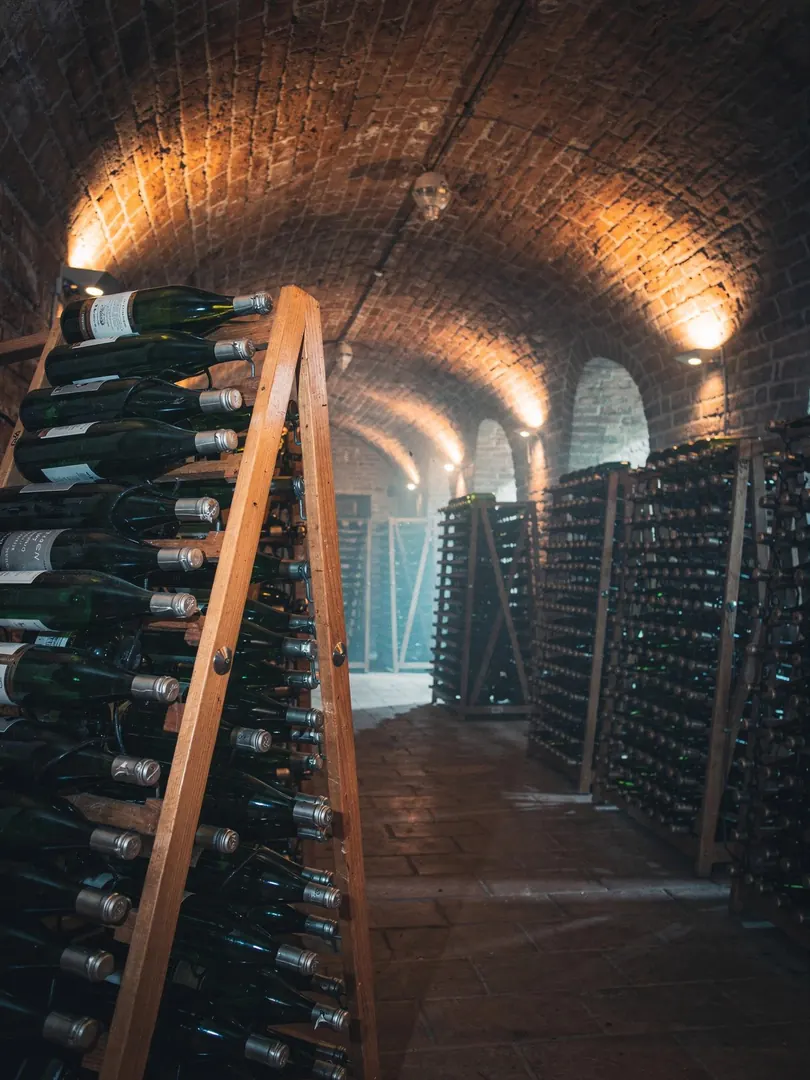
Bottle fermentation only
The Second Fermentation
A bottle, a bit of sugar, fresh yeast, and a crown cap: that's all the second fermentation needs. The finished blended base wine is bottled and combined with this mixture, the liqueur de tirage. The bottle then rests in the cellar, the yeast consumes the sugar, and alcohol and carbon dioxide form, with nowhere for the gas to escape.
The liqueur de tirage may raise the alcohol content by no more than 1.5 percentage points and builds up the pressure a quality sparkling wine needs: at least 3.5 bar. Because the carbon dioxide forms within the wine itself, it dissolves in fine bubbles, which is exactly what makes the perlage so delicate. Contratto and Enrico Serafino, like all DOCG houses, use this method.
The bottle is usually sealed with a crown cap containing a small plastic cup, the bidule, which later catches the lees deposit. The yeast is specially selected so it can work even under alcohol and pressure, and settle well afterward.
Alta Langa is a pure Metodo Classico, meaning bottle fermentation using the traditional method. Tank fermentation, the method used for Prosecco, is not an option for this wine. The label often states "Metodo Classico" alongside the DOCG name.
EU regulations require a minimum of nine months on the lees in the same facility for traditional bottle fermentation. Alta Langa demands more than three times that, at 30 months. Separation happens later through disgorgement; the bottle is never transferred. The profile below shows the region's key wines with their ranges.
Alta Langa BrutBottle fermentation · Pinot Nero, Chardonnay
- Time on lees
- 30–48 Months
- Sugar
- 0–12 g/l
- Alcohol
- 12–12.5 % vol
Fine perlage, brioche and apple, firm acidity from the high-altitude sites.