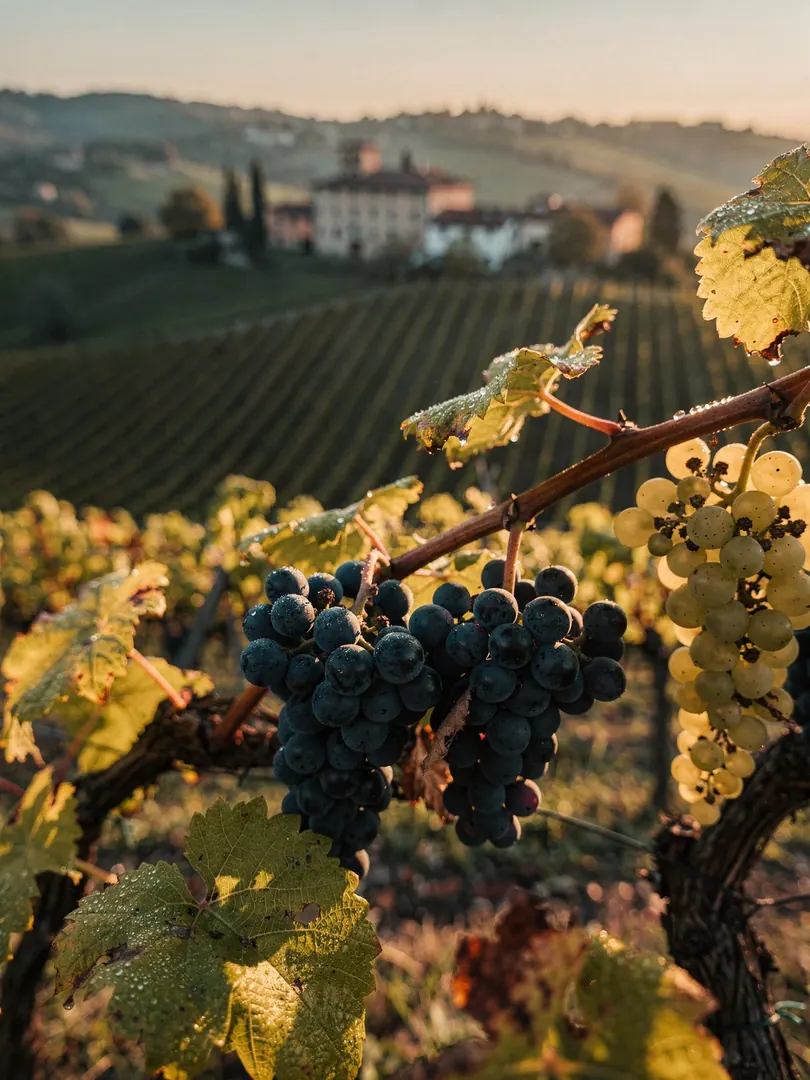
Two Burgundian grapes
Grape Varieties
Which grapes go into Alta Langa? Two: Pinot Nero, known in German as Spätburgunder, and Chardonnay. The regulations require that together they make up 90 to 100 percent of the blend, and producers use them either alone or combined. Red grape varieties like Pinot Nero are, of course, at home in Piedmont, but here they serve sparkling wine, not red wine.
Pinot Nero is a red grape with pale juice. When gently pressed and the skins quickly removed, the result is a white base wine called Blanc de Noirs, literally "white from black." It brings body, cherry, and strawberry, and feels broader than a pure Chardonnay. Fontanafredda bottles such a wine as Vigna Gatinera Blanc de Noirs Riserva, and Contratto offers one called Blanc de Noirs "For England."
Chardonnay delivers citrus, green apple, and the tension needed to withstand a long lees aging. Pure Chardonnay bottled as Blanc de Blancs, "white from whites," is also common, as with Contratto's Blanc de Blancs Pas Dosé.
Why only these two? Burgundian grape varieties prefer cool conditions, and at the altitude of Alta Langa they find what they'd lack in the warmer sites below. There, both would quickly gain too much sugar and too little acidity. Their aromas also combine well with lees and develop brioche and hazelnut notes during extended aging.
The rosé is also made from these two varieties, at a minimum of 90 percent. It owes its color to Pinot Nero. Enrico Serafino calls its Zero Rosé a Saignée: after brief contact with the skins, a portion of the pink-tinted juice is drawn off and fermented separately.