Altitude and marl
Soil & Climate
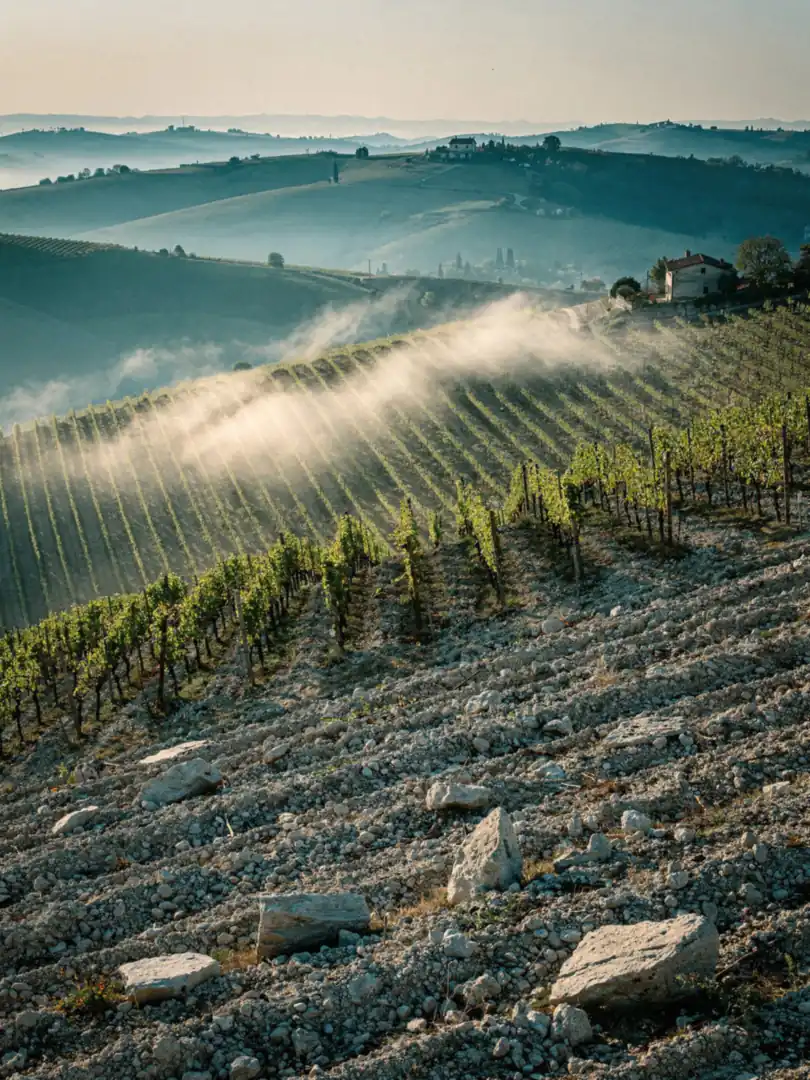
The vineyards of Alta Langa sit higher than most of their neighbors' sites, consistently above 250 meters according to the consortium. Anyone leaving the Tanaro valley from Alba and driving upward notices it in the air alone. That might sound like a small difference, but on the slope it matters: nights are cool, grapes ripen more slowly, and acidity is preserved. Constant airflow along the ridges also dries the berries faster after rain and keeps the heat of the plains at bay.
This is exactly the acidity a sparkling wine needs. Here, Pinot Nero and Chardonnay aren't meant to accumulate as much sugar and alcohol as possible, but rather freshness, since the finished wine spends at least 30 months on the lees and needs a structure that can carry it that far. In Piedmont's warm summers, that's no given, which is why winemakers deliberately seek out the higher hills.
The subsoil consists of calcareous marl and sandstone, deposited by a sea that once covered this area millions of years ago. Marl is a mixture of clay and limestone. It retains water and supplies the vines even during dry spells, while the limestone is said to give the wine firmness and a fine, mineral note.
DOCG regulations require at least 4,000 vines per hectare and cap yields at 11 tonnes per hectare. Harvesting is done exclusively by hand. The grapes arrive at the winery in small, perforated crates so the berries stay intact and aren't crushed under their own weight.
There's no shared chalk cellar here like in Champagne. Each house decides for itself where the bottles age. Contratto reportedly ages its wines in historic cellars carved into tuff rock, while other producers use modern, temperature-controlled spaces.