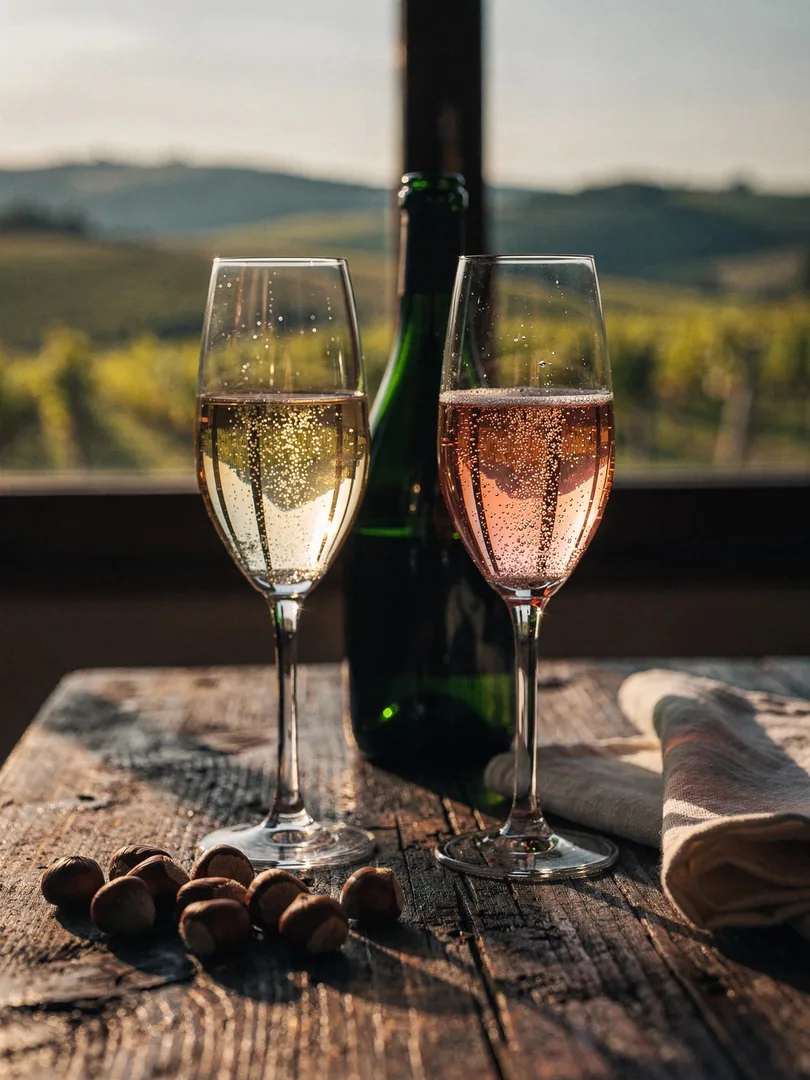
Yeast, apple, hazelnut
Tasting
In the glass, Alta Langa typically shows a pale straw yellow, or a delicate salmon pink for the rosé, along with a fine perlage that rises for a long time. The nose often reveals citrus, apple, and white blossom layered over lees-driven notes like brioche and hazelnut; wines with more Pinot Nero add red berries.
On the palate, the firmness from the high-altitude sites stands out. A Pas Dosé feels taut and cool, a Brut somewhat softer. Thanks to extended lees aging, the texture is creamier than a tank-fermented sparkling wine, without becoming heavy.
Three houses serve as good examples. Enrico Serafino, founded in 1878 by its own account, bottles a Zero Pas Dosé and a Rosé de Saignée version. Fontanafredda demonstrates with its Vigna Gatinera Riserva how a pure Pinot Nero performs. Coppo's Luigi Coppo Brut is an example of a Brut with dosage. Vintage and dosage are stated on the bottle, so reading the label gives a good sense of what to expect.
A tulip glass is recommended—a slim glass with a slightly tapered rim, not a flat Champagne saucer. It holds the aromas together and lets the bubbles rise the full length of the glass.
Serve well chilled, at around 8 to 10°C (46 to 50°F). Too cold suppresses the aroma; too warm makes the wine seem broad and frothy. To open, loosen the wire cage, hold the cork firmly, and turn the bottle, not the cork. Keep the bottle at an angle, and you should hear only a quiet sigh, not a loud pop. Tasting it without over-chilling lets the lees notes come through better.