Must Instead of Wine
Base Wine & Blend
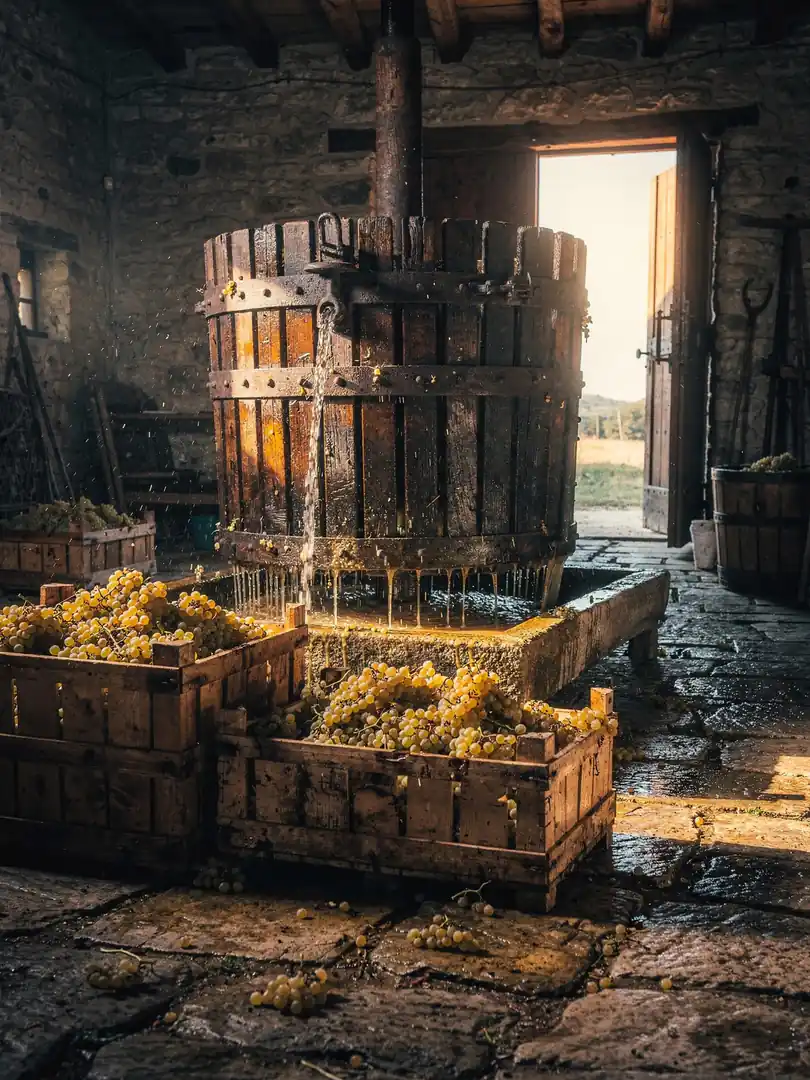
Ask about the base wine in Canelli, and you'll be shown must instead. A finished still wine that's later made sparkling doesn't exist for Asti, because the wine's foundation is the grape juice itself. Harvest begins in late summer, the grapes move quickly to the winery, and they are pressed gently.
The fresh must is clarified and finely filtered to remove any yeast that might start fermentation prematurely. It is then stored chilled in pressure tanks, remaining sweet and grapey throughout. This storage is the heart of the method: houses don't have to process everything all at once.
Fermentation then takes place as needed, batch by batch, throughout the year. This means Asti reaches the bottle just as fresh in spring as it does in autumn, and vintage dating is rarely the focus here. Freshness lies in the cold chain, not in the year on the label.
Yet a blend in the Champagne sense does exist. The houses buy grapes from hundreds of growers across many municipalities and blend musts from different hills so that aroma and sweetness stay consistent year after year. There are no reserve wines, since no aged wine is ever involved.
One special case is late harvest, recognized under the regulations for Moscato d'Asti as "Vendemmia Tardiva." The grapes stay on the vine longer, the must becomes more concentrated, and the wine gains more sweetness and body. It's the exception; most bottles are young, pale, and light.