Harvest and Assemblage
Base Wine & Blend
How do dark grapes become the base wine for a Metodo Classico? In the Oltrepò, the harvest for sparkling wine base material begins earlier than for other wines, while the grapes are still high in acidity and low in sugar. The wine needs to stay fresh in the glass later on, even after years on the lees.
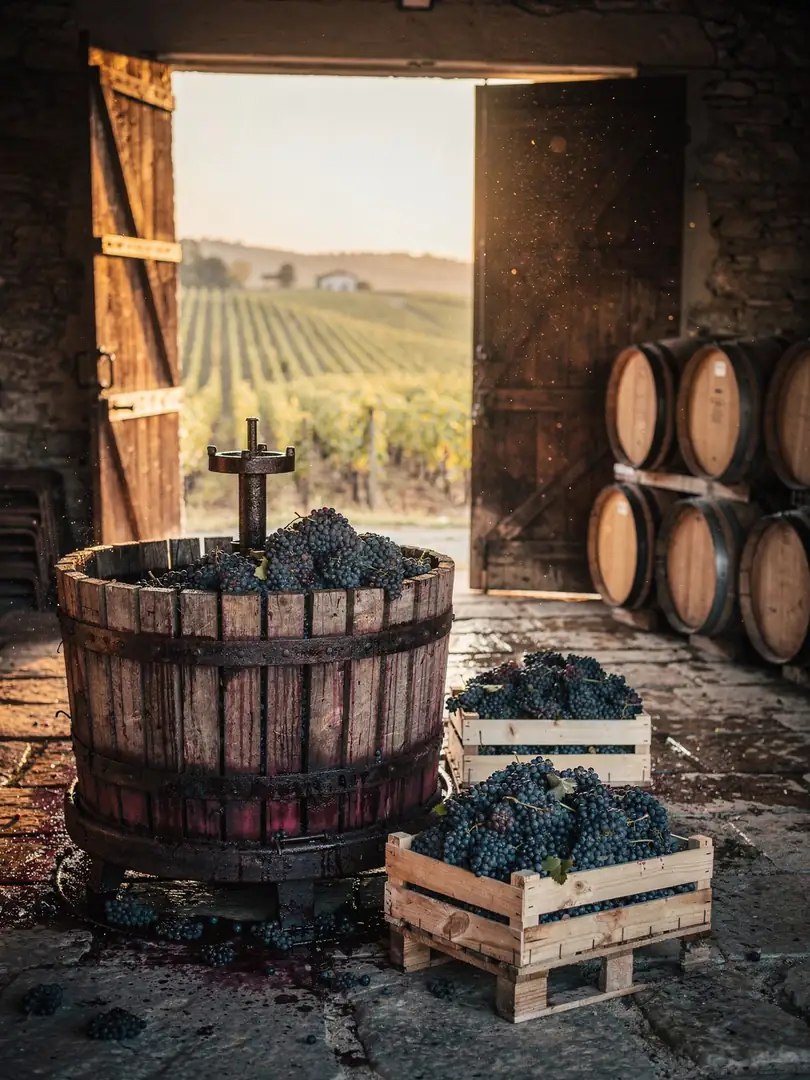
Sparkling wine grapes are typically hand-harvested. Whether they come from the hills around Casteggio or around Broni, the grapes arrive at the winery in small crates so they don't get crushed and the juice stays pale. Picking is best done in the cool early morning, before the sun warms the fruit.
Pressing follows. Because Pinot Nero has dark skins, it is pressed whole and very gently. Only the first, finest juice goes into the blend. The coarser juice from the end of the pressing is called the taille in Champagne; it's often set aside or aged separately.
From Pinot Nero alone, this produces a Blanc de Noirs, a white sparkling wine made from dark grapes. Cruasé, by contrast, is pink, because its color comes from the skins of the Pinot Nero berries, which stay briefly in contact with the juice.
Now comes the art of blending, the assemblage. The cellar master tastes the base wines from individual sites and varieties, often over months, and composes the cuvée from them. If older vintages have been held back as reserve wines, he can smooth out the variations of a given year.
This is where two labels differ. A non-vintage wine aims to taste the same every year, true to the house style, while a Millesimato comes from the grapes of a single year and reflects its particular character: a warm summer tastes different from a cool one. One stands for consistency, the other for individuality.