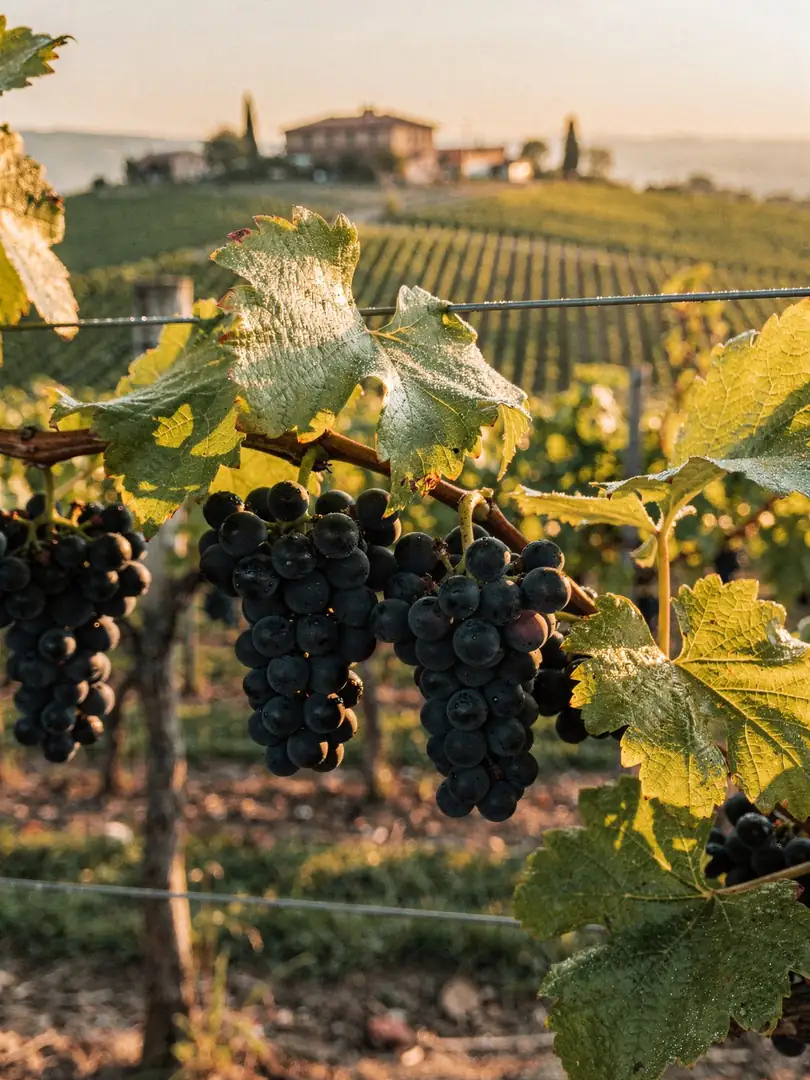
Pinot Nero Takes the Lead
Grape Varieties
The DOCG precisely regulates which grapes go into Oltrepò Pavese Metodo Classico: at least 70 percent Pinot Nero, plus up to 30 percent Chardonnay, Pinot Grigio, and Pinot Bianco, either singly or blended.
Pinot Nero is a dark-skinned grape with thin skin. Even so, a pale juice can be pressed from it if the whole clusters are pressed gently, since the pigment sits in the skin, not the pulp. In the bottle, the wine barely reveals its dark origins: it gleams pale gold, while the Cruasé ranges from salmon to coppery, depending on the style.
Why is Pinot Nero so well suited to sparkling wine? It ripens early, retains plenty of acidity in cool conditions, and can be pressed into a base wine low in tannin. As a result, the sparkling wine can age on the lees for many years and gain depth. In the glass, the variety brings body and red fruit reminiscent of strawberry and cherry; after years on the lees, notes of bread crust and spice emerge.
Chardonnay contributes freshness and citrus fruit, rounding out the blend. Pinot Bianco and Pinot Grigio, mutations of Pinot Nero, bring richness and soft fruit. Each variety is harvested and fermented separately at first; only later does the cellar master blend them.
The wide range allowed gives producers plenty of latitude. Some favor an almost pure Pinot Nero, while others use a larger share of Chardonnay to give the wine a brighter, more citrus-driven character. Both approaches stay within the rules, and both come through in the glass.
Anyone seeking the variety on its own should look for the addition "Pinot Nero" on the label: this means the blend is at least 85 percent Pinot Nero, and in the case of Cruasé, a full 100 percent.