Marl and Altitude
Soil & Climate
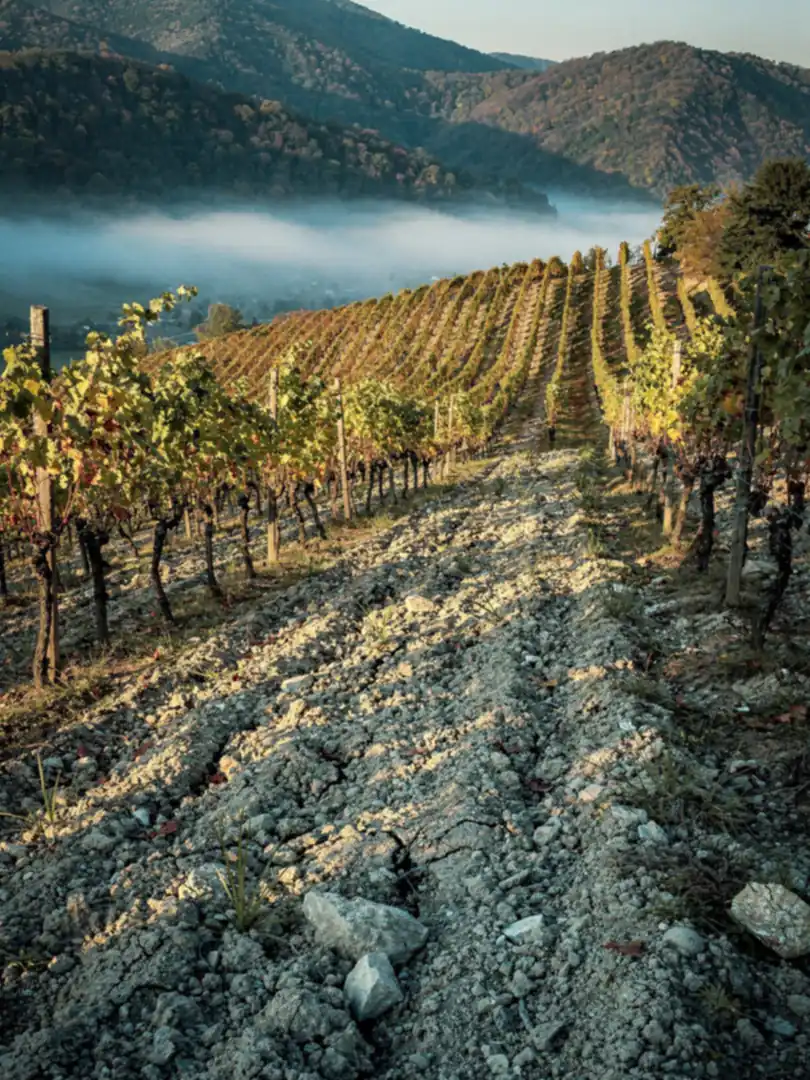
The 45th parallel, exactly halfway between the equator and the North Pole, runs through the Oltrepò. That might sound like southern warmth, and summers here do get hot. Yet the grapes retain their acidity thanks to the hills: the higher the vine rows sit on the slope, the cooler the nights.
Especially in the higher reaches of the Versa and Scuropasso valleys, temperatures swing sharply between day and night. This very difference preserves the acidity a base wine needs for sparkling wine production, since it gives the wine tension and longevity after the second fermentation.
The soil consists mainly of calcareous clay. In some spots, marl, limestone, shale, and gypsum come to the surface. Such soils retain water, release it slowly, and encourage the vines to root deep. Lime-rich sites are considered an advantage for sparkling wine, as they lend the wine a taut, mineral edge.
Pinot Nero ripens early and quickly loses freshness in very warm sites, which is why growers seek out elevation for it.
Add to this the location between the Po Plain and the Apennines. Wind from the mountains clears away the morning fog, and the slopes dry out quickly. On maps and labels you'll come across names like Golferenzo or Montalto Pavese; these stand for hill ranges where Pinot Nero has long been at home.
One more detail in the cellar matters for the finished sparkling wine: bottles resting on the lees need a space that stays cool and consistent all year round, so the second fermentation proceeds slowly and fine bubbles form.