Harvest and Blending
Base Wine & Blend
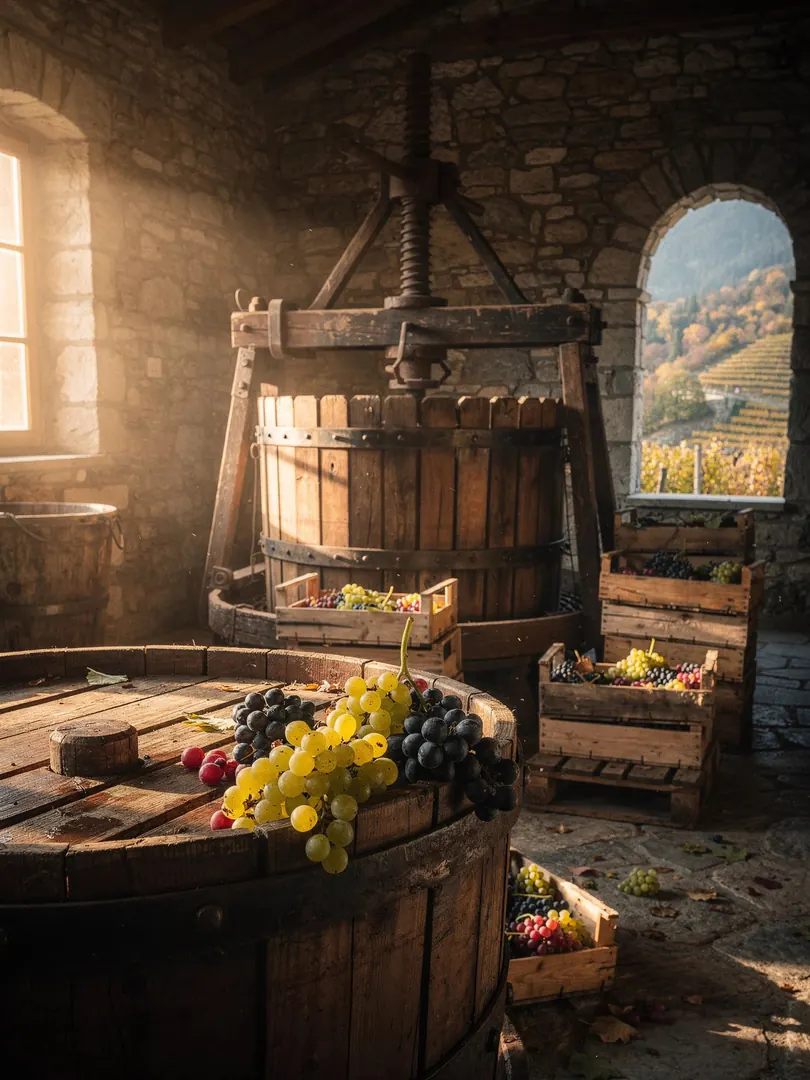
The base wine for a Trentodoc is made in September, often earlier than that of still wines from the same valleys around Trento. The harvest is done by hand, as the rules require, and often in small crates, so the grapes stay whole and don't release juice or color en route. The goal is a wine with high acidity and moderate alcohol, since the second fermentation will raise the alcohol by roughly one more percentage point.
Then comes gentle pressing. No more than 70 percent juice may be extracted from the grapes—less than for many still wines—to keep bitter compounds from the skins out of the wine. The first, finest juice is considered the most prized part of the pressing.
Each variety and each vineyard site is first fermented separately, usually in stainless steel tanks, though some houses use oak barrels in part. At this stage the wine is still, dry, and sharply acidic. Few people would want to drink it on its own, but it's exactly this austerity that the sparkling wine needs to develop tension later on.
Winter brings the assemblage, the blending. The cellar master tastes many individual wines and assembles them into a cuvée that matches the house style. Reserve wines—wines from previous vintages—are often added to keep the base character consistent across years.
A Millesimato, or vintage sparkling wine, comes predominantly from a single harvest and spends at least 24 months on the lees. Without a vintage, 15 months suffice, but the cellar master usually blends several harvests so the house style tastes the same every year. The Riserva requires 36 months.
The color of the grapes also shapes the style. A Blanc de Blancs is made solely from white grapes—here Chardonnay and Pinot Bianco—while a Blanc de Noirs comes only from red grapes—here Pinot Noir and Meunier. A rosé gets its color from the red grapes, for example through brief skin contact.