Crémant Since 1991
Region & History
Crémant de Luxembourg arrived late, and deliberately so: on January 4, 1991, a government decree established that sparkling wine from the Luxembourg Moselle could bear this name if it underwent bottle fermentation. Sparkling wine had long existed in the country, but it lacked its own protected designation.
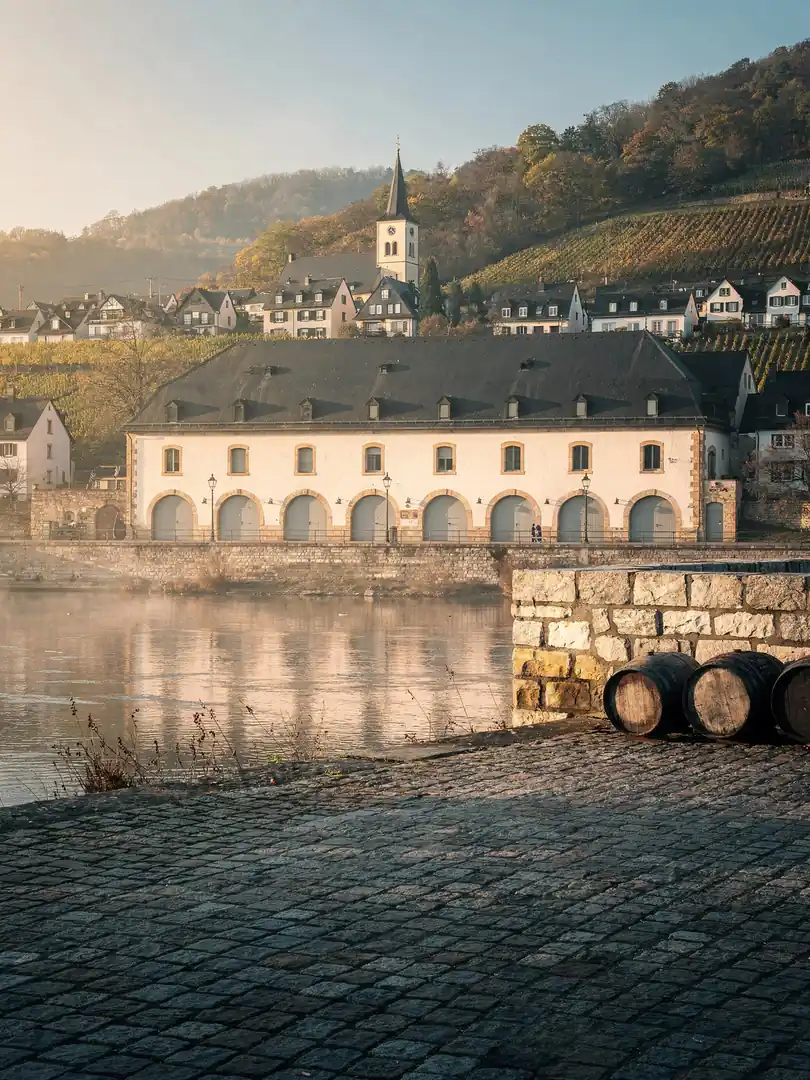
How old the sparkling wine tradition is becomes clear at the house of Bernard-Massard in Grevenmacher. Jean Bernard-Massard, previously a cellar master in Champagne, founded it in 1921 and built a cellar right on the banks of the Moselle to make sparkling wine using the method of Champagne, now known as traditional bottle fermentation. According to the house, the family has run the business for five generations.
The second pillar is the cooperative. On April 16, 1966, five winegrowers' cooperatives signed the agreement that created Domaines Vinsmoselle; Wormeldange joined in 1988. The administration has been based at the Château de Stadtbredimus since 1971, with cellars located in Greiveldange, Grevenmacher, Remerschen, Stadtbredimus, and Wellenstein.
When Crémant arrived in 1991, the cooperative's Crémant line was given the name Poll-Fabaire; its development center for Crémant is located in Wormeldange. According to figures from Luxembourg, members cultivate roughly half of the vineyard area, which is why Vinsmoselle accounts for a large share of the Crémant produced.
Since then, the label has carried the Marque nationale, the official seal of Luxembourg wines, alongside the controlled designation Crémant de Luxembourg. The vineyard area itself remains small: around 1,300 hectares along a strip roughly forty kilometers long between Schengen and Wasserbillig, yielding about three million bottles of Crémant each year.
The name is not tied to France: protected sparkling wines from Luxembourg are also allowed to carry it, and have been since 1991—long before the Belgian Crémant de Wallonie was established in 2008.