Hand Harvest and Blending
Base Wine & Cuvée
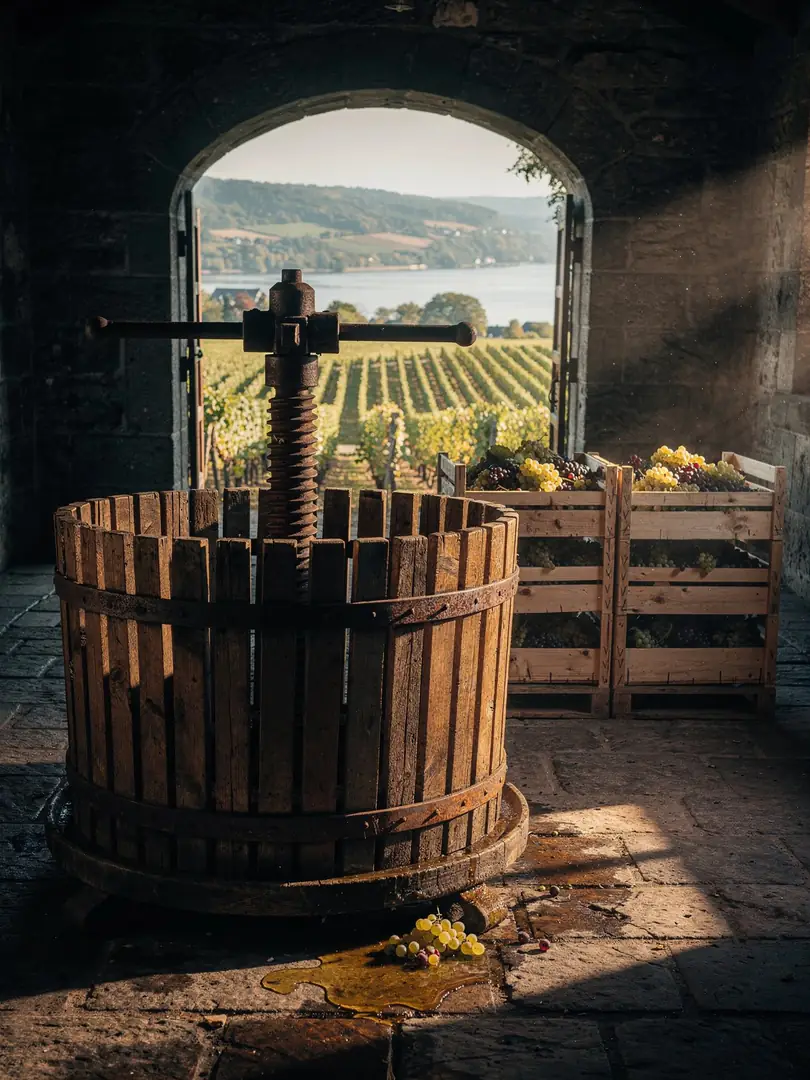
Before wine becomes Crémant, the harvest must be right. In Luxembourg, grapes for Crémant are picked by hand, arriving at the press whole or destemmed, and from 150 kilograms of grapes no more than 100 liters of juice may be drawn off. This rule applies to every Crémant in the EU and forces gentle pressing. Winemakers with their own estates press the grapes themselves; the cooperative receives grapes from its members, for instance in Wellenstein and Remerschen.
Harvest begins earlier than for still wine, while acidity is high and sugar low. By law, the blend of base wines, the cuvée, must reach a total alcohol content of at least 9% ABV. The finished sparkling wine with protected origin requires a minimum actual alcohol content of 10% ABV. The dosage added for the second fermentation may raise the alcohol by up to 1.5% ABV.
Blending is central to the cuvée. A cellar master tastes the individual wines by variety and vineyard and assembles a blend meant to taste consistent year after year—Auxerrois for roundness, Chardonnay for freshness. This blending, known in French as assemblage, is the true art of the house. Where a house has set aside reserve wines from earlier vintages, these may be added to the mix.
Crémant de Luxembourg is produced both with and without a vintage; a vintage Crémant comes from a single year's harvest, stated on the label, and reflects that year's particular character. A cuvée made entirely from white varieties is called Blanc de Blancs; one made solely from red grapes such as Pinot Noir, pressed white, is called Blanc de Noirs.
Rosé Crémant is likewise hand-harvested; it shows a pale salmon hue and aromas of red fruit and blossoms.