Early, by Hand
Base Wine & Blend
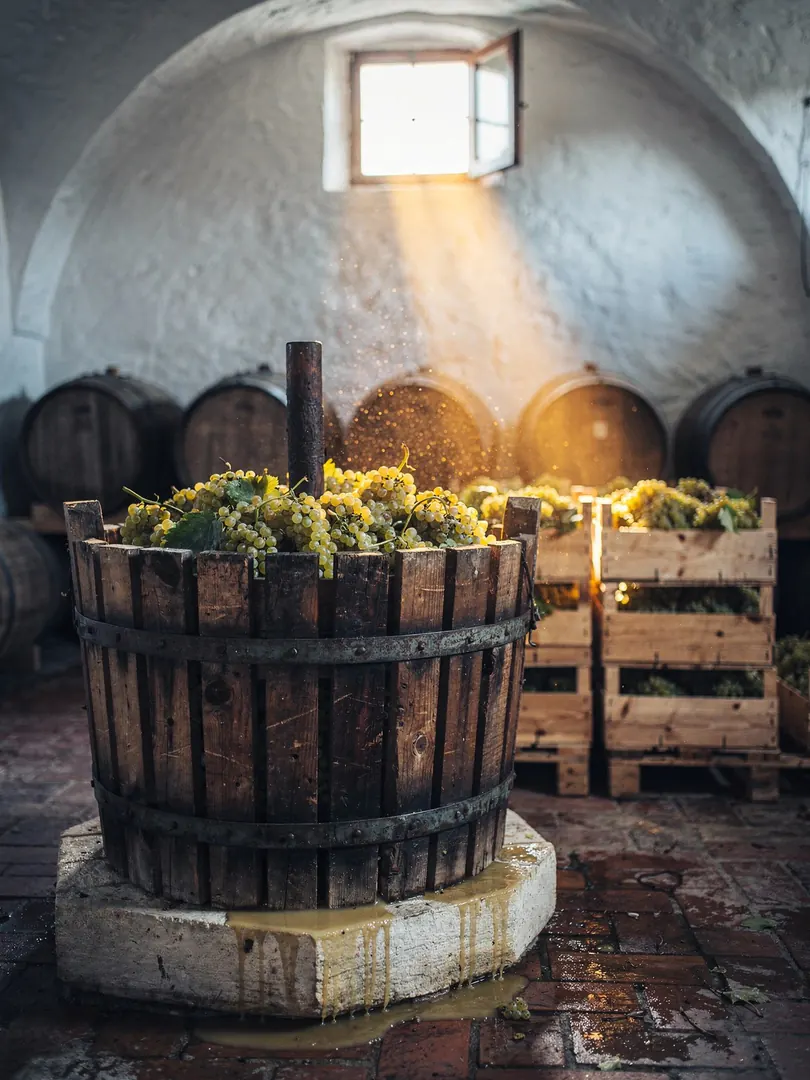
When are grapes harvested for sparkling wine in Lower Austria? Much earlier than for still wine, usually already in September, guided by acidity rather than must weight. For Reserve and Große Reserve, hand harvesting is also mandatory, so the grapes arrive at the press whole and undamaged.
There they're pressed as whole clusters, with a maximum yield of 60 percent for Reserve and 50 percent for Große Reserve. The resulting juice is especially fine, since the first drops contain the least tannin. This must becomes the base wine through primary fermentation, the foundation for everything that follows.
Steininger focuses on single-varietal vintage sparkling wines, where only the wine of one year and one grape variety goes into the bottle. You can taste the vintage itself. When a producer blends several years instead, reserve wines—older wines held back for this purpose—give the cuvée its consistent signature style.
Rosé has a special feature in sparkling wine production. It may be made by blending white wine and red wine, which is forbidden for still wine within the EU. How a producer makes its rosé, though, doesn't appear on the label—only the grape varieties sometimes do.
Some producers in the Kamptal skip malolactic fermentation and oak aging for their base wine, so the variety and vintage stay clearly visible. This is a free choice made by the cellar master, not a requirement. It shows just how much room for decision-making exists before the bottle is even filled.