More Than Just Veltliner
Grape Varieties
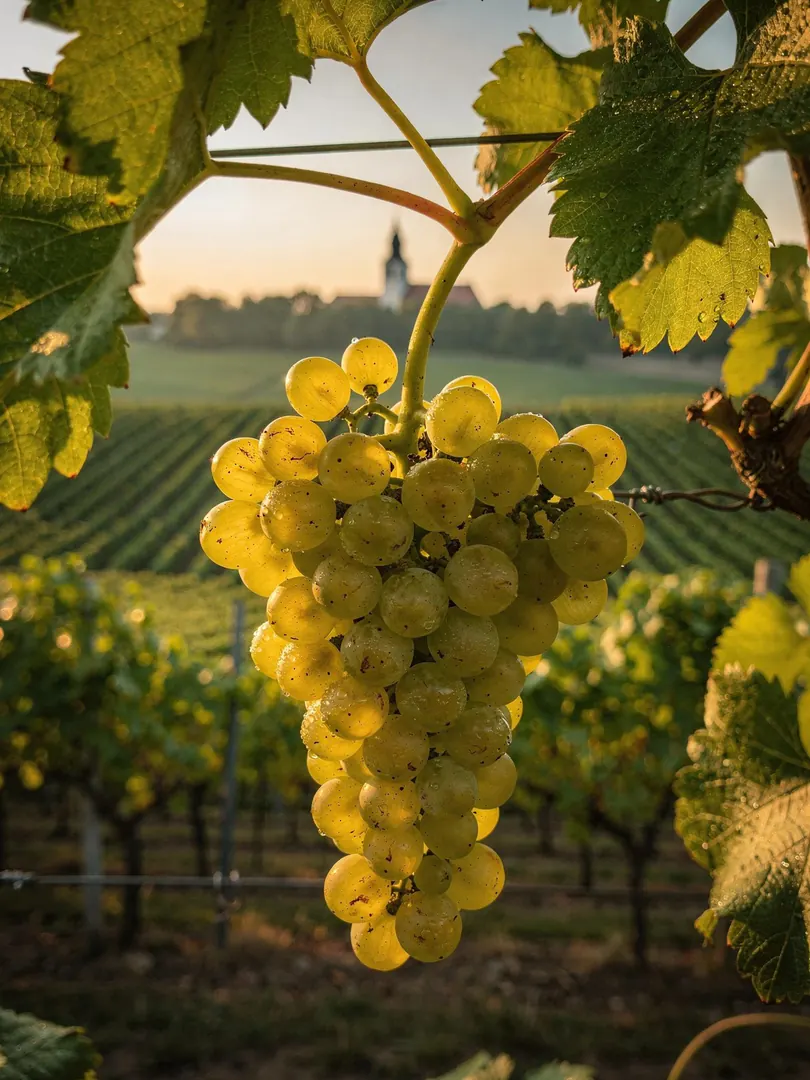
Which grape varieties go into sparkling wine from Lower Austria? In the Weinviertel, Grüner Veltliner dominates, grown on roughly 8,500 hectares. Welschriesling, Riesling, Weißburgunder, and Chardonnay round things out, used either alone or in blends depending on the producer. The range spans from lean and citrusy to rich and spicy styles.
What a single-varietal sparkling wine looks like is shown by Steininger in Langenlois. According to the estate, it produces its sparkling wines as single-varietal, single-vintage bottlings. For the Grüner Veltliner, the data sheet describes a yellow-green color, fine mousse, blossom honey, fresh apple, mandarin peel, and lime.
Red grapes also make it into the press. Bründlmayer's Brut Rosé is made from roughly equal parts Pinot Noir, Zweigelt, and Sankt Laurent. Zweigelt is the country's most widely planted red variety, and Sankt Laurent is considered a close relative of Pinot Noir. The result is a rosé with a distinctly Austrian signature.
A Grüner Veltliner picked for sparkling wine is a different wine from the robust still wine that made the Kamptal famous. It's harvested earlier, brings less alcohol, and carries an acidity that holds up even after years on the lees.
Trade press reports list Große Reserve wines made from 100 percent Grüner Veltliner alongside blends of Weißburgunder, Welschriesling, and Chardonnay. The law doesn't prescribe a particular variety here—it only requires that at least 85 percent of the grapes come from the named municipality.