Red Berries, Pale Wine
Base Wine & Cuvée
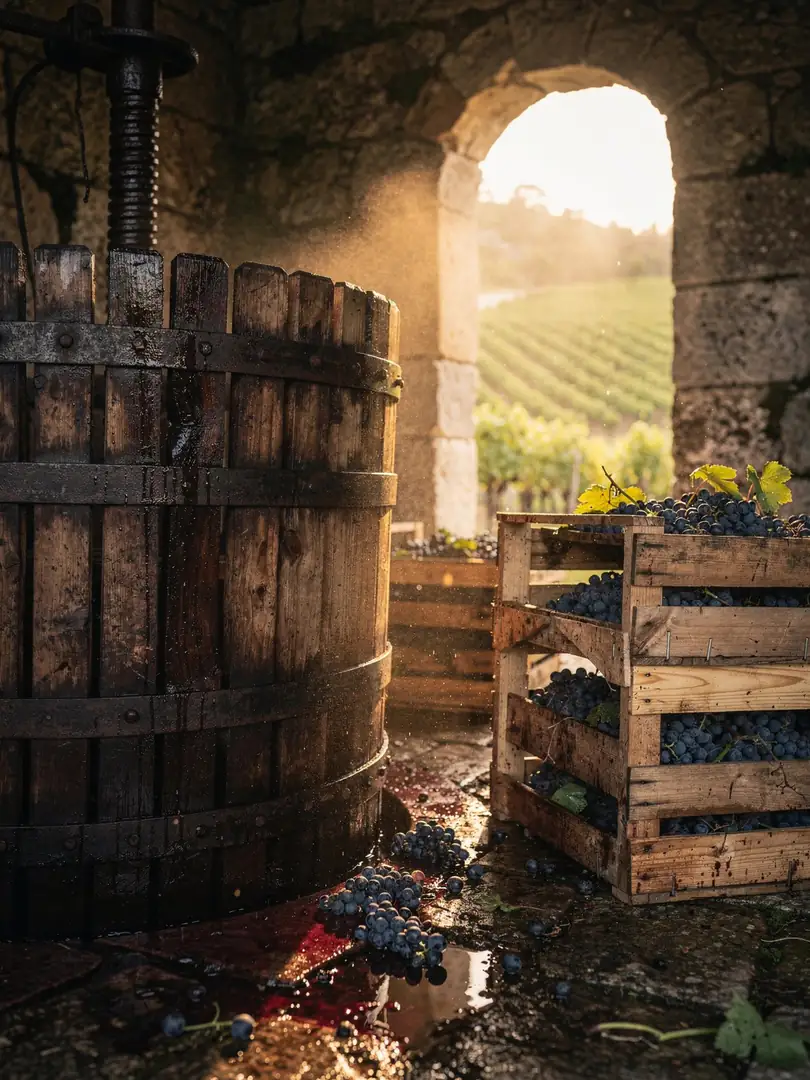
The base wine is the still wine that later becomes sparkling wine. In Bairrada it begins with an early harvest: grapes are picked while still high in acidity and low in sugar, long before Baga would be ripe enough for red wine. The berries are then firm, greenish at the core, and full of freshness.
For a Blanc de Noirs made from Baga, pressing is everything. Color sits in the skin, not the juice. Pressing the grapes gently and quickly transfers almost no pigment and almost no tannin, which would otherwise make the wine bitter. Done right, the must stays pale, and the wine gains structure without turning rough.
A second path leads to the red Espumante that the region also produces. Here the must stays on the skins briefly, picking up color and a touch of tannin, before being pressed off and fermented like a white wine. The result is a sparkling wine with lively acidity, a fine mousse, and light tannin.
After that, the cellar master blends the cuvée. Baga can stand alone or be blended with Bical, Maria Gomes, and Arinto, depending on whether the house is aiming for structure or lightness. Without a vintage, a consistent house style emerges from several harvests, sometimes with the help of older reserve wines.
Vintage sparkling wines also exist: Aliança names a Vintage Brut from 2010, and some Baga reserves carry the harvest year on the label. Here, what matters is the character of that particular year, not whether it matches an earlier house style. That makes these bottles more varied, and a little more idiosyncratic.