Taut, Pale, Austere
Tasting
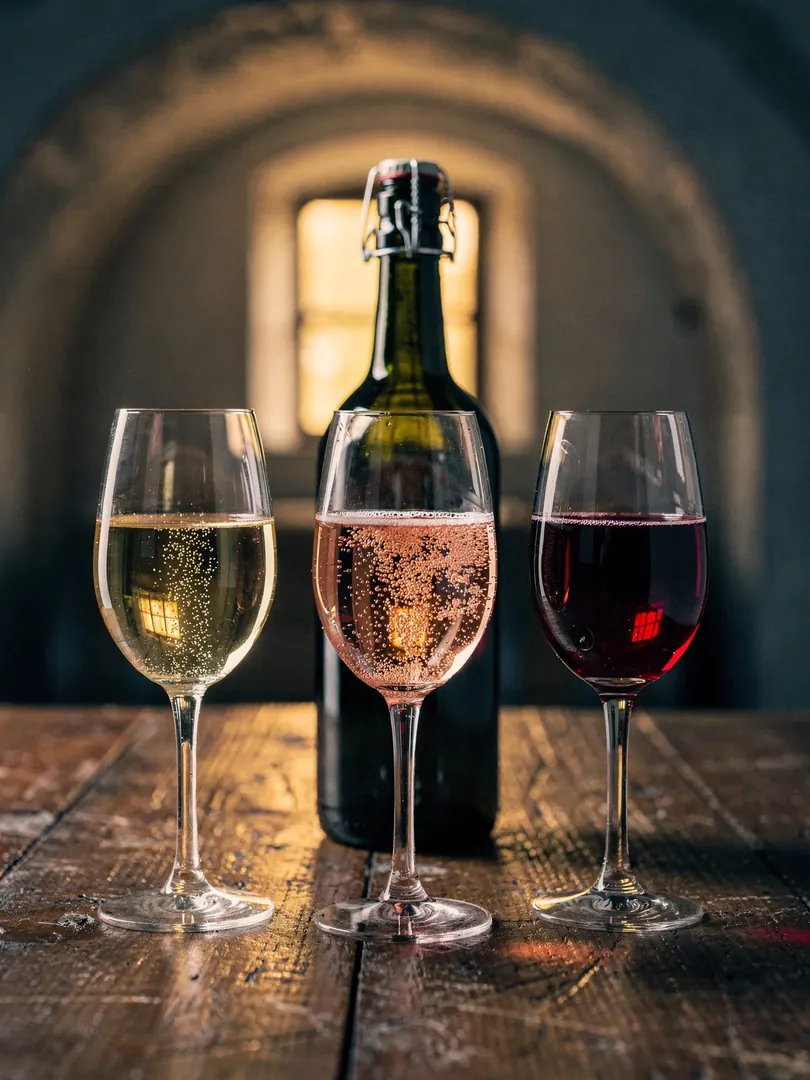
In the glass, a Baga Blanc de Noirs first reveals what you wouldn't guess from looking at it: that it comes from red grapes. The color is pale, and the bubbles rise finely. On the nose it suggests apple, citrus, and fresh yeasty pastry; on the palate the acidity is taut, and the finish leaves a light, dry tannin that sets it apart from a Chardonnay-based sparkling wine.
Three houses serve here as tasting examples, not recommendations: the Aliança Baga Bairrada Reserva Brut Nature Branco shows the pale Baga style. The Aliança Pinot Noir Grande Reserva Brut Nature shows the same region through a different variety. The Bairrada Espumante Bruto Natural from Sidónio de Sousa represents a smaller estate.
The red Espumante calls for a different approach. Producers describe red Brut sparkling wines from Bairrada as having lively acidity, fine bubbles, light tannins, and fruit notes. It tastes less like red wine than the color might suggest, more like red berries with a bit of bite.
A tulip-shaped white wine glass works better here than a flat coupe. The bubbles rise longer in the narrow bowl, and the aromas gather at the top, where they can be smelled. Well chilled here means around 6 to 8°C (43 to 46°F). Too cold suppresses the fruit; too warm flattens the wine and makes the carbonation feel harsh.
When opening: loosen the wire cage, place your hand over the cork, and slowly turn the bottle with the other hand, not the cork. Hold the bottle at a slight angle. If it sighs rather than pops, you've done it right, and no foam is lost.