Two Worlds
Grape Varieties
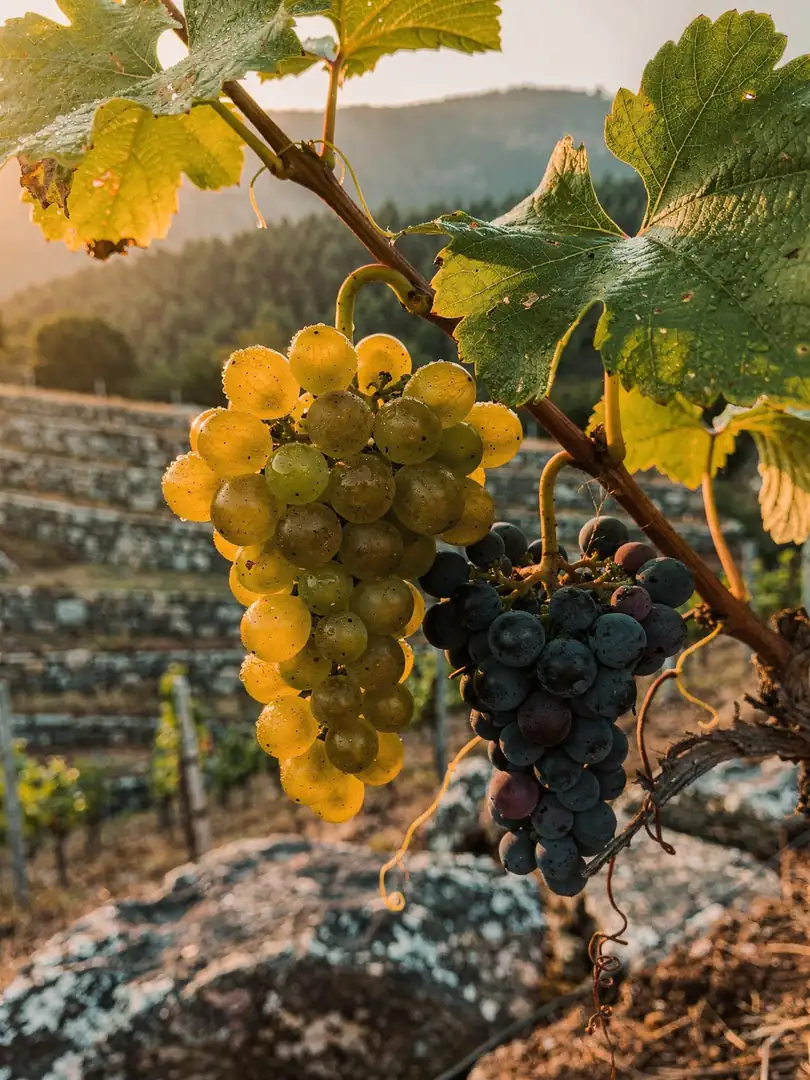
Which grape varieties go into Espumante from Távora-Varosa? At the heart of the sparkling wine base are Chardonnay, Pinot Noir, Malvasia Fina, and Gouveio—two international and two Portuguese varieties. This combination shapes the region's style.
Chardonnay brings structure, apple and citrus fruit, and an acidity that develops well on the lees. Pinot Noir contributes body and fullness. Because the juice of the red berry is pale when pressed gently, the red grape yields a white sparkling wine known as Blanc de Noirs.
Malvasia Fina and Gouveio are white varieties from northern Portugal. Gouveio is the same variety known as Godello in Spain, and it retains its acidity at altitude and in cool conditions. Malvasia Fina adds extra fruit to the blend.
Alongside these, white varieties such as Bical, Cerceal, and Fernão Pires are also grown. The region's white wines traditionally served as part of the cuvée for sparkling wines—the blend from which the eventual Espumante is made.
Red varieties such as Touriga Nacional, Touriga Franca, Tinta Roriz, and Tinta Barroca are also found in the region, mainly for still wine. For sparkling wine, what matters is that the grapes can be picked early with high acidity, which is easier to achieve at 500 to 800 meters than further down in the Douro.
Why this blend? Pinot Noir and Chardonnay are the classic varieties of the sparkling wine world. The Portuguese partners give the wine its own signature on top of that, so it doesn't come across as a copy.