Bottle Fermentation Only
The Second Fermentation
Cava undergoes its second fermentation exclusively in the bottle. The D.O. Cava regulations recognize only traditional bottle fermentation. A tank method as used for Prosecco, or transferring the wine from bottle to a pressurized tank (transvasage), is excluded.
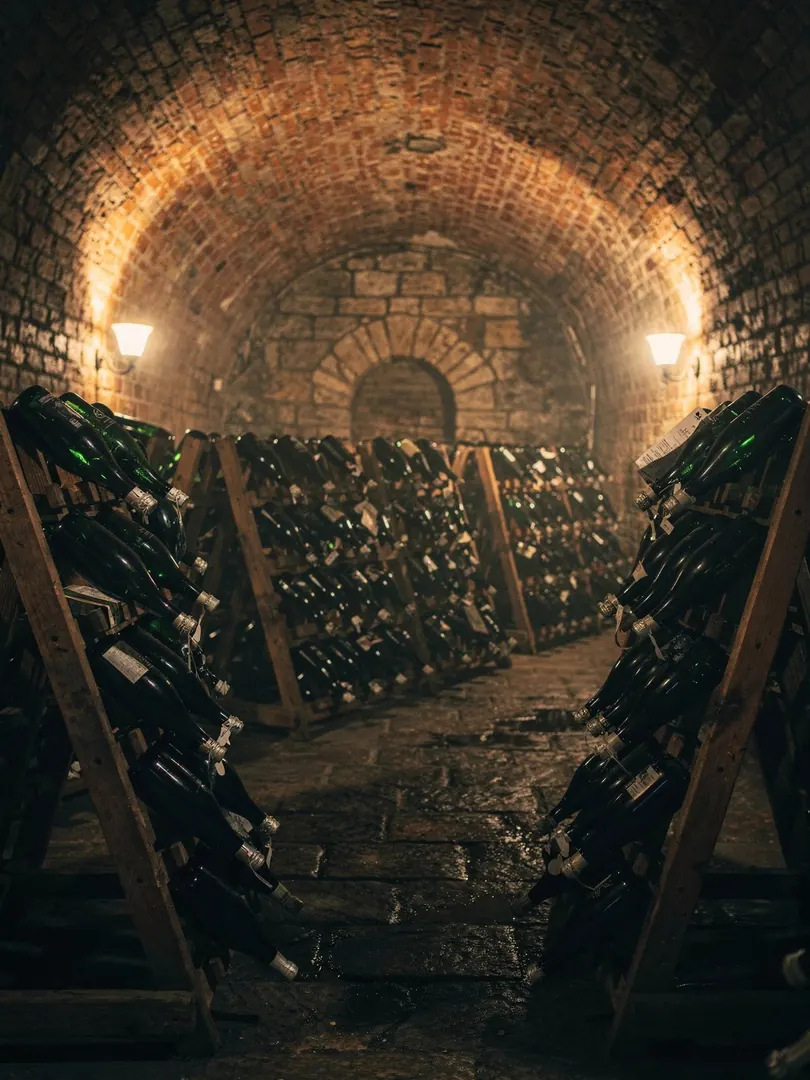
The process begins with tirage, the bottling. The finished base wine receives a liqueur made of sugar and yeast, the tirage liqueur, and is filled into heavy bottles, usually sealed with crown caps. The bottles then rest horizontally in the cellar.
Now the yeast ferments the added sugar. This produces a bit more alcohol, yeast sediment, and carbon dioxide, which, trapped in the sealed bottle, has nowhere to escape and dissolves into the wine. This builds up pressure—at least 3.5 bar at 20 degrees Celsius for Cava. That's why Cava bottles are heavier than still wine bottles: the glass has to withstand the pressure.
After a few weeks, the sugar is used up, the yeast gradually dies off and settles as sediment in the bottle. The scale of this process is reflected in the numbers: of the roughly 190 million bottles produced in 2025, every single one underwent its second fermentation in its own bottle.
The label must not say Champagne method—that term is forbidden outside Champagne. Terms like traditional or classic bottle fermentation are allowed instead. The crown cap is later replaced with a natural cork. At Freixenet and Codorníu in Sant Sadurní, too, the bubbles are created this way.
It's precisely this fermentation method that sets Cava apart from Prosecco, where the second fermentation usually takes place in a tank. The bottle method is considered to produce a finer mousse, because the wine stays in contact with the lees for a long time.
Cava de Guarda BrutBottle fermentation · Macabeo, Xarel·lo, Parellada
- Time on lees
- 9–15 Months
- Sugar
- 6–11 g/l
- Alcohol
- 11.5–12 % vol
Fresh, apple and citrus, lightly nutty, crisp acidity.