Tirage and Pressure
The Second Fermentation
Bottle fermentation is what sets Cap Classique apart from ordinary sparkling wine. It begins with the tirage, the bottling stage: the dry base wine receives a dosage of sugar and fresh yeast, is transferred into thick-walled bottles, and sealed with a crown cap. Tirage literally means "drawing off," referring to the wine being drawn into bottles.
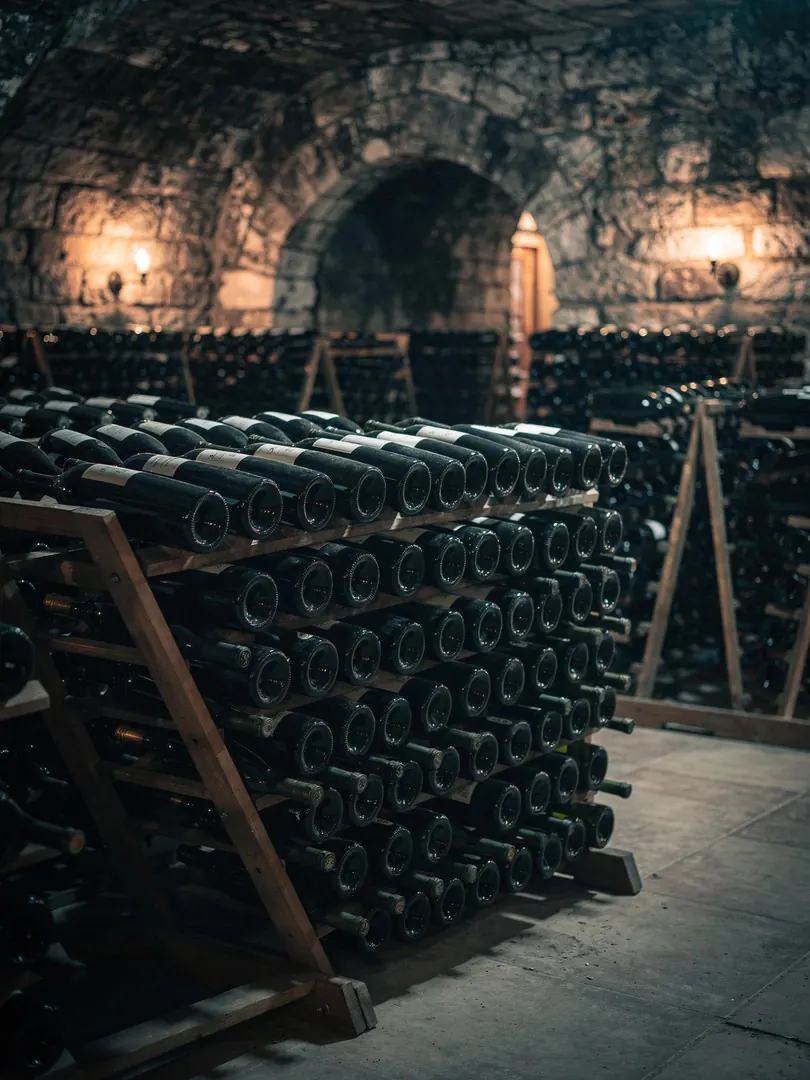
The bottles then rest horizontally in the cellar. During this time, the sugar converts into a small amount of alcohol and carbon dioxide. Because the bottle is sealed, the gas has nowhere to escape. It dissolves into the wine, and pressure climbs to several bars, more than in a car tire. Only when the bottle is opened does it rise as bubbles.
When Frans Malan made the Kaapse Vonkel in 1971, this method was an exception at the Cape, since most of the country's sparkling wines had their fizz added artificially. Today, second fermentation in the bottle is the defining condition for the name Méthode Cap Classique, and the association's rules are built around it.
Prosecco works differently: there, the wine typically ferments in a large stainless steel tank and is only bottled afterward. This is faster, cheaper, and emphasizes fruit. Cap Classique takes the longer road and gains more yeasty character and finer bubbles as a result.
Pét-Nat is also something different, even though it too finishes fermenting in the bottle. It undergoes only a single fermentation with no added sugar; Cap Classique undergoes two, first in tank or barrel, then in the bottle.
The profile below shows two typical styles from the region, with their usual ranges. The figures for lees aging and dosage are common ranges, not rules; the only regulation set by the association is the minimum twelve-month lees aging.
Cap Classique BrutBottle fermentation · Chardonnay, Pinot Noir
- Time on lees
- 12–24 Months
- Sugar
- 4–10 g/l
- Alcohol
- 12–12.5 % vol
Citrus, green apple and brioche, with taut acidity from coastal breeze and limestone.