Fat and Salt
Fries, Chips, Currywurst: Why Sparkling Wine Loves Fat and Salt
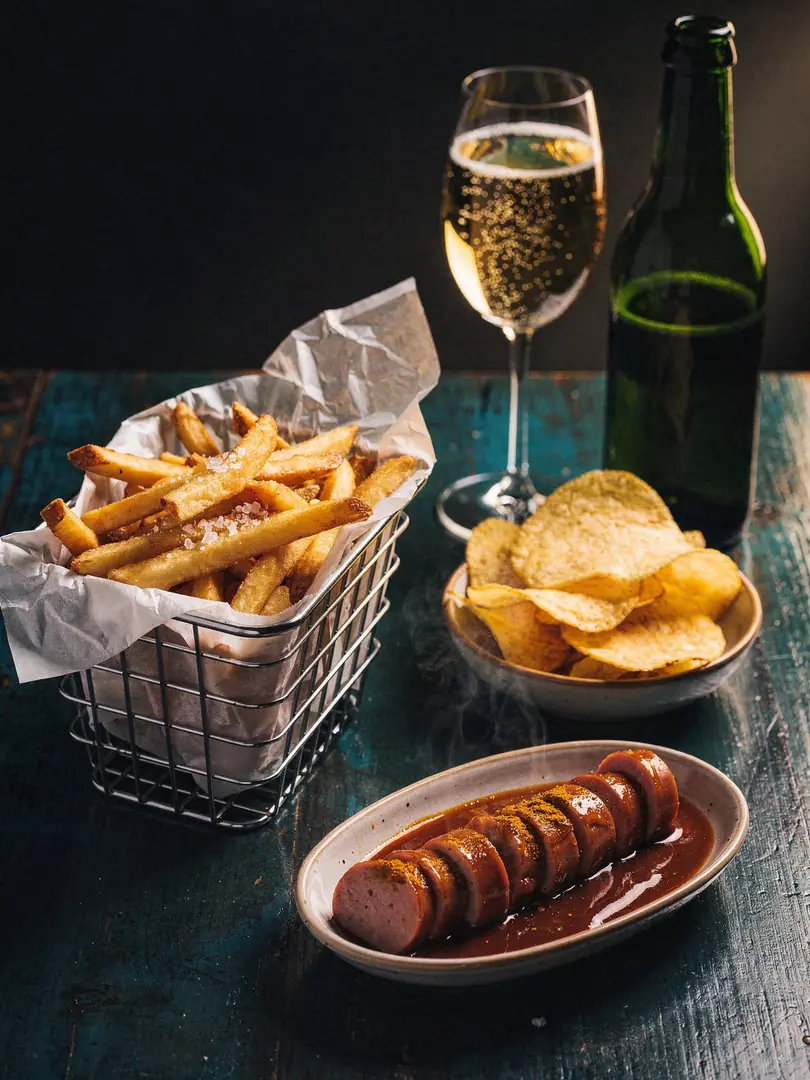
Sparkling wine pairs with fries, chips, and fried food because acidity and carbonation cut through the film of fat in the mouth, while salt makes a dry sparkling wine taste softer and fruitier. A young Brut, Cava, or Crémant often suits this better than a long-aged vintage Champagne.
Why Do Sparkling Wine and Fries Pair So Well?
Fried food has two sides: a crispy, salty crust and plenty of fat. After a few bites, a film coats the tongue, making each subsequent bite feel heavier. A sparkling wine cuts through it with its acidity, and the bubbles amplify the effect. The mouth feels clean again afterward, and the next fry tastes just like the first. A still, soft white wine has a much harder time achieving this.
A study from the Monell Chemical Senses Center in Philadelphia supports this principle from another angle. Catherine Peyrot des Gachons and colleagues showed in 2012, in the journal Current Biology, that mildly astringent drinks offset the slippery sensation of fatty food. Astringent means they cause a slight pucker in the mouth. The study tested solutions containing grape seed extract and a compound found in green tea alongside beef jerky. Sommeliers describe the effect of acidity and carbonation in very similar terms, though the study itself didn't measure that specifically.
Salt Makes Sparkling Wine Taste Fruitier
Salt changes how we perceive acidity. A salty potato chip makes a tart sparkling wine seem milder, allowing the fruit to come forward. That's why chips and fries can even handle very dry sparkling wines like Extra Brut, which some might find too sharp on their own. Conversely, the acidity refreshes the mouth after the salt. Many tasters describe this interplay as a loop, where each bite and sip makes you crave the other even more.
Salty snacks have accompanied sparkling wine for a long time as a result: salted almonds, sea-salt grissini, or buttered popcorn. In Spain, Cava is often enjoyed with tapas like fried anchovies or croquettes. In Italy, Prosecco comes with fried vegetables and small fried fish, while in Japan it's tempura. These combinations aren't a trend; they all follow the same principle of fat, salt, acidity, and bubbles. The only key is that the fat must be fresh. Old frying oil tastes rancid and bitter, a note no wine can mask. The lighter and crispier the crust, the more delicate the sparkling wine can be too.
Currywurst, Fried Chicken, Tempura: Which Sparkling Wine for What?
With currywurst, something new enters the equation: the sauce is sweet, spiced, and often slightly hot. A bone-dry Brut Nature tastes thin next to it. An Extra Dry or a fruity Rosé sparkling wine works better, its residual sugar matching the sweetness of the sauce. For bratwurst without sauce, a simple Brut is enough. A Riesling-based sparkling wine brings plenty of acidity to cut through the fat.
Fried chicken has a well-seasoned coating and juicy, fatty meat. A Champagne or Crémant with some age and brioche notes holds up well. Tempura, meaning vegetables or shrimp fried in a light batter in Japanese cuisine, is more delicate. It calls for a fine, dry sparkling wine, such as a Blanc de Blancs. Fish and chips with malt vinegar is trickier, since the vinegar competes with the wine's acidity. A Brut with a bit more body helps here.
Champagne, Cava, or Sekt: What Does Fried Food Need?
Fries don't call for a prestige cuvée. The subtle notes of a long-aged wine get lost anyway next to fat, salt, and toasted flavors. What matters more is lively acidity, a firm mousse, and a dry style. A Cava Brut made from Macabeo, Xarel·lo, and Parellada reliably delivers this. A Crémant de Loire made from Chenin Blanc or a grower Sekt made from Riesling works equally well.
Prosecco is a borderline case. Many Prosecco DOC wines are sold as Extra Dry and taste soft and floral. Next to salty chips, this feels pleasant, but it often lacks the bite needed against a lot of fat. A Prosecco Brut suits light, fried vegetables better. Pét-Nat, a sparkling wine made through a single fermentation, often cloudy and rustic, is an appealing choice with street food. If you're surprising guests with fries and sparkling wine, chill the bottles well, since cold temperatures make the acidity feel fresher.