The Early Bubbles
What Was the First Sparkling Wine? Limoux, Glass, and Cork
No one can say for certain which was the very first sparkling wine. The oldest principle is that of a single, interrupted fermentation, as still used today in the Méthode ancestrale. The winemakers of Limoux cite a document from 1531. Sparkling wine only became a trade good once bottles and corks could withstand the pressure.
Méthode Ancestrale: The Oldest Path to Bubbles in Wine
Before anyone deliberately added sugar, there was only one way to get carbonation into wine: bottling it while it was still fermenting. The must begins to ferment, is bottled before fermentation finishes, and the yeast continues working inside. The gas cannot escape and dissolves into the wine. In French this is called Méthode ancestrale, the method of the ancestors. There is only a single fermentation here, not a second one.
The difference from bottle fermentation is fundamental. With champagne, a dry base wine is first fully fermented, then given sugar and yeast in the bottle for a second fermentation. With the Méthode ancestrale, the sugar still comes from the grape itself. This is harder to control, since the final pressure depends on the residual sugar at bottling. Today's Pét-Nats, short for Pétillant naturel, follow this old principle. However, they are not a distinct legal category.
Limoux 1531: The Oldest Claim to the First Sparkling Wine
In Limoux, a small town in the Languedoc south of Carcassonne, sparkling wine has been made from the white grape variety Mauzac for centuries. Winemakers there cite a document from the Abbey of Saint-Hilaire dated 1531, said to mention a sparkling wine. Whether the text truly refers to sparkling wine has so far only been passed down through later accounts. The more honest statement is therefore: Limoux holds the oldest claim, not the oldest confirmed evidence.
The Wine Journey tells the story of Limoux at its place of origin. For the history of sparkling wine, what matters is what has survived there to this day. Blanquette méthode ancestrale is a wine made from Mauzac with only a single fermentation. Alongside it stands Crémant de Limoux, made using the traditional bottle fermentation method, meaning two fermentations, and primarily from Chardonnay and Chenin. In the same town, two eras of sparkling wine history can thus be compared side by side.
Why Sparkling Wine Bottles Used to Explode
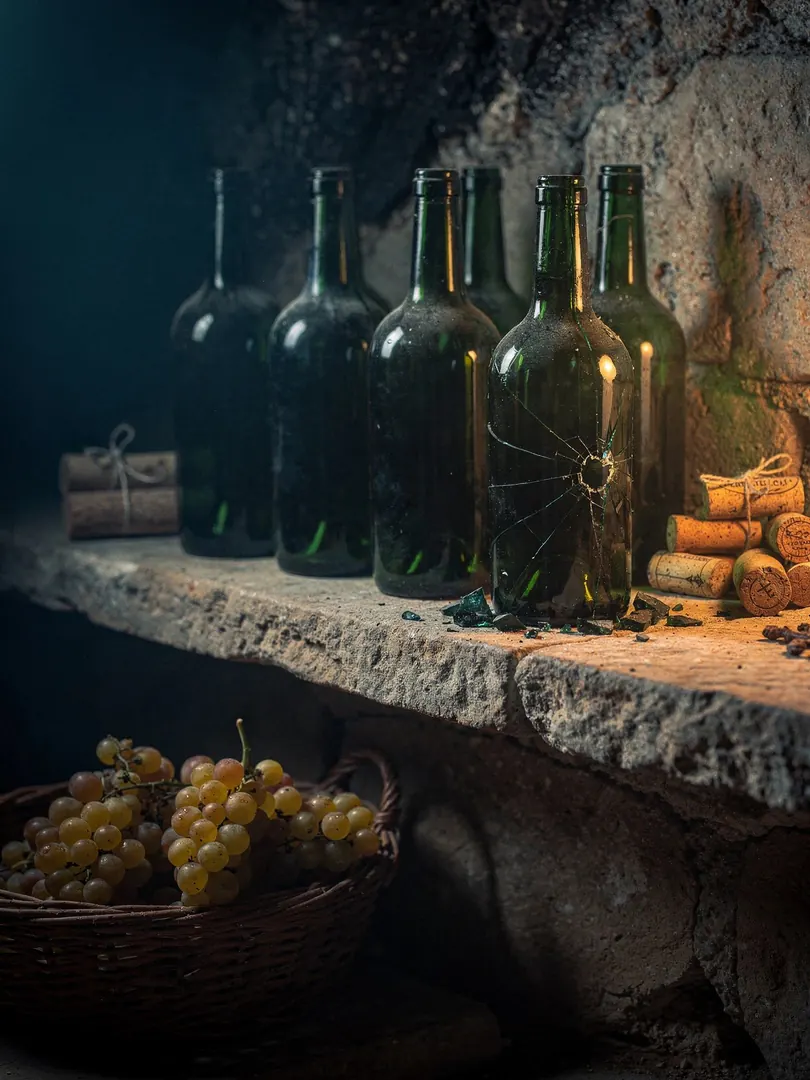
A sparkling wine with six bars of pressure, as found in a modern champagne, was barely containable in the 17th century. Six bars is roughly three times the pressure in a car tire. The glass from many French glassworks was thin and uneven, and the closures were not reliable. In warm weather, bottles often burst in chains in the cellars, as one shattering bottle would set off the next.
In some years, losses were so high that sparkling wine remained a risky business. Only sturdier glass, well-fitted corks secured with string or wire, and cool cellars made the pressure manageable. The chalk cellars beneath Reims and Épernay helped with this. They maintain a consistently low temperature year-round, and cold wine holds carbon dioxide better in solution. The wire cage over the cork, the muselet, only became standard in the 19th century.
1728: Wine from Champagne Is Allowed to Travel in Bottles
A royal decree brought sparkling wine out of its niche. For a long time, wine in France could only be transported in barrels. In 1728, a decree by Louis XV permitted transport in bottles. For a wine whose appeal lay in its carbonation, this changed everything. In a barrel, the gas escapes on the way to the customer; in a sealed bottle, it is preserved.
A year later, on 1 September 1729, Ruinart was founded in Reims, the oldest house making exclusively champagne. Others followed over the course of the 18th century, Moët, for example, in 1743. Early champagne, however, was drunk quite differently from today. It was cloudy, because the yeast remained in the bottle after fermentation, and it was noticeably sweeter. The story of how the yeast was removed from the bottle and the wine became clear is tied to a widow from Reims.