Tirage and Fermentation
Traditional Bottle Fermentation, Step by Step
In traditional bottle fermentation, the base wine ferments a second time in the very bottle it will later be sold in. Sugar and yeast are added during tirage, the bottle is sealed, and pressure builds over the following weeks. All told, the wine spends at least nine months on the lees.
What Happens During Tirage?
The base wine is still, dry, and fully fermented by the time it goes into the bottle. To make it ferment once more, the cellar master adds the tirage dosage, called liqueur de tirage in French. It consists of sugar dissolved in wine, specially selected yeasts, and usually a riddling aid that will later help the lees slide more easily. EU law classifies this addition as neither enrichment nor sweetening. It serves one purpose alone: creating the sparkle.
The quantity is precisely calculated. Typical amounts are around 24 grams of sugar per liter and about 20 grams of yeast per hectoliter. This produces roughly six bar of pressure, the typical value for a Champagne. At the same time, alcohol rises by a good percentage point; the tirage dosage is permitted to raise it by no more than 1.5% vol. In Champagne, tirage may begin no earlier than January 1st following the harvest. By then, the base wines have already had several months to settle.
Crown Caps Instead of Mushroom Corks: The Bottle During Fermentation
The bottle is initially sealed not with the familiar mushroom-shaped cork but with a crown cap, just like on a beer bottle. Underneath often sits a small plastic cup, the bidule, which will later catch the lees deposit. The bottles are made of thick glass because they must withstand the full fermentation pressure. In Champagne, the regulations stipulate that the second fermentation takes place exclusively in glass bottles.
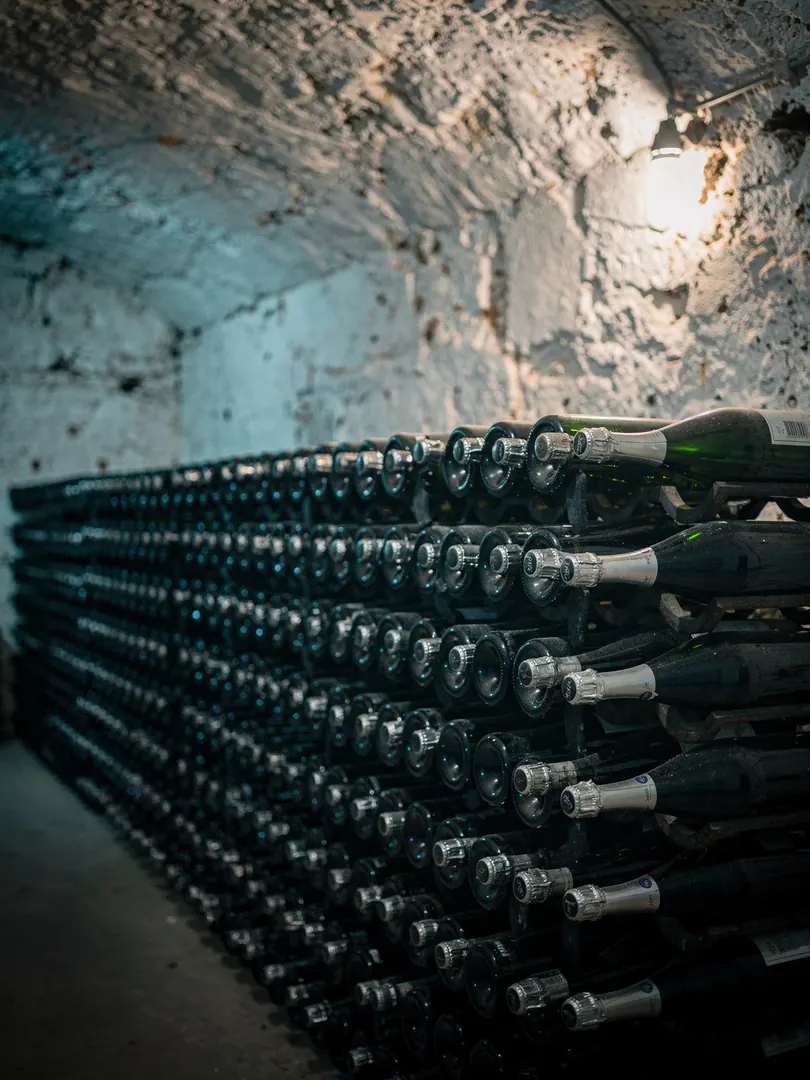
The bottles are then stacked horizontally, in many houses deep underground in chalk or tuff cellars. A cool, steady temperature around 13 degrees Celsius lets the yeast work slowly. The French call this stage prise de mousse, roughly: the wine takes on its sparkle. Among cellar masters, a calm, cool fermentation is considered essential for fine, well-integrated bubbles. After a few weeks, the sugar is used up, and the pressure in the bottle is set.
Why Does the Lees Stay in the Bottle So Long?
Once the sugar has fermented, the yeast cells die off and settle as a fine, grayish-white film along the bottle wall. They could be removed at this point. But it's precisely this lees deposit that makes the method so valuable: over months and years, it releases compounds into the wine that change its flavor and mouthfeel. This process is called autolysis; exactly what happens during it is covered in the stop on lees aging.
The law sets minimum thresholds. For the term "traditional bottle fermentation" to apply, the wine must rest continuously on the lees at the same producer for at least nine months from the point the cuvée is prepared. Non-vintage Champagne may be disgorged no earlier than twelve months after tirage and sold no earlier than fifteen months after that, vintage Champagne after 36 months. Cava Reserva requires 18 months, non-vintage Franciacorta also 18. Many houses age their wines considerably longer by choice, since the wine ages well, protected on the lees.
Who Uses Traditional Bottle Fermentation?
For some regions, the method is mandatory: Champagne, every Crémant, Cava, Franciacorta, Trentodoc, and Alta Langa are made exclusively this way. In Germany, the law requires it for grower Sekt, in Austria for Sekt g.U. at the Reserve and Große Reserve levels. South Africa's Cap Classique and most English sparkling wines follow it too. Outside Champagne, it's called méthode traditionnelle in French; the term méthode champenoise is reserved for Champagne.
The effort involved is considerable. Each bottle is its own small fermentation vessel, it must age for months or years, be riddled, disgorged, and resealed. That ties up space, capital, and labor. In return, the wine gains aromas of bread, nuts, and brioche over time, along with a creamy sparkle that a short tank fermentation simply can't deliver. How the lees ultimately leave the bottle is covered in the next stop.