See, smell, taste
Tasting sparkling wine: perlage, mousse, yeast, finish
When tasting sparkling wine, there are four things to focus on: the perlage, meaning the rising bubbles; the mousse, the foam that forms on the tongue; the aromas from fruit and yeast aging; and the finish. These elements often reveal whether a wine is young from the tank or has spent a long time aging in the bottle.
Perlage and color: what the eye sees in the glass
Tasting begins with a look into the glass. Good sparkling wines form fine bubbles that rise steadily and evenly, creating a narrow ring at the surface. Judging quality by this alone, however, would be premature. Where and how many bubbles form depends heavily on the glass itself, on fibers, detergent residue, and the mousse point at the base.
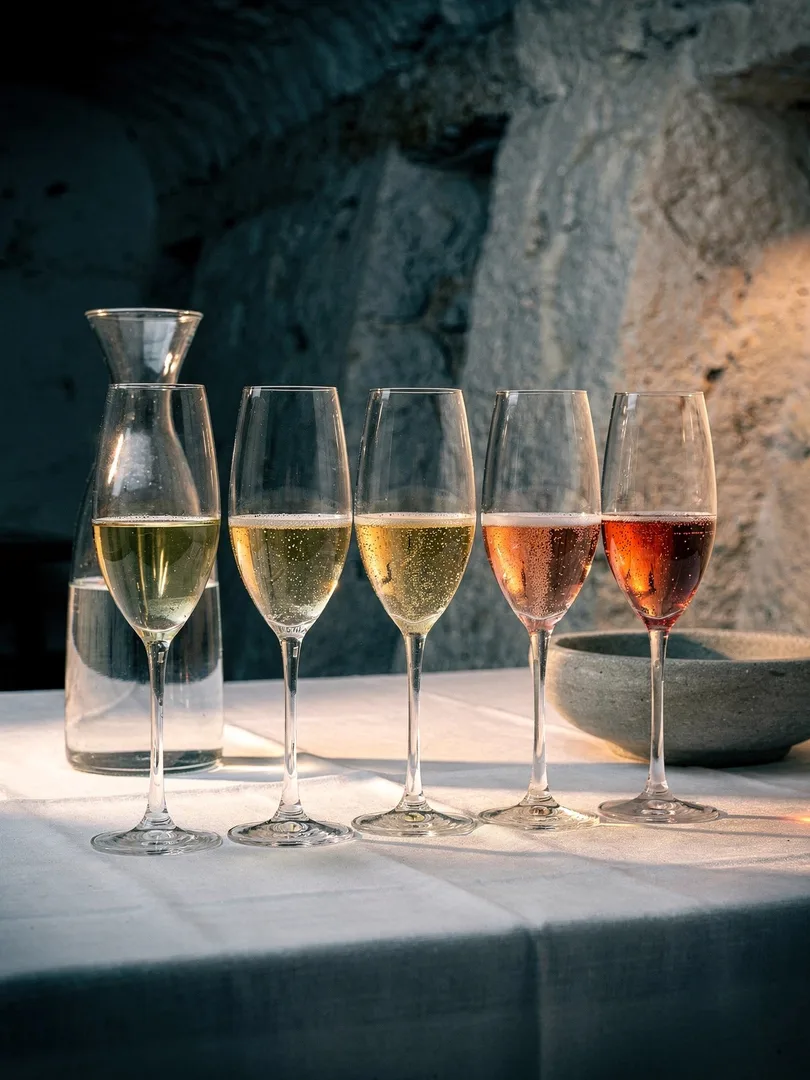
Color reveals more. Young sparkling wines from white grapes shimmer pale and greenish-yellow. With maturity and extended time on the lees, they turn more golden, and aged Champagnes can show amber tones. A Blanc de Noirs made from red grapes stays pale but sometimes carries a faint coppery shimmer. Rosé ranges from salmon to raspberry red, depending on whether red wine was blended in or the skins had brief contact with the must.
Aroma: distinguishing fruit, yeast, and maturity
Experts like to think of aroma in three layers. At the forefront is the fruit from the grape itself. Glera in Prosecco smells of pear and apple, Chardonnay of citrus and white flowers, Pinot Noir of red berries, and Muscat unmistakably of fresh grapes. This primary fruit dominates young sparkling wines made through tank fermentation.
The second layer comes from lees aging. After the second fermentation, the dead yeast cells break down—a process experts call autolysis. This produces notes of brioche, fresh bread, biscuit, and nut. Non-vintage Champagne spends at least twelve months on the lees for this, while a Cava Gran Reserva requires at least 30 months. The third layer develops with bottle age after disgorgement: honey, toasty notes, mushroom, and dried fruit.
Mousse and acidity: how sparkling wine feels in the mouth
Tasters use the term mousse for the foam that forms in the mouth. In a well-aged sparkling wine, it feels creamy and fine, almost like cream. A young wine with high pressure, by contrast, can feel fizzy and sharp, with bubbles that prick the tongue. Both can be correct, depending on the style. A semi-sparkling wine at 1 to 2.5 bar only tickles gently.
Then comes the balance of acidity, sweetness, and alcohol. Sparkling wine thrives on fresh acidity, which is why the grapes are harvested early. The dosage—the sugar added after disgorgement—is meant to round out this acidity, not mask it. A Brut Nature with under 3 g/l shows the acidity unvarnished, while an Extra Dry with 12 to 17 g/l feels rounder. Good tasters therefore don't ask whether a wine is sweet, but whether the sweetness matches the acidity.
Finish and sequence: how to compare sparkling wines
The finish is what remains after swallowing or spitting. In simple sparkling wines, it fades within a few seconds. In aged wines, fruit, yeast, and minerality linger long after. When comparing several wines, it's worth timing how long the flavor persists—this is one of the most reliable indicators of quality.
When tasting several sparkling wines, a fixed order applies: dry before sweet, young before old, white before rosé. A Demi-Sec tasted before a Brut Nature would make the dry wine seem sour and harsh. All wines should be served at the same temperature in identical glasses, otherwise you're comparing glasses rather than wines. Water and a spittoon are essential, and spitting is standard practice among professionals. Brief notes on color, aroma, mousse, and finish help you recall your impressions later.
A simple exercise sharpens the palate faster than any theory. Place a tank-fermented Prosecco next to a Crémant or Champagne made through traditional bottle fermentation, and taste both side by side. In the first glass, fruit takes center stage; in the second, notes of bread and nut mingle in, and the mousse feels finer. Once you've consciously tasted the difference, you'll recognize it again in the next bottle, even without a label. That's exactly what tasting is all about.