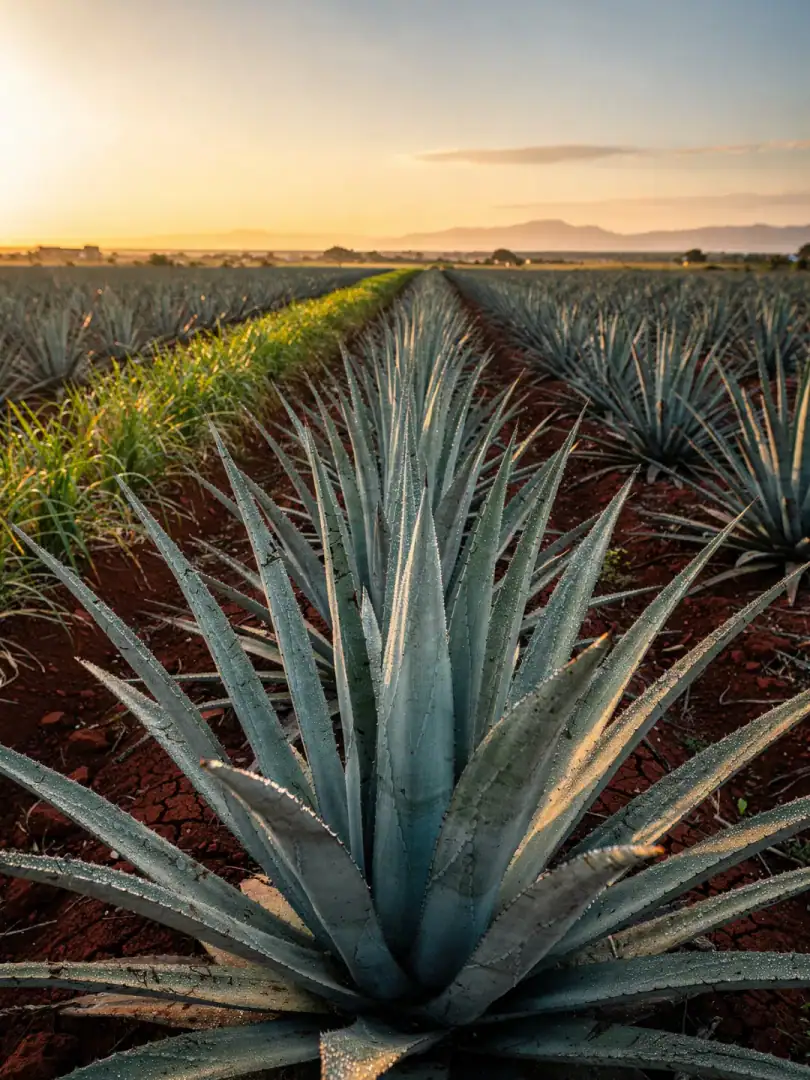
Agave Amid the Sugarcane
Agave & Soil
In Queensland, when people say agave, they mean one single species: Agave tequilana. In English it's called Blue Weber Agave, in Spanish Agave Azul. It's the exact same plant from which Tequila is made in Jalisco, only here it can never be bottled under that name. It doesn't grow wild anywhere in Queensland. Every single plant was hand-planted.
Around Bowen, the land has traditionally been sugarcane and mango country, not agave country. It was into this very agricultural landscape that Top Shelf International planted more than half a million agaves. They stand row upon row like a beet field, not terraced like the highland plots of Mexico. Sugarcane and agave here literally sit field by field. Both plants store sugar, just in very different ways.
An agave can live for ten to thirty years, but only a window of a few years is suitable for harvest, once the piña, the trunk-like heart of the plant, has stored enough sugar. The first seedlings went into the ground in 2020. As early as 2024, the First Harvest Blanco, the farm's first Agave Spirit, came to market, distilled from the earliest mature plants. The majority of the more than 600,000 agaves took longer, reaching full maturity only around six years after planting.
Harvesting is done by hand. The ripe piña is cut from the field and stripped of its tough leaves before heading to the distillery. Beneath the roots lies the farm's true distinguishing feature: a red, iron-rich soil, quite different from the volcanic earth of Jalisco.
A loose, iron-red topsoil layer of clay and silt, also used in the region for mango plantations.
The root: This is where the agave's shallow water roots sit, soaking up every tropical downpour instantly.