Discada and Pinole
Food & Drink
Two culinary traditions coexist in the Chihuahuan Desert and the mountains above it. One belongs to the Rarámuri in the Sierra, the other to the ranchers of the lowlands. Separated by altitude and history, they're connected by the same plant growing along the roadside. Both share the same dry soil, but not the same plate.
The Rarámuri traditionally live on corn. Toasted pinole flour, tortillas, the thin corn porridge atole, and tamales form the backbone of their diet, supplemented by beans and squash from the Sierra's few irrigated valley floors.
In the ranches of the lowlands, meat dominates instead: machaca. Beef, dried in the sun or over the fire and then shredded, is simmered with onions, tomatoes, and chile. It's usually served as a hearty breakfast before fieldwork, often alongside eggs.
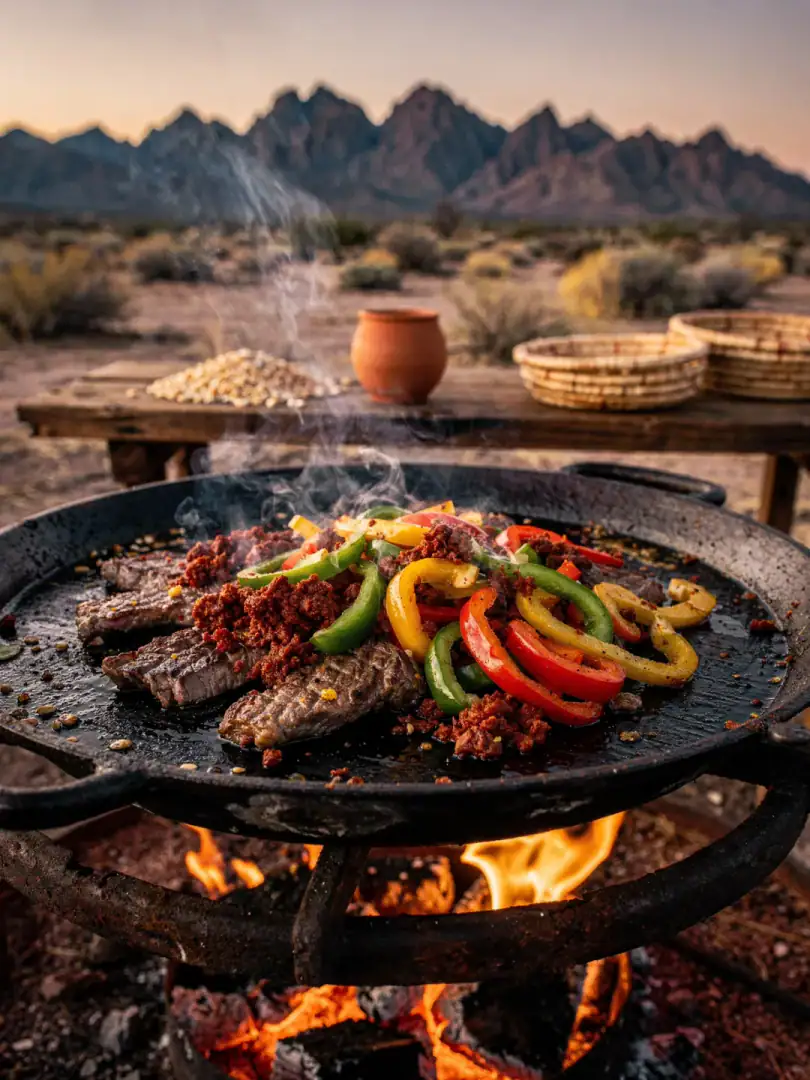
Even more community spirit goes into discada. Ground beef, bacon, chorizo, jalapeños, tomatoes, and onions are fried together on a large, repurposed plow disc over an open fire. For many Chihuahuenses, it's less a recipe than a reason to gather outdoors.
A small glass of Sotol suits a discada like this better than any cocktail could. Its dry, mineral character doesn't compete with the rich, fatty meat, but cuts cleanly through it instead. Among the Rarámuri, by contrast, alcohol tends to stay reserved for festivals and rituals rather than everyday life.
In the end, two images of the same desert stand side by side. The Rarámuri plate of corn and beans grew on the Sierra's sparse terraces. The smoky discada of the ranchers comes straight off the hot disc. Sotol connects both, since it comes from the same earth as their food.