Neat and Slow
Tasting
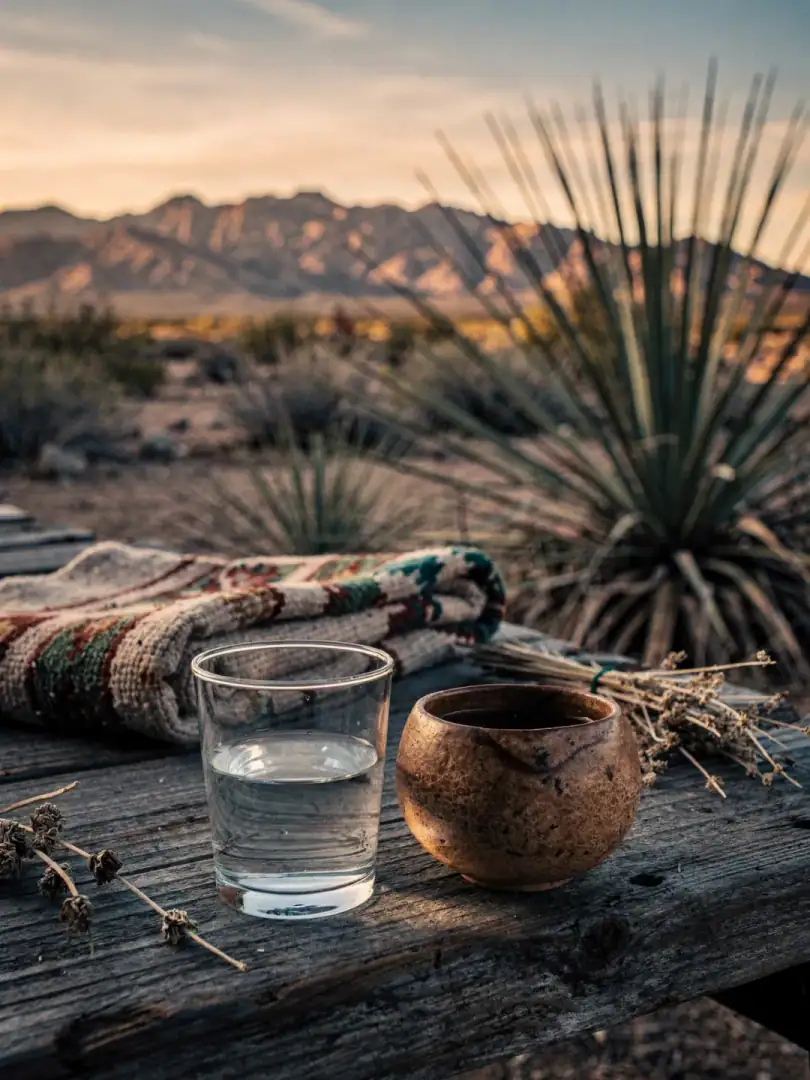
Sotol is best enjoyed neat and slow. It's usually served in a small glass, a caballito, much like tequila. Sometimes it comes in a jícara, a dried gourd shell instead. It's a quiet drinking ritual, not a quick shot. Ice or anything sweet has no place in it.
A dry, mineral character is typical of the region. Grassy and slightly earthy notes follow, often with a hint of dry herbs. Smoke appears less often, only when the hearts were cooked in an earthen pit. Sweet fruit, as found in some tequilas, is largely absent here.
Hacienda de Chihuahua represents the clean, almost polished side of Sotol, most noticeable in the oak character of its aged expressions. Sotol Por Siempre, by contrast, tastes wilder, with an herbal note close to dried oregano and a hint of citrus, as the distillery itself describes it.
Clande reveals yet a third facet. The cooperative brings together recipes from various families across the whole state of Chihuahua. As a result, each bottling differs noticeably from the next, depending on whose earthen pit and whose yeasts stand behind it. This turns every tasting into a small journey across the state.
Tasting the three side by side quickly reveals just how much room the Sotol designation of origin allows. Same plant, same region, yet very different signatures, something tequila's stricter rules simply don't permit.
In El Paso, just across the Texas border, Sotol has become a fixture on many bar menus. In Chihuahua itself, though, it remains largely what it has always been: a drink meant to be sipped slowly, while talking about the desert, not the bottle.