Copper, Wood, Ritual
Fermenting & Distilling
Once the piñas are cooked and crushed, fermentation begins, and here the paths of Durango's vinatas diverge most sharply. Some still ferment the crushed agave in wooden vats or hollowed-out stone basins, just as their ancestors did. Others, such as the operation 618, have since switched to stainless steel tanks.
The yeasts usually arrive on their own, from the air and from the agave itself, not from a packet. This takes patience, but it's what makes the Mezcal distinctly different from batch to batch.
Among the Tepehuán Mezcaleros of Mezquital, fermentation is preceded by a ritual of its own, called "ponerse bendito". A week before production begins, they eat only corn dishes and drink unsalted water, a cleansing ritual before the agave becomes Mezcal.
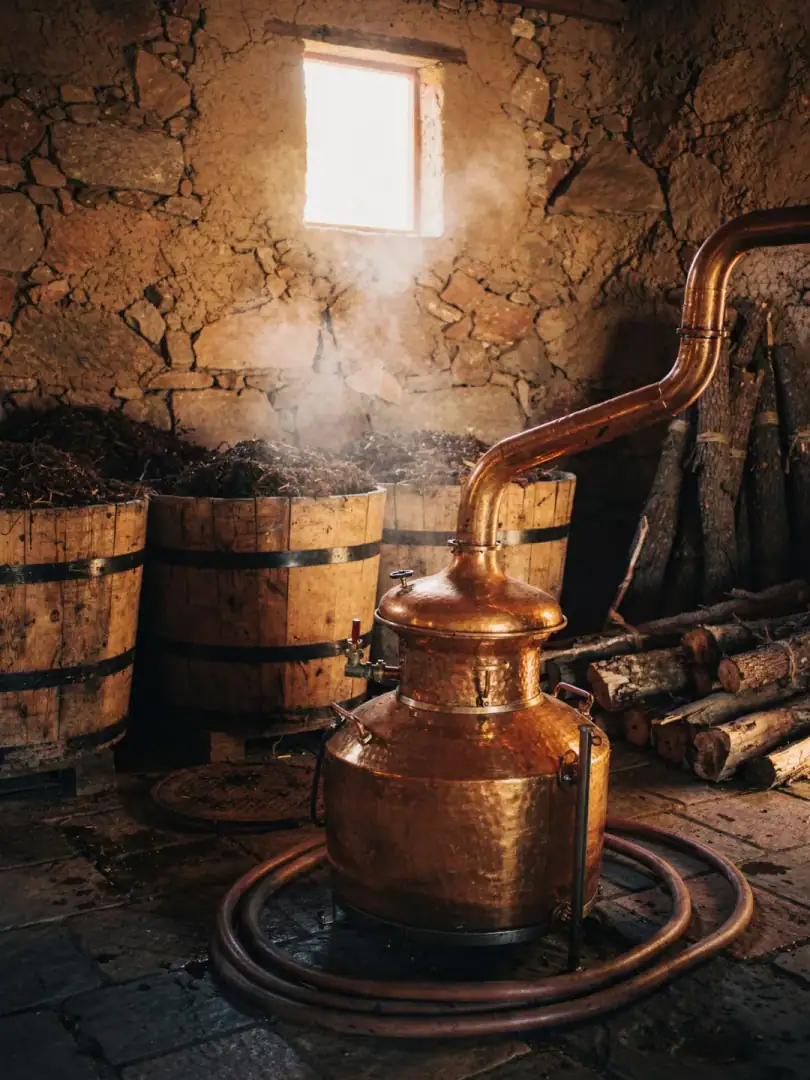
Distillation usually happens twice, in some vinatas even three times, in alambiques made of wood or copper. Copper stills are considered the standard among the region's Mezcaleros, as they distribute heat evenly. The result is a distillate between 38 and 52 percent alcohol, notably more variable than industrially produced Mezcal.
Whoever fills the copper still with fermented Cenizo distills Mezcal. If the same still stands ready next door for Dasylirion instead, the result is Sotol, its own protected name for its own plant, even though the craftsmanship and equipment look identical.
How often distillation happens and what material the still is made of also determines the category later stated on the label, Artesanal or Ancestral, depending on how much machinery was involved.
In the larger vinatas around Nombre de Dios, several stills now run in parallel, while in the small operations of the Sierra, it's often still just a single still, passed down through generations.