Volcanic Stone & Handwork
Cooking & Milling
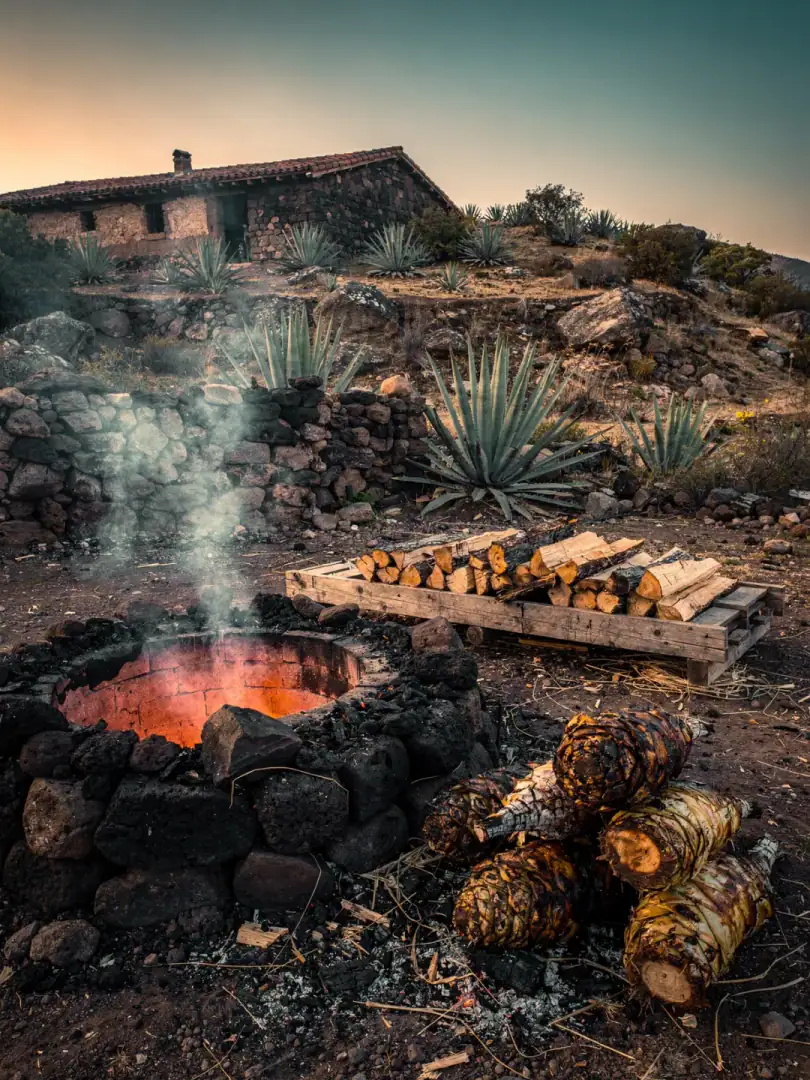
In the vinatas around Nombre de Dios, the Cenizo piñas are usually cooked in a horno de tierra, a pit dug into the ground and lined with stones. Many operations deliberately use volcanic rock, which holds heat especially well and releases it slowly over days while the agave hearts cook beneath it.
This open earthen pit, rather than an autoclave or diffuser, is more than just a matter of taste. Only spirits cooked this way, or in a traditional masonry oven, may later be called "Mezcal Artesanal". Anyone using steam autoclaves or diffusers instead ends up in the simpler "Mezcal" category, the industrial tier of the standard.
When it comes to milling, the differences between vinatas become clear. Most crush the cooked hearts by hand or with a wooden mallet, the mazo. One operation, El Ojo, has brought in the tahona, the round stone wheel from Oaxaca, into its own vinata, unusual for the region. Others, like Apaluz, forgo machines entirely and rely purely on manual labor.
Nearby, where Dasylirion is processed into Sotol, the cooking looks almost identical, also done in an earthen pit. The method may be similar, but the plant and the resulting name are not: agave becomes Mezcal, the desert plant becomes Sotol, and no vinata is allowed to swap the labels.
Cooking takes several days, depending on the size of the pit and the quantity of piñas. Only once the hearts are dark and caramelized on the outside and soft at the core is the oven considered finished.
This is where the subtle smoky base note comes from, shared by many Mezcals from Durango, regardless of whether copper or clay awaits them for distillation.