Caldillo and Mitote
Food & Drink
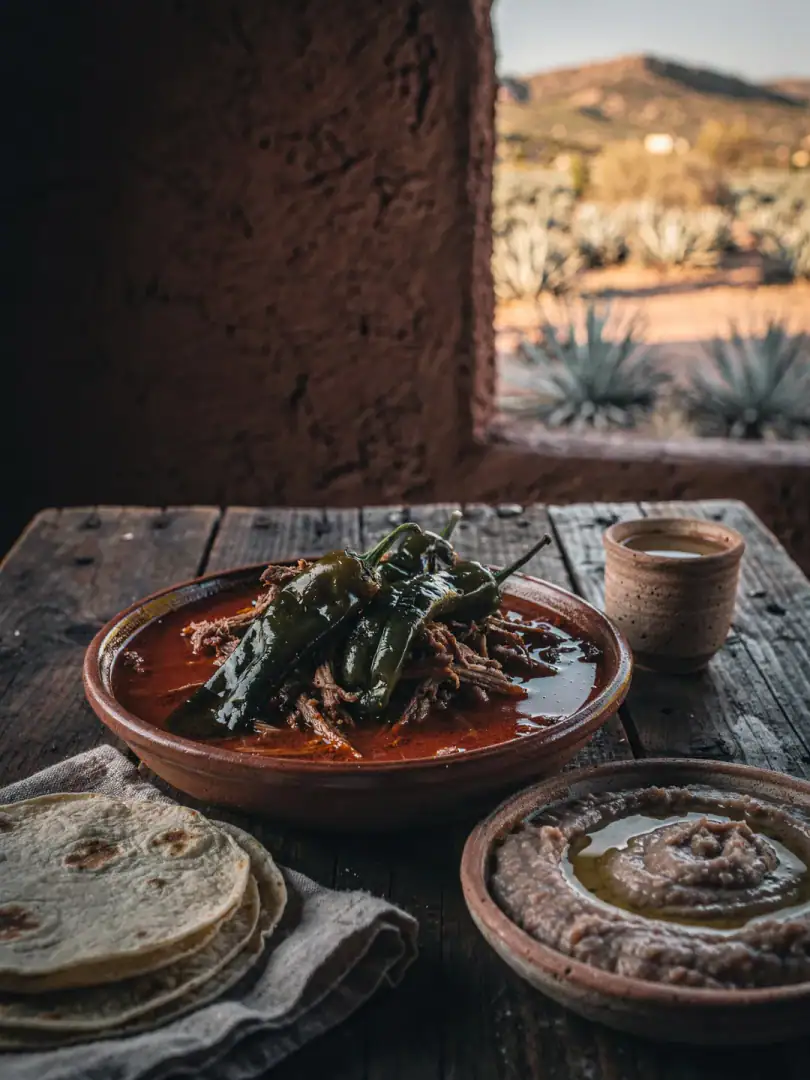
Few dishes hold Durango together the way Caldillo durangueño does. It's a stew made from dried or fresh beef, its sauce built from roasted tomatoes, onions, garlic, and chile pasado, a dried, roasted poblano chile considered Durango's own chile variety.
Caldillo is served with flour tortillas and refried beans, sometimes topped with a whole roasted chile. To finish, some hosts offer a small glass of Mezcal, sipped slowly, never as a shot.
Among the O'dam, the Tepehuán people of the south in Mezquital, Mezcal carries a deeper meaning than mere enjoyment. They call it "di". They drink it during the Mitote, also called Xiotal, a festival that follows the annual cycle of farming and community life.
For young people, the first taste of Mezcal at the Mitote marks the passage into adulthood. This ritual is passed down through generations, older than any Denominación de Origen.
This keeps Mezcal in Durango closely tied to the region's food and festivals. It belongs less to the bar than to the family table and the village.
Anyone who's eaten a truly spicy Caldillo quickly understands something: a mild, young Mezcal suits it far better afterward than a heavy, barrel-aged one. It cools the tongue instead of adding to the burn.
Even outside of festivals, a small glass of Mezcal is part of everyday life for many families in Durango. It doesn't stand for intoxication, but for a fixed part of the shared meal.
The shift between hearty Caldillo and clear, young Mezcal reveals something fundamental: kitchen and distillery are more closely woven together in Durango than almost anywhere else in Mexico.