In Small Sips
Tasting
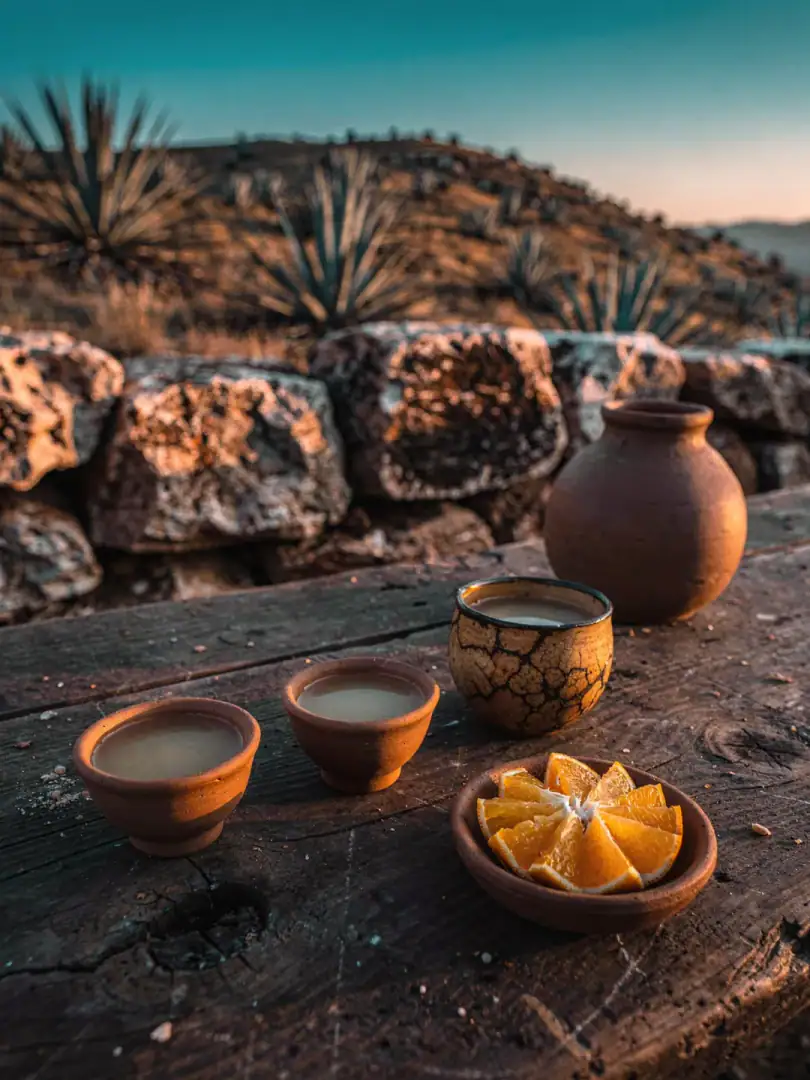
Tasting your first Mezcal from Durango calls for patience, not haste. The small clay vessels are called Copita or Jícara, the latter made from dried gourd shell, and are deliberately small. You smell first, then sip in tiny mouthfuls. The drink is meant to warm in the mouth, not be knocked back like a shot of Tequila from a caballito.
Typical of wild Cenizo from the highlands is an earthy, mineral base note, coming from the volcanic soil and the plant's long ripening time. Add to that smoke from the oven and a certain sharpness, born of the slow, often still manual production.
Cuero Viejo from Nombre de Dios is a fine example. The family-run operation blends local craft tradition with techniques adopted from Oaxaca, while remaining unmistakably true to its native agave.
Legendario Domingo was founded in 2012 by Julian Saenger. As Maestros Mezcaleros, the Colón family from Nombre de Dios works alongside him. Their Mezcal is released under the simple name "Durango".
The "Leyenda Durango" line from Mezcales de Leyenda also hails from Nombre de Dios. Mezcalero Ventura Gallegos carries on a family tradition passed down through several generations, working within a small cooperative of local producers.
These names serve here as taste examples, not purchase recommendations. The best way to taste, in any case, is directly at one of the vinatas around Nombre de Dios.
Anyone tasting several Mezcals from Durango side by side quickly notices how differently the same Cenizo can taste. The difference lies in soil, oven, and vinata, not in the agave or the region.
This very variation is what makes tasting in Durango so exciting. There isn't one single Cenizo flavor, but many small variations on the same underlying note.