Vinatas & Protection
Region & History
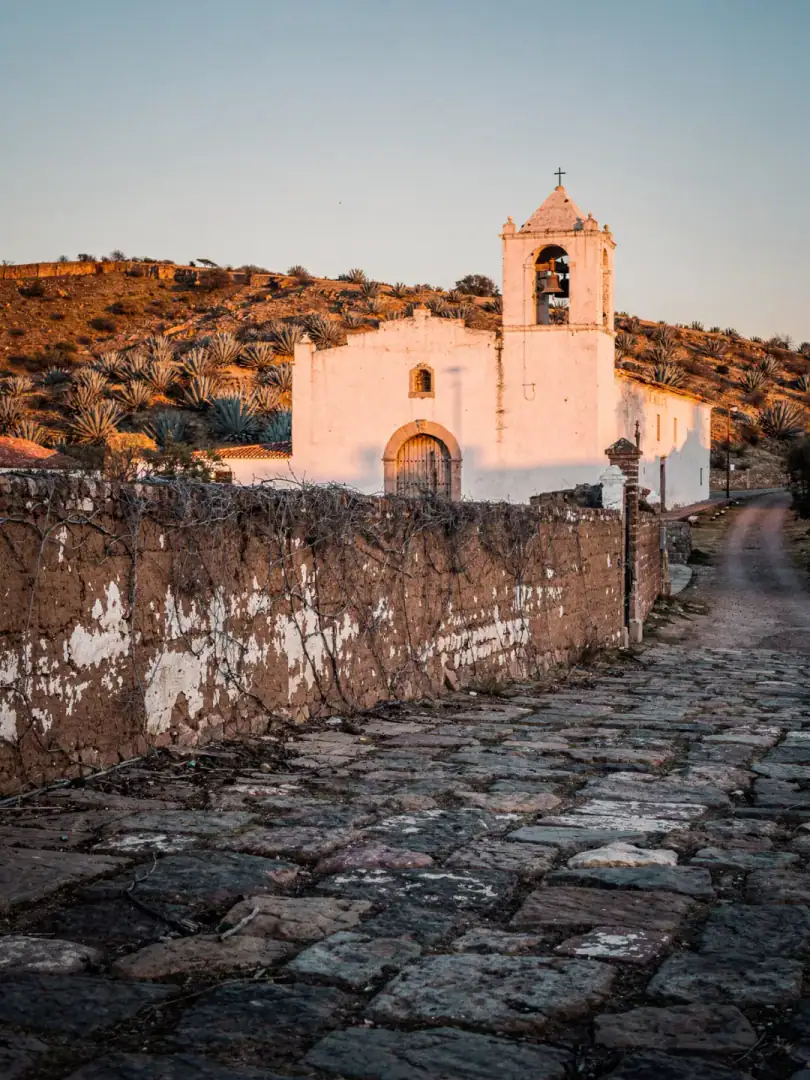
In 1562, Spanish missionaries founded Nombre de Dios, today the most important Mezcal town in the state of Durango and one of the oldest settlements in northern Mexico. Long before the missionaries arrived, people here already used the wild agave for food and fiber. With the colonial era came distillation, and the cooked agave heart became a distilled spirit.
In the 19th century, agave spirits fell under the state's watchful eye. Heavy taxes and periodic bans hit distillers across Mexico, government troops monitored production, and officials branded the drink as dangerous and intoxicating. In Durango, production survived nonetheless, mainly in small, family-run operations far from the big cities.
During the Porfiriato era, the Mezcal trade flourished mainly in the neighboring states of San Luis Potosí, Zacatecas, and Guanajuato, where large haciendas produced on a grand scale. Durango stayed more modest: here, a Mezcal distillery is still called a vinata, not a Palenque as in Oaxaca, and most operations were, and still are, small family businesses rather than large estates.
In 1994, the Mexican government included Durango, alongside Oaxaca, Guerrero, San Luis Potosí, and Zacatecas, in the first Denominación de Origen for Mezcal. Since then, only spirits distilled from one hundred percent agave sugars within one of the protected regions may be called "Mezcal", no matter what other agave spirit is being made next door.
Durango has one distinctive feature no neighboring state shares: the entire state also lies within the protected zone for Sotol, named after the desert plant Dasylirion. It's related to the agave, both belong to the Asparagaceae family, but botanically it sits in a different subfamily and is not itself an agave. Sotol has been protected across all of Chihuahua, Coahuila, and Durango since 2002, under standard NOM-159-SCFI-2004, cooked and distilled according to its own rules. So two protected names exist side by side here: whoever distills Cenizo agave in the vinata makes Mezcal. Whoever processes Dasylirion instead makes Sotol. The names must never be mixed.
Today, Mezcal production in Durango is concentrated in the municipalities of Durango, Nombre de Dios, Súchil, and Mezquital. Around Nombre de Dios alone, the scene counts about twenty-five small producers, mostly without their own brand, but with decades of family tradition behind them.