Haciendas and Designations of Origin
Region & History
Long before distillation arrived here, the Chichimeca Jonaz knew only one way to drink the agave. In what is now San Luis de la Paz, they drank Pulque, the fermented juice of the mature plant. It was central to festivals and rituals. With the Spanish came the still. From then on, the Crown wrestled for centuries over control of this new drink.
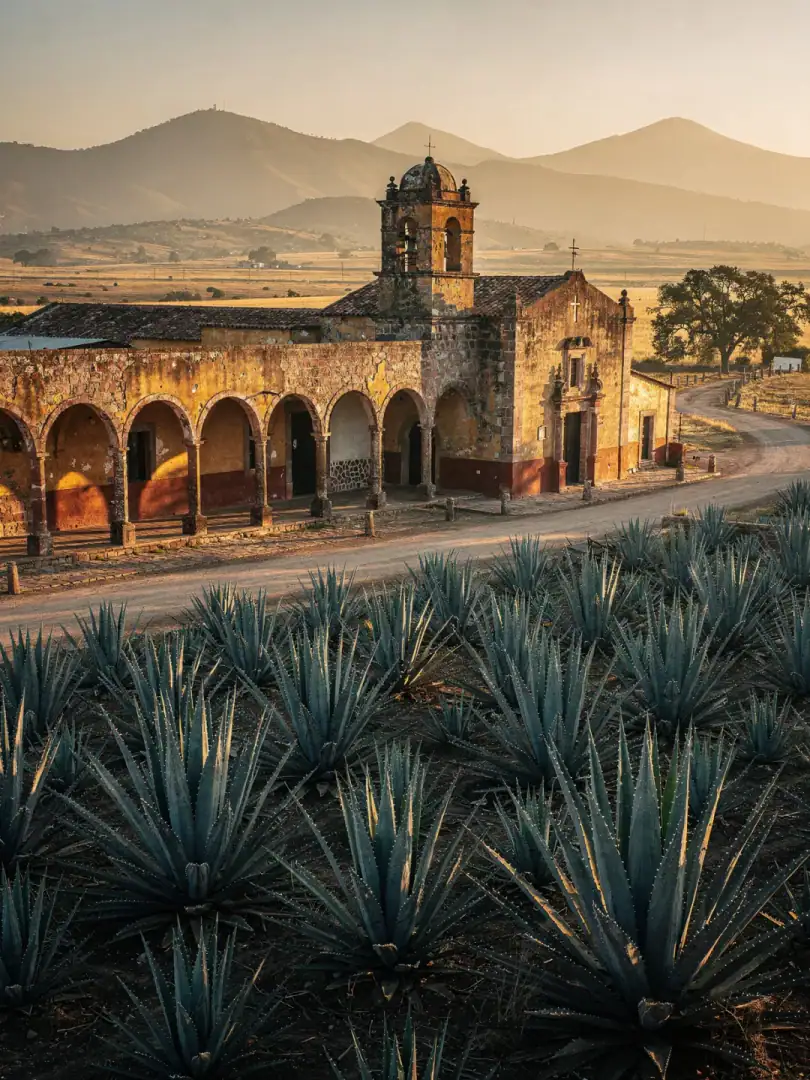
In Pénjamo, in the fertile Bajío, the Hacienda Corralejo has operated since 1565. From 1755 onward, it began, by its own account, distilling agave into brandy. It is still considered one of the oldest Tequila addresses outside Jalisco. In the northeast, in San Felipe, stood the Hacienda de Jaral de Berrios. It was among the very first to receive permission from the Spanish Crown to produce Mezcal.
On that same estate, Miguel Hidalgo was born in 1753. His father, Cristóbal Hidalgo, managed the hacienda there. So the future father of Mexican independence grew up among agave fields. Decades later, in 1810, he called for revolt against Spanish rule. The birthplace of a nation and the cradle of a Tequila sit at the very same spot in Pénjamo.
Guanajuato is today the only Mexican state with its own designation of origin for two separate agave spirits. Seven of its municipalities have belonged to the national Tequila region since 1974: Pénjamo, Abasolo, Cuerámaro, Huanímaro, Manuel Doblado, Purísima del Rincón, and Romita. Separately, San Felipe received Mezcal denomination of origin status in 2001. San Luis de la Paz joined later. Whoever harvests Blue Weber in Pénjamo may distill Tequila. The very same plant, planted in San Felipe, never could.
Legally, the two worlds remain strictly separate. Tourism, however, brings them together: the official Ruta del Tequila y Mezcal links Pénjamo in the Bajío with San Felipe and San Luis de la Paz in the dry north. Anyone who drives it can see, within a few hours, how differently two agave spirits from the same state can taste and how differently they're made.