Weber and Salmiana
Agave & Soil
In the Bajío around Pénjamo, cultivated Agave tequilana Weber, variety Azul, grows in neat rows. Locals simply call it Agave Azul. Row after row, the blue-gray rosettes stand on the fields of Hacienda Corralejo and its neighbors. It takes six to eight years before the jimador goes to work with the coa. The coa is a sharp round blade on a long handle, used to strip the leaves and expose the piña.
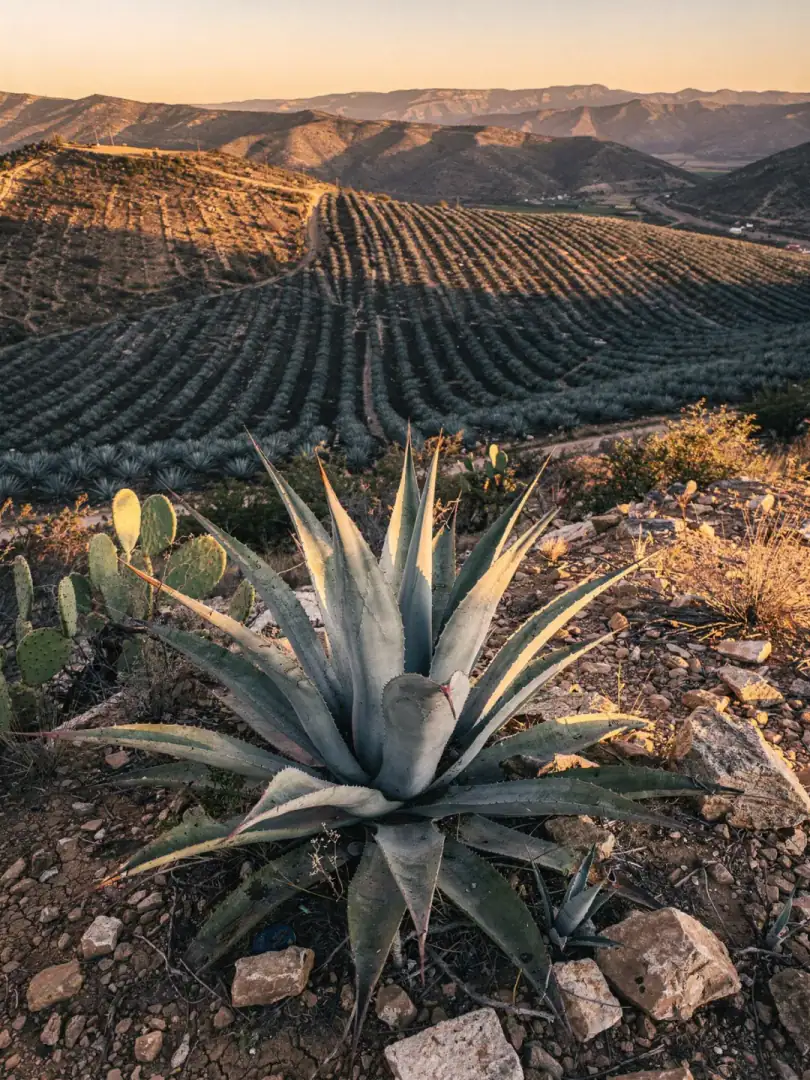
In the northeast, in the semi-desert around San Felipe and San Luis de la Paz, a different agave rules. It's Agave salmiana, usually called Maguey manso there. It grows mostly wild among cacti and thorn scrub, only rarely cultivated. It takes considerably longer to mature than its blue cousin in the south, often eight to fifteen years.
Beneath the Weber fields in the Bajío lies dark Vertisol. This clay-rich soil swells during the rainy season and cracks deep during the dry months. It earned the plain its 18th-century reputation as the granary of New Spain. For the agave, too, it retains plenty of moisture.
The Salmiana in the north, by contrast, grows on shallow, stony limestone soil of the high desert. It holds almost no water. That's exactly what forces the plant to grow more slowly and toughly. Experts in the region say this is precisely what gives its later Mezcal such concentrated, earthy sweetness.
The harvest itself follows two very different rhythms. In Pénjamo, trained jimadores cut whole plantations to the hacienda's schedule, piña after piña, often several tons a day. In the high desert, farmers and mezcaleros gather wild Salmiana hearts one by one, wherever they happen to ripen. Often they're spread far apart, reachable only by mule.
A clay-rich, humus-heavy soil that swells with rain and cracks deep during the dry season.
The root: The agave's fine feeder roots make instant use of every rainfall here.