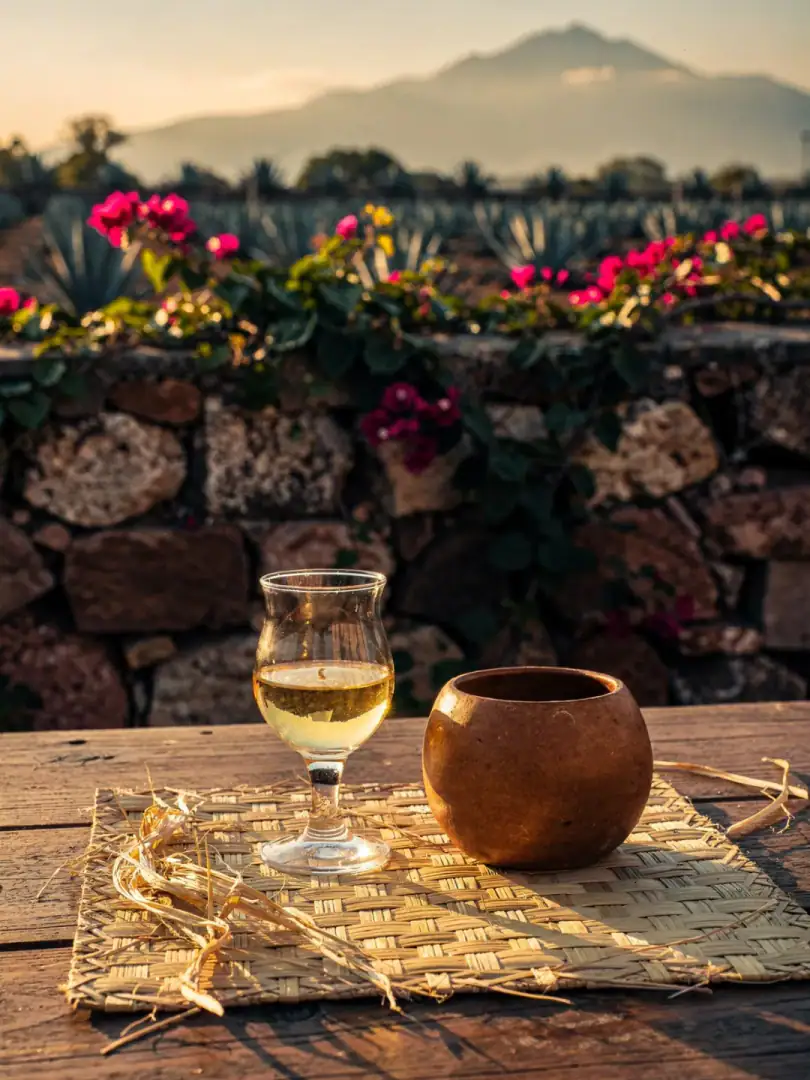
Copita and Jícara
Tasting
Tequila from Pénjamo is considered earthy and rather soft among connoisseurs. It shows cooked agave, a touch of caramel, and little sharp bite on the finish. Hacienda Corralejo has been the region's best-known name for decades, offering classic Blanco and Reposado alongside aged Añejo and Extra Añejo bottlings.
Tequila here is traditionally drunk from the copita, a small, often slightly waisted glass that concentrates the aromas without emphasizing the alcohol. It's sipped neat, rather than downed as a shot with salt and lime. This shows off, more than anything, what the piña from the Bajío brings to the glass.
Mezcal from San Felipe and San Luis de la Paz, by contrast, tastes fruitier and less smoky than the styles known from Oaxaca. Salmiana itself brings notes of ripe fruit and earth, and the brief fire in the earthen pit lays only a delicate layer of smoke over the top.
This Mezcal is traditionally drunk from the jícara, a small drinking bowl made from a dried gourd. It's sipped in small mouthfuls, with time taken between each. A name that historically marks the beginning of this tradition is the Hacienda de Jaral de Berrios in San Felipe, one of the first to receive permission to distill Mezcal.
The official Ruta del Tequila y Mezcal invites travelers to sample both in a single day. The copita belongs to the morning in Pénjamo, the jícara to the afternoon in San Felipe. Two origin regions, one state, two entirely different worlds of flavor.
Anyone who hasn't tried either spirit but still wants to understand how differently they taste need only think of how they're made. Fast steam-cooking stands against days of fire in the earth. That alone almost explains, on its own, the softness of Tequila and the depth of Mezcal.