Blanco to Añejo
Aging
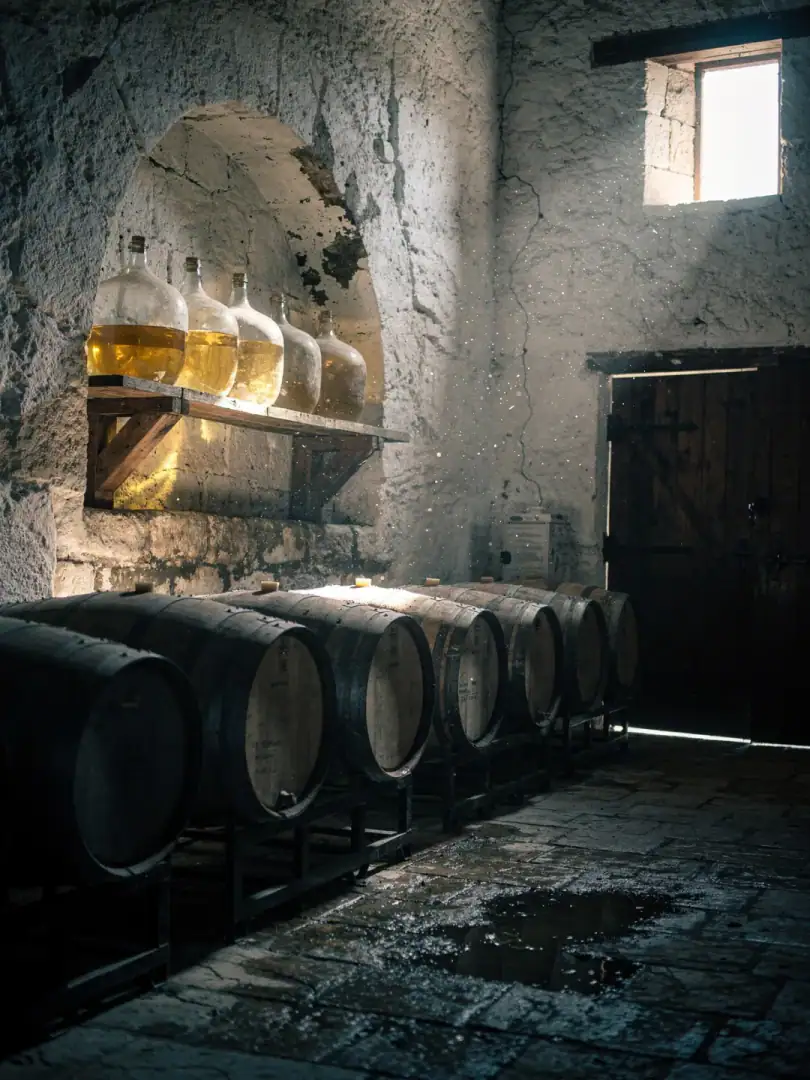
Tequila from Pénjamo comes in every legal aging category. Blanco has no cask contact at all. Reposado ages at least two months in oak. Añejo requires at least one year, Extra Añejo at least three. Barrels are capped at 600 liters.
Blanco may not receive any abocamiento, meaning no added caramel or oak flavoring. Reposado and the darker categories, however, may be adjusted with a small amount of caramel, oak extract, glycerin, or sugar syrup. None of this has to appear on the label.
In San Felipe and San Luis de la Paz, most Mezcal stays Joven, clear and unaged, matching the character of Salmiana perfectly. Anyone wishing to age it has an alternative that doesn't exist for Tequila: Madurado en Vidrio, aging in large glass demijohns instead of oak barrels.
Only once barrels come into play can the Mezcal be called Reposado. After at least a year in wood, it becomes Añejo. Flavor adjustment exists here too, though it's not a quiet side process as with Tequila but its own labeled category: Abocado con, spelled right out in the name.
On a label from Pénjamo, the producer's NOM number and category must appear, whether 100% Agave or simply Tequila. On a bottle from San Felipe, the Mezcal denomination-of-origin seal appears instead, always alongside the term Artesanal, Ancestral, or simply Mezcal, depending on the method of production.
Set the two bottles side by side, and the difference shows even on the paper. Tequila from Pénjamo often advertises barrel age in months and years. Mezcal from the north instead advertises the mezcalero's personal touch and the name of the earthen pit the agave came from.