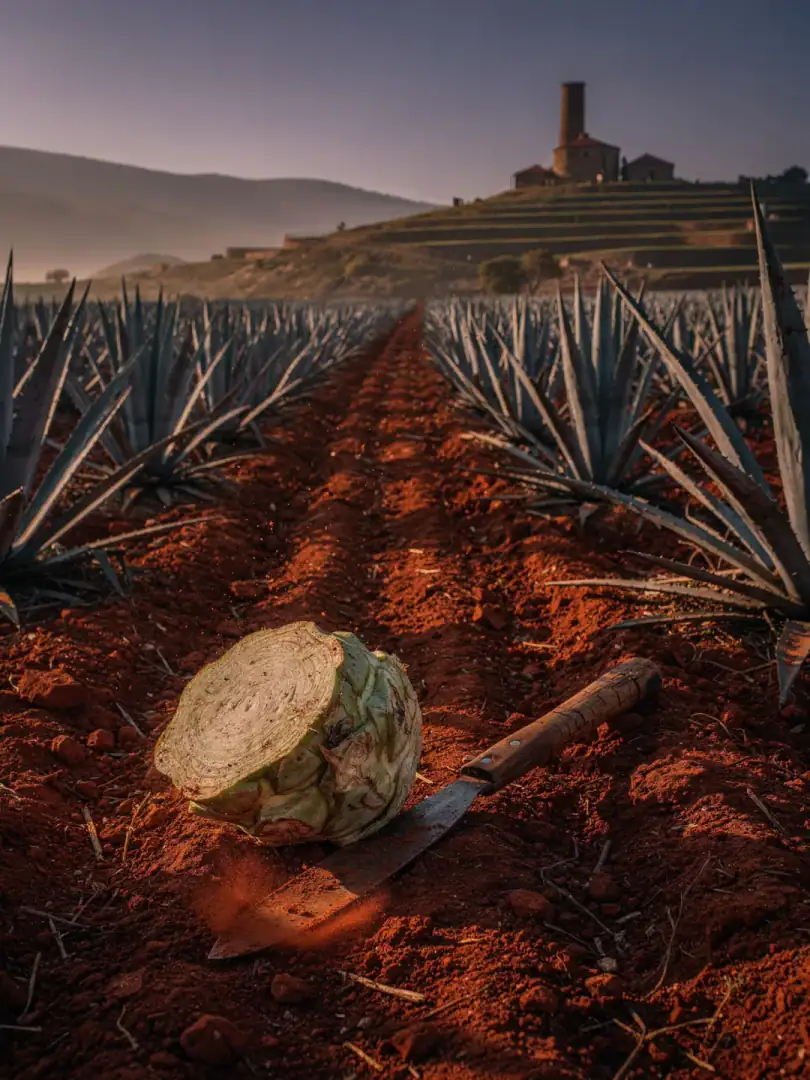
Tierra Roja
Agave & Soil
In Los Altos, only one agave grows in neat rows: Agave tequilana Weber, variety Azul. Popularly known as the "blue agave" for the bluish sheen of its leaves. Mezcal permits a dozen different species depending on the region, but tequila law recognises only this single plant. It barely grows wild here anymore—every plant stands in a cultivated row, often tended around Arandas by the same family for generations.
The jimadores are the harvesters. Using the coa, a round blade fixed to a long handle, they first strip away the spiky leaves. What's left is only the heart of the plant, the piña. In the cooler highlands of Los Altos, an agave often takes longer to mature than in the warmer valley. Regional experience points to eight to ten years, compared with the six to eight years considered typical in the lowlands.
This slower ripening comes down to something buried in the soil: tierra roja, the iron-rich red clay of the highland plateau. It holds moisture well but is dense and mineral-heavy. As a result, the agave needs more time to build up sugar reserves in the piña. Rub the soil between the rows between your fingers and the contrast with the grey volcanic ground of the lower valley is immediately obvious.
The colour of the soil plays no part in the category that ends up on the label—only the plant itself and the territory matter for that. Even so, this red earth shapes what eventually lands in the glass, long before any cooking or distilling begins.
Loose, dark brown, rich in decomposed plant matter from agave leaves and grasses.
The root: This is where the fine feeder roots sit, quick to draw up water and nitrogen after rain.