Altitude, Rain, Frost
Altitude & Climate
Arandas and Atotonilco el Alto sit at around 2,000 metres above sea level—considerably higher than the lower valley around the town of Tequila. That altitude is really why Los Altos is called the "highlands".
Rain falls here mainly between June and September, followed by a long dry spell stretching well into the following spring. During those dry months, the agave lives off the reserves it built up during the rainy season.
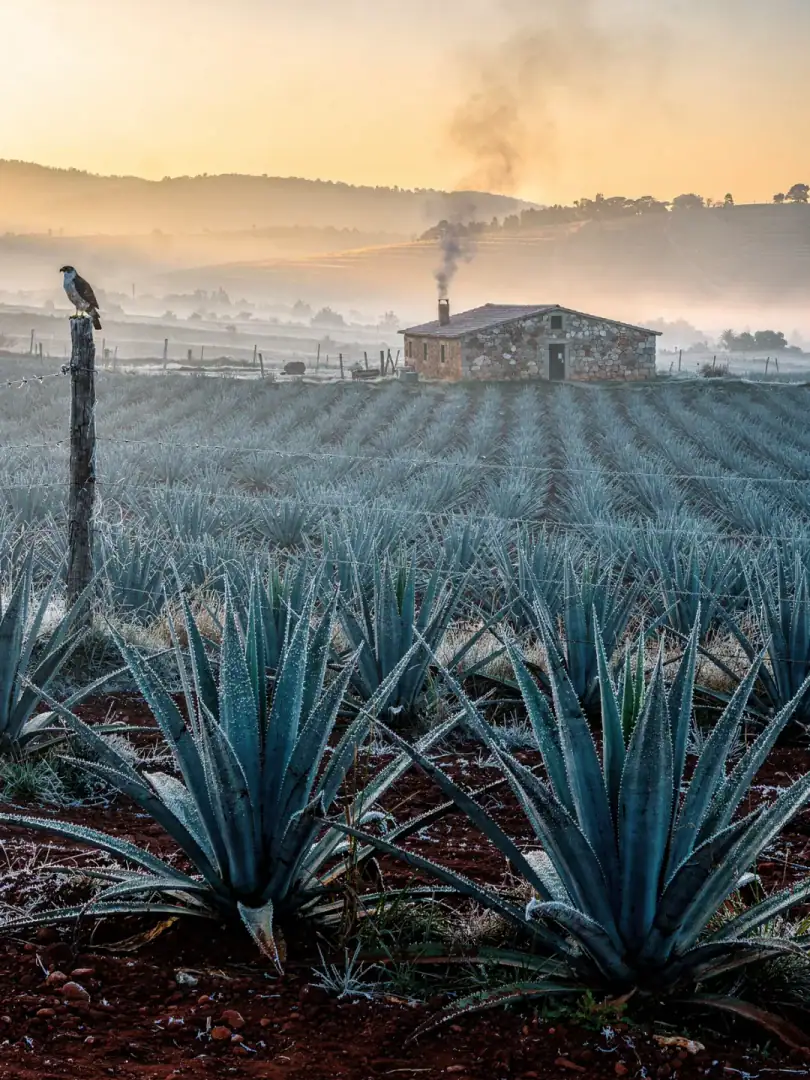
At night, the thinner highland air cools sharply—occasionally enough for a light frost on the fields in winter. By day, the sun warms strongly, barely softened by cloud cover. The lower valley simply doesn't see this swing between cold and heat.
It's precisely this gap between day and night that slows the agave's growth, letting it store sugar more gradually and evenly. Combined with the iron-rich red soil, this produces the milder, more floral aromas for which Los Altos is known among connoisseurs—a contrast to the earthier, greener tone many associate with the lower valley.
Drive through the fields around Jesús María at dawn and you'll often still see mist hanging in the hollows. The sun usually burns it off within the hour. This quick shift is part of the rhythm by which the agaves here ripen. Connoisseurs call this interplay the true engine of sweetness.