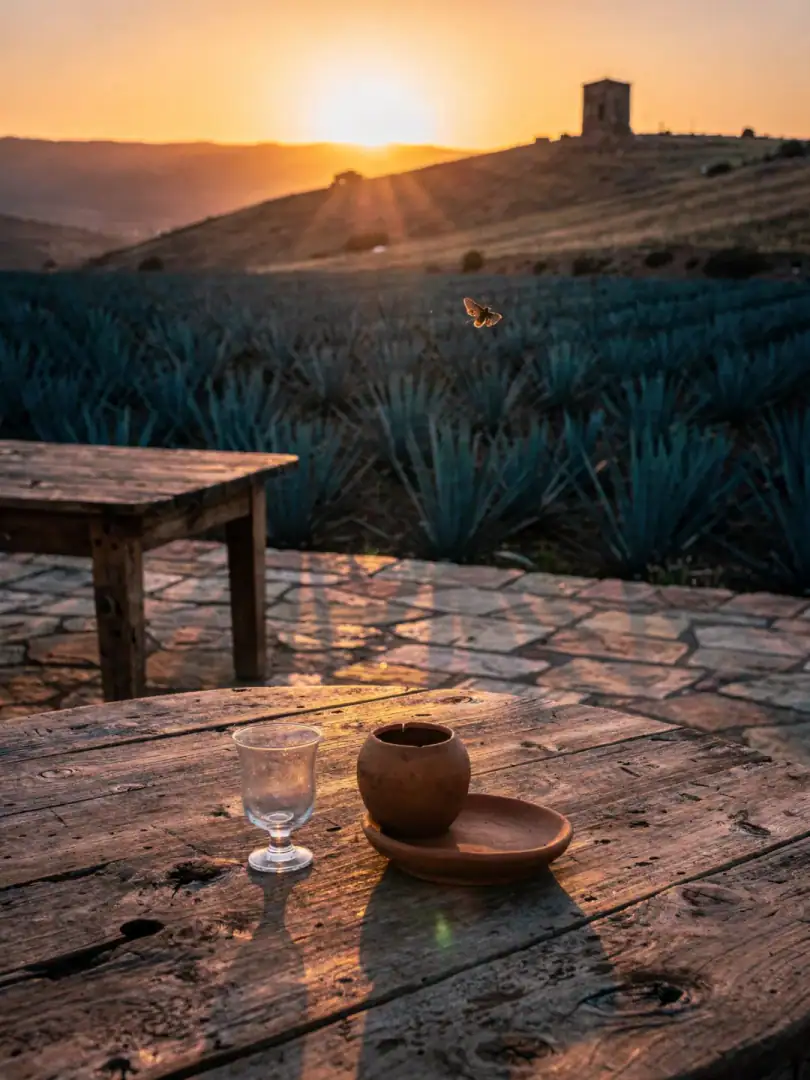
Copita, Jícara, Caballito
Tasting
A Blanco from Los Altos often reads sweet at first: cooked agave, a touch of citrus, and a floral streak running through it. Connoisseurs put this down to the red soil and cool nights of the region—a contrast to the grassier, peppery notes associated with lower-lying areas. This is exactly what gives the region its recognisable signature.
Tapatío, from the La Alteña distillery in Arandas, is held up by many as a benchmark for this style: robust and agave-forward without tipping into sweetness. Siete Leguas from Atotonilco el Alto, meanwhile, shows just how much texture the mule-driven tahona and open fibre fermentation can give a Blanco. Both are simply flavour examples, not purchase recommendations.
Traditionally, Tequila isn't drunk here from a shot glass. The customary vessel is the copita, a small tulip-shaped glass tapering slightly at the top to concentrate the aromas. In the countryside, some still reach for the jícara, a hollowed-out gourd. Others use the caballito, a slim little glass from which Tequila is drunk neat in cantinas across Mexico. Both vessels belong more to everyday life than to any show.
Set two glasses side by side—a Blanco and an Añejo from the same distillery—and the difference between fresh agave and barrel ageing becomes especially clear. In Los Altos, what stands out is how much of the region's mild base sweetness still comes through even after barrel ageing, even once vanilla and caramel notes from the wood have joined in.