Barrel, Year, Label
Maturation
The name of one of the best-known bottles from Atotonilco el Alto explains maturation well. Don Julio 1942 is an Añejo, named for the year Julio González founded his distillery, La Primavera. For this category, the law requires at least one year in barrel.
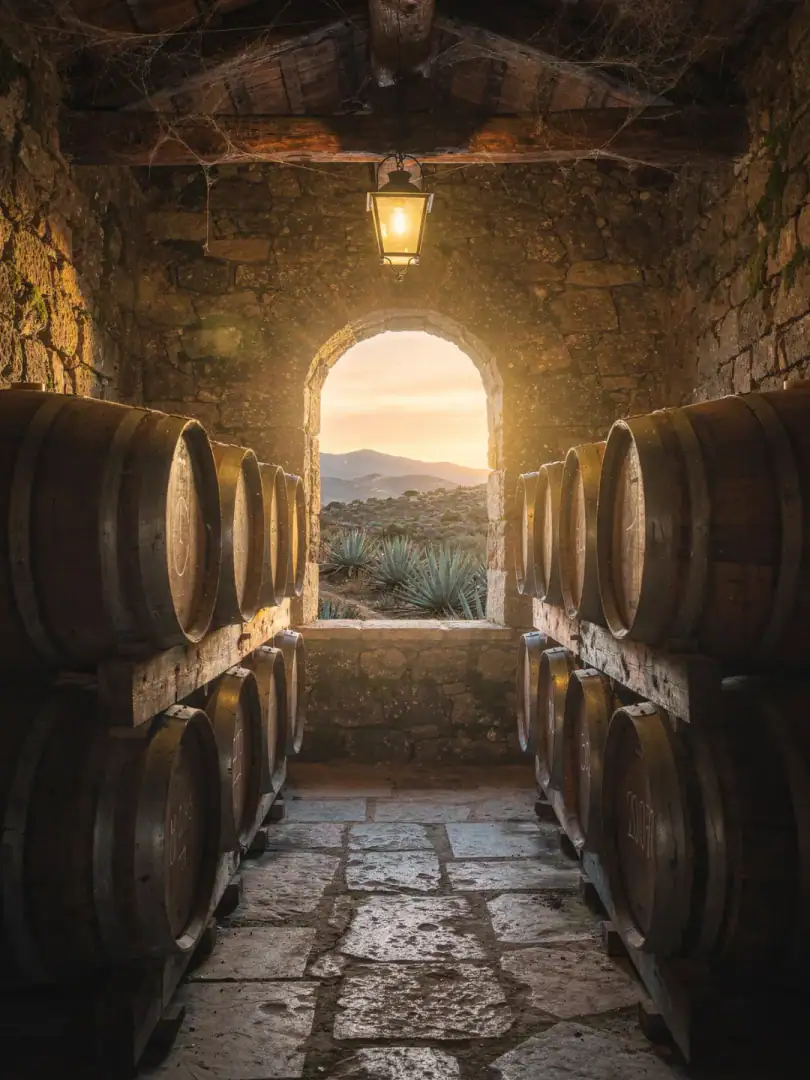
Blanco leaves the distillery almost immediately. By law, it may have had no more than two months' contact with wood, without being artificially flavoured afterwards. Reposado needs at least two months in oak barrels. Añejo needs at least one year, Extra Añejo at least three. The barrels themselves may hold no more than 600 litres.
"Cristalino", as some houses in the region offer it, isn't a legal category in its own right. It's simply filtered, decolourised Añejo or Extra Añejo—it looks like Blanco again afterwards but keeps the aromas of maturation. Anyone unaware of this can easily mistake the bottle for something quite different from what it actually is.
In Los Altos, the better-known houses in particular love to showcase aged expressions. The region's mild, fruity base notes pair well with the vanilla and caramel notes drawn from the oak. A young Blanco made from the same agave tastes noticeably more direct by comparison. Both are Tequila—just with different amounts of time spent in barrel.
Patrón and Siete Leguas both offer Reposado and Añejo lines alongside their Blanco. Buyers identify the category by the word on the label, not the colour of the bottle. Read the word Reposado or Añejo, and you know at once how long the spirit's journey through oak lasted at minimum.