Desert Meets Huasteca
Food & Drink
San Luis Potosí is a state of two halves. In the center lies the dry, mountainous highland where mezcal is made. To the east, no more than three hundred kilometers away, lies the tropical, humid Huasteca Potosina, a different world climatically. The state's cuisine carries both landscapes within it.
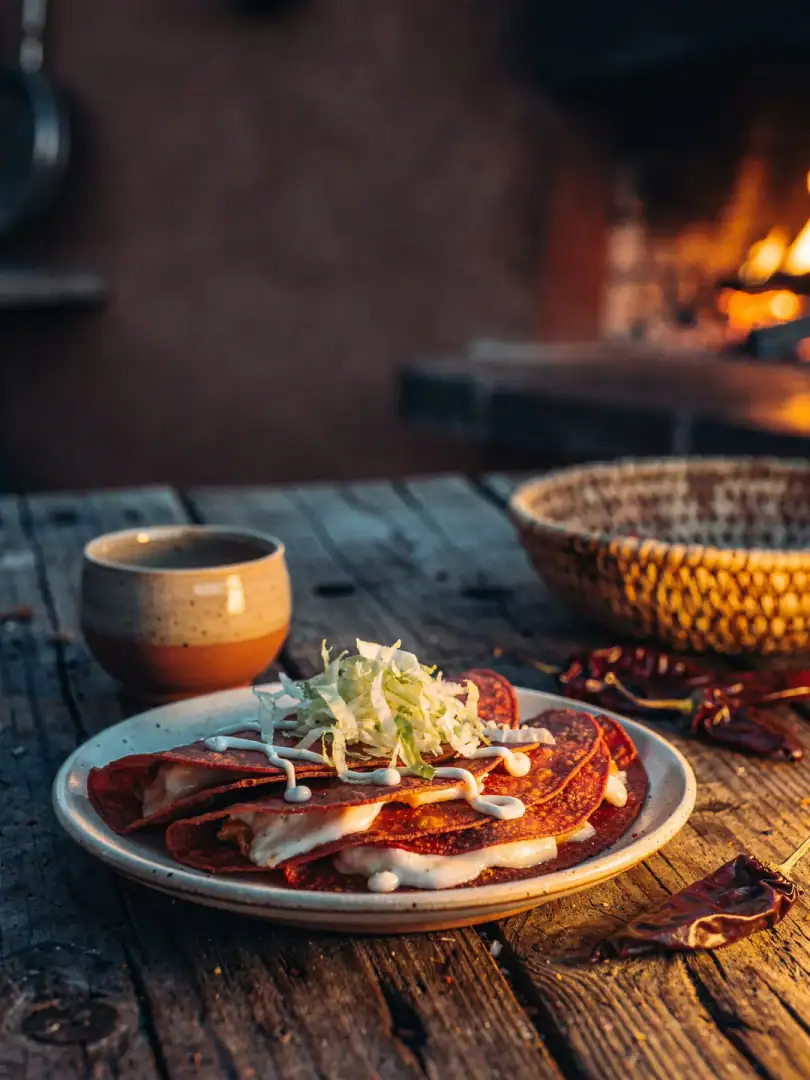
Typical of the highlands are Enchiladas Potosinas. The corn dough is colored red with guajillo chile and usually filled with cheese or potato. Served fried, they come with lettuce, sour cream, and red sauce. It's a simple, spicy dish, born from what the barren region provides.
From the distant Huasteca Potosina, on the other hand, comes the Zacahuil, one of Mexico's largest tamales. This enormous corn-dough parcel filled with chicken or pork can weigh up to thirty kilograms. It is wrapped in banana or papatla leaves and cooked for hours in an earthen oven. It is usually meant for an entire feast, not a single serving.
Both dishes show just how differently this state's landscapes shape its cuisine. The same fiery, earthy note of chile appears in both, yet with entirely different ingredients and cooking methods.
What pairs best with mezcal from the Altiplano is something hearty and earthy: a piece of cheese, a touch of chile. Nothing should mask the agave's vegetal aroma. Traditionally, it is drunk in small amounts, neat, from a Jícara or a small glass, not as the opener to a long night out.
This way, mezcal from the Altiplano remains what it has been on the hacienda for centuries: a spare, concentrated spirit from a spare, concentrated landscape. It is accompanied by a cuisine that feels at home between dry desert and humid rainforest.