Vegetal and Earthy
Tasting
A mezcal from the Altiplano Potosino first smells of cooked agave, green and slightly earthy. Sometimes a hint of wet chalk lingers, recalling the limestone crust beneath the plants. Added to this is often a smoky note from the masonry oven.
On the palate, Maguey Salmiana shows itself more robust and vegetal than the leaner blue agave used for tequila. Peppery, sometimes slightly smoky notes come from the masonry oven. Added to this is a mineral edge that seems to stem from the barren, chalky soil. A long, warm finish lingers at the end.
Three names serve as examples of this style, not as buying recommendations, but as flavor references. Real de Magueyes comes from Hacienda Laguna Seca in Charcas. The Derrumbes San Luis Potosí series aims specifically to showcase regional character. Mezcal Salmero bears the name of the agave from which it is made.
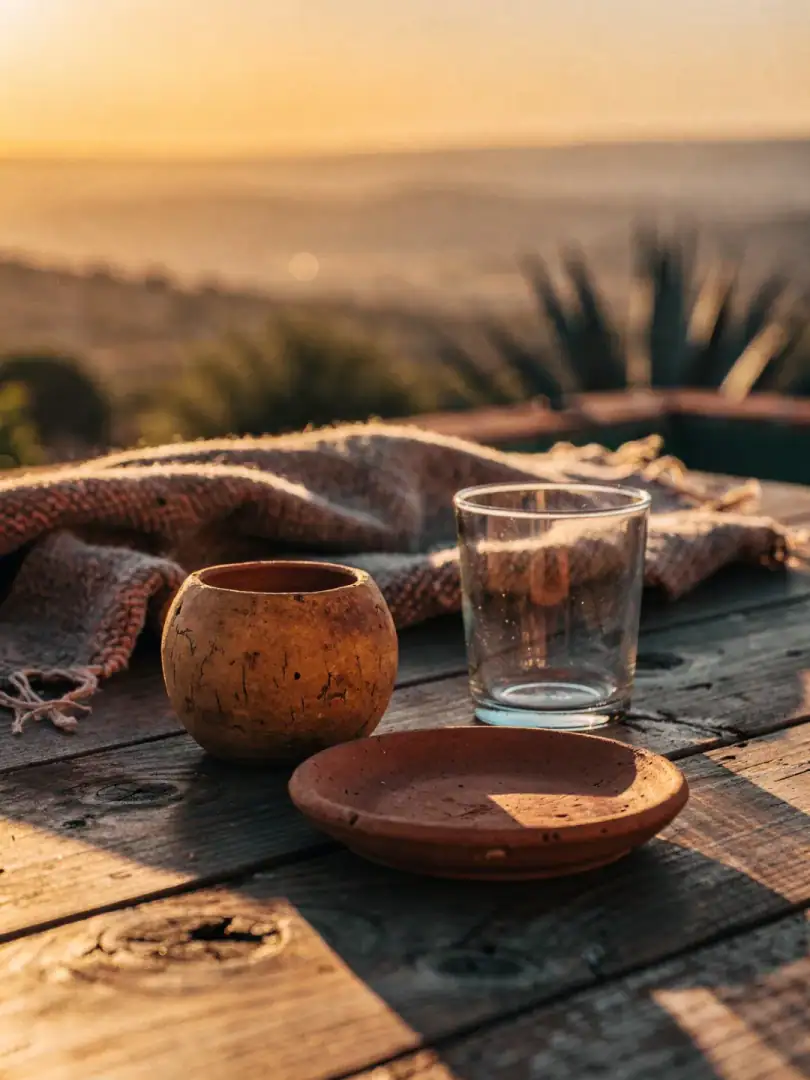
Mezcal is traditionally tasted neat. This is often done from a small Jícara, a hollowed-out gourd shell, or from a simple glass, the Copita. It is never shaken, nor is it diluted with plenty of ice.
One first smells with the mouth slightly open, so the alcohol doesn't numb the nose. Then one takes a small sip and lets it sit briefly in the mouth before swallowing. This reveals, one after another, the green, earthy, and mineral sides of the spirit, often followed by a slightly smoky finish.
Anyone who has tasted Maguey Salmiana this way will usually recognize its character again. It comes across as more robust, earthier, and more vegetal than many mezcals from Mexico's warmer, lower-lying regions. It is shaped by desert, limestone, and the patience of a plant that takes ten years to mature.