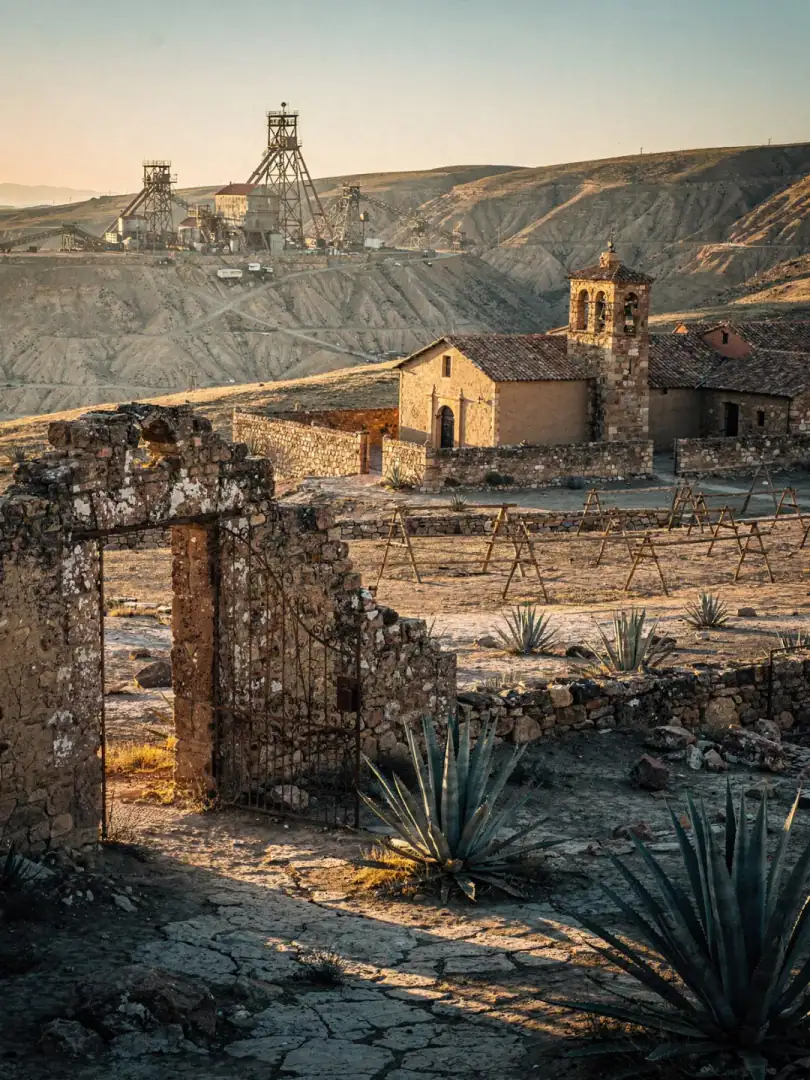
Monastery & Mine
Region & History
In the desert around Charcas, semi-nomadic Chichimeca peoples lived before the Spanish conquest, among them the Guachichiles. They gathered the wild Maguey Salmiana and knew its sweet aguamiel long before anyone here distilled anything.
The Spanish came for the silver. In 1773, miners found rich veins near Real de Catorce, and within a few weeks nearly fifty mines sprang up; the town was officially founded in 1779. Nearby Charcas also grew into a mining town with silver, lead, and zinc, and adventurers from all across New Spain flocked to the austere highland plateau.
In the midst of this landscape, Carmelite monks founded Hacienda Laguna Seca in the 17th century and began distilling mezcal from wild Maguey Salmiana. Later, the estate belonged to the Maldonado Zapata family. According to tradition, even Miguel Hidalgo's troops passed by the hacienda during the War of Independence.
To this day, Laguna Seca is considered the oldest still-operating mezcal factory in Mexico. Since 1994, San Luis Potosí has been one of the original states within the mezcal denomination of origin, alongside Oaxaca, Guerrero, Durango, and Zacatecas. This protection of origin means: whatever is distilled from agave here may be called mezcal, never tequila, and must always be made from one hundred percent agave sugar—there's no such thing as a mixto here, as there is with tequila.
Little remains of the mining wealth on the Altiplano, but mezcal survived as a semi-industrial craft carried on by haciendas from the 18th and 19th centuries. According to figures from the mezcal council COMERCAM, San Luis Potosí contributed just under one percent of the country's total mezcal volume in 2023—modest compared to Oaxaca, but home to one of the oldest factories in the entire country.