Salmiana of the Highland Plateau
Agave & Soil
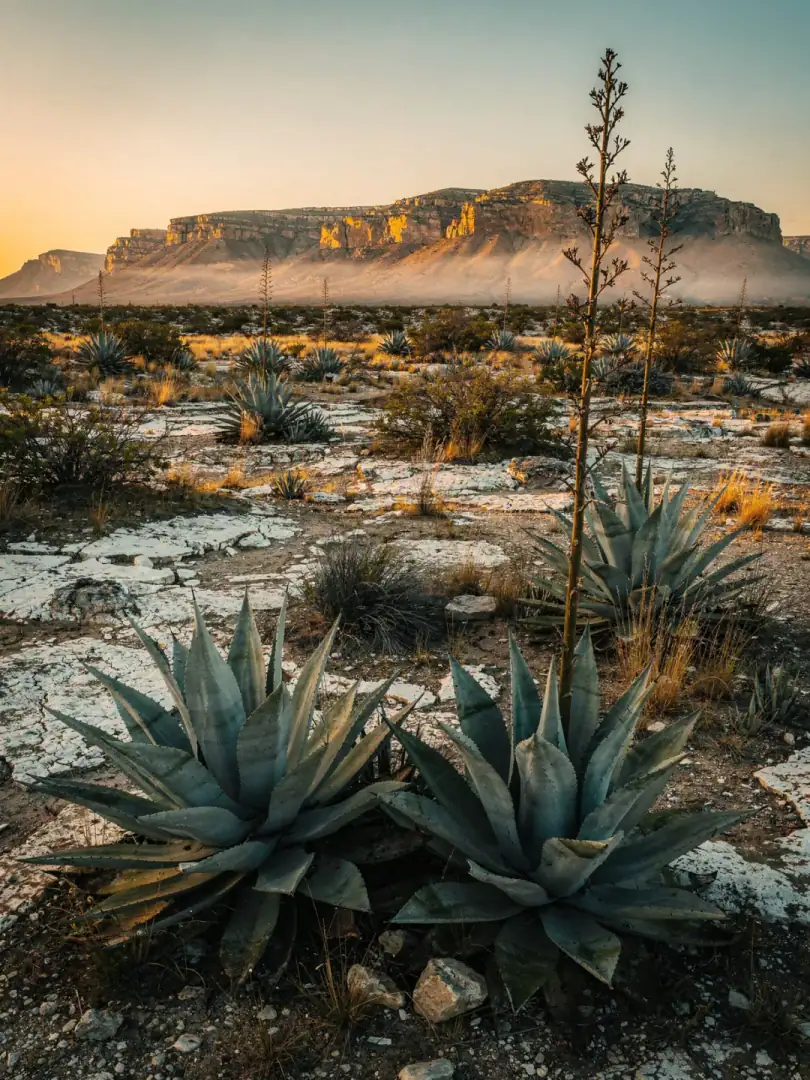
Here, mainly a single agave grows: Agave salmiana, popularly known as Maguey Verde or Maguey Manso. Its leaves are large, fleshy, and grayish-green, spreading broadly like a fan, growing wild across the slopes and plains of the Altiplano Potosino.
Unlike the slender blue agave of Jalisco, Maguey Salmiana is a master of surviving drought. Many plants grow wild, not planted in rows, and are only harvested once they've reached full maturity.
Reaching maturity takes seven to ten years, sometimes longer. The jimador, the harvest worker, uses the coa, a sharp spade on a long handle, to hack away the spiny leaves until only the piña remains, the heart of the plant. A single liter of mezcal here often requires sixteen to nineteen kilograms of agave, considerably more than for smaller varieties.
The soil supports this frugality. Beneath the maguey lies first a thin, stony layer of earth, barren and quick to dry out. Below that comes a hard, pale caliche crust, typical of the highland plateaus of northern Mexico, followed by weathered rock.
This layering forces the agave to spread its roots wide and shallow rather than dig deep. That's exactly what it needs: after the rare downpours, it absorbs water lightning-fast across the surface and stores sugar in thick, fibrous leaves for the lean stretches in between.
Some farmers also use the same maguey for pulque, the fermented, unaged drink made from sweet aguamiel. It's a different tradition using the same raw material, and both continue side by side on the Altiplano to this day.
A thin, barren layer of earth with little humus, quick to dry out.
The root: Moisture evaporates here almost instantly, and fine roots stay just beneath the surface.