Palenques & Origin
Region & History
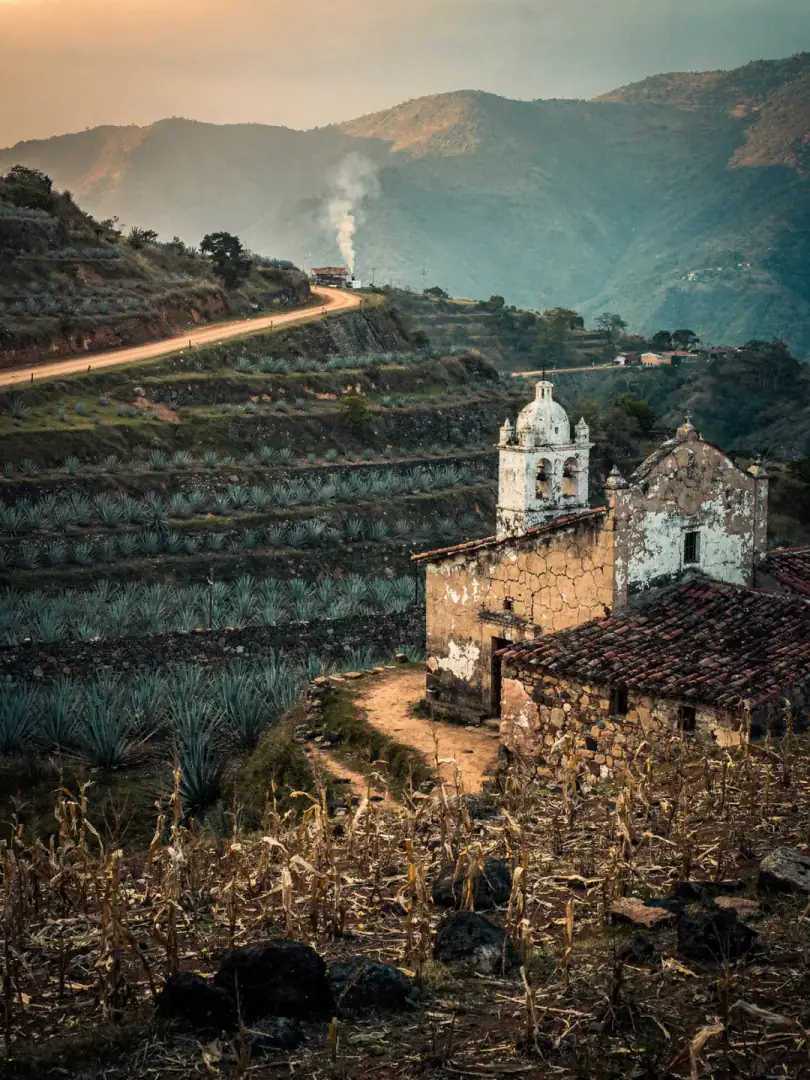
Heading south from Oaxaca City, you leave the valley floor behind after about an hour. The Sierra Sur begins where the road to Miahuatlán de Porfirio Díaz turns steep. It doesn't end until the Pacific coast. The name Miahuatlán comes from Nahuatl and means "place of the corn cobs." Even the Aztec empire demanded tribute here, long before the Spanish arrived. The villages themselves remained distinctly Zapotec, with their own language and customs.
In 1866, Porfirio Díaz drove back French intervention forces near Miahuatlán. This battle later gave the town its second name. It wasn't until 1948 that the double name became official by decree, in honor of the future president. The surrounding villages, San Luis Amatlán, Sola de Vega, Candelaria Yegolé, lived at the time off corn, livestock, and the distilling of agave juice. They stood far removed from the haciendas of the valley below.
In families like that of Aquilino García López, memories of running their own stills go back five generations, beginning in the mid-19th century. The current operation in Candelaria Yegolé, a river village high in the mountains, wasn't rebuilt by Don Aquilino until the early 2000s. Between those two points lie decades during which Mezcal from the Sierra Sur rarely traveled beyond the nearest market town.
Oaxaca is one of five states that established the Mezcal denomination of origin in 1994. Today it's governed by the standard NOM-070-SCFI-2016 and the Consejo Regulador del Mezcal. For the Sierra Sur, that means everything distilled here from agave must come 100 percent from agave sugars. A mixto, as is permitted for Tequila, is off the table. Even so, many small palenques around Miahuatlán and Sola de Vega still sell informally today, bottle by bottle. A certification rarely appears on the label.
The region became known through two names from Candelaria Yegolé: Mezcal Vago and Rey Campero. Both showed what could be made from the area's rare wild agaves. But behind them lies a much larger network of tiny family operations. They pass their knowledge down from generation to generation, making the Sierra Sur one of the most agave-rich corners of Oaxaca.