Copita & Jícara
Tasting
Mezcal from the Sierra Sur rarely tastes of smoke alone. Many different agaves, from wild growth and semi-wild cultivation alike, grow here side by side. That's why the range runs from earthy-mineral in Tepeztate, to floral-herbal in Tobalá, to honey-sweet in Barril, all drawn from the same soil. It's exactly this mix that makes the region unique.
Two names from Candelaria Yegolé have come to represent this diversity. Mezcal Vago is distilled by Aquilino García López and his family, known for its round, slightly sweet style. Rey Campero, from Romulo Sánchez Parada, is said by the distillery to stand for a mineral, almost salty note. Both show just how differently two palenques in the same village can work. Both operations run in the same village, yet in entirely different ways.
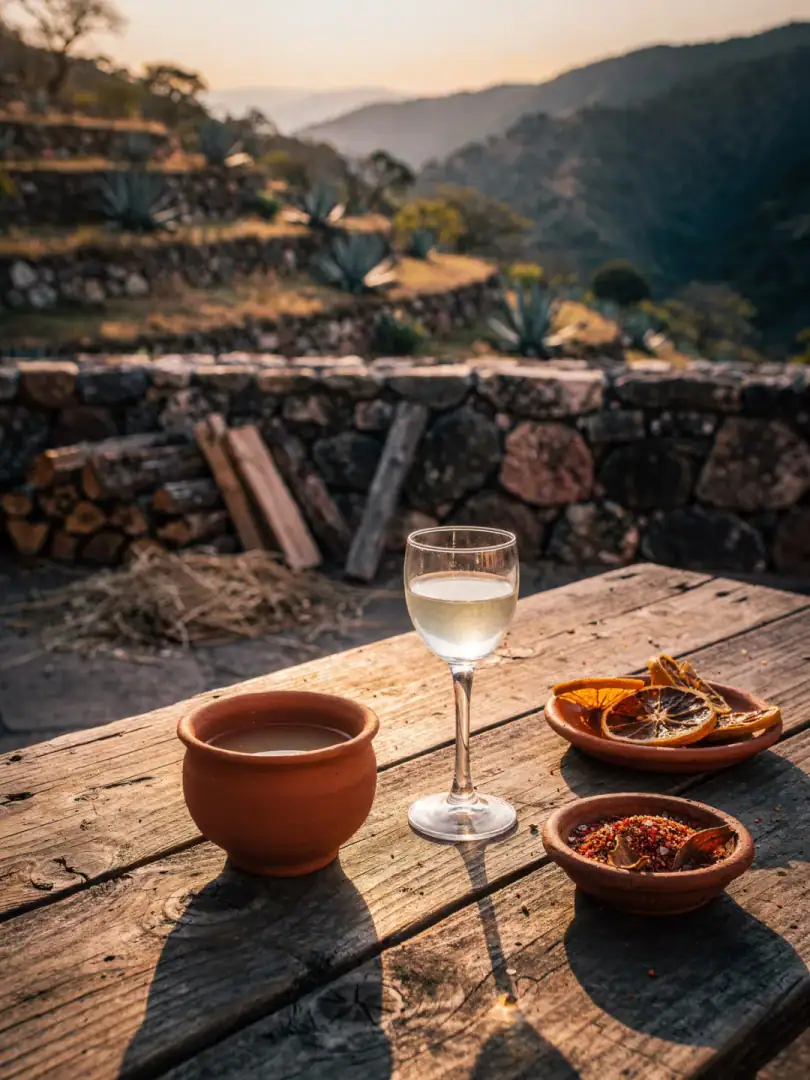
Tasting here traditionally doesn't happen from a wine glass, but from a jícara or a copita. The jícara is a small bowl made from a gourd shell, the copita a narrow glass. A small sip is enough, spread slowly across the tongue before swallowing. Downing Mezcal as a shot from a caballito simply isn't the custom here. This way, the aroma unfolds slowly instead of vanishing at once.
Guests visiting a palenque in the Sierra Sur are often served several varieties in succession, ranging from mild Espadín to a rough, decades-old Tepeztate. This is how the difference between cultivated and wild agave takes shape right on the tongue, not just on the label. Comparing different varieties trains the palate over time.