Mostly Unaged
Maturation
Clear and unaged, as a Joven, is how most Mezcal from the Sierra Sur leaves the palenque. The wild agaves Tobalá and Tepeztate already take decades to reach harvest. Few producers have any interest afterward in letting the finished spirit disappear into a barrel for months. The very idea of a barrel almost runs counter to their nature.
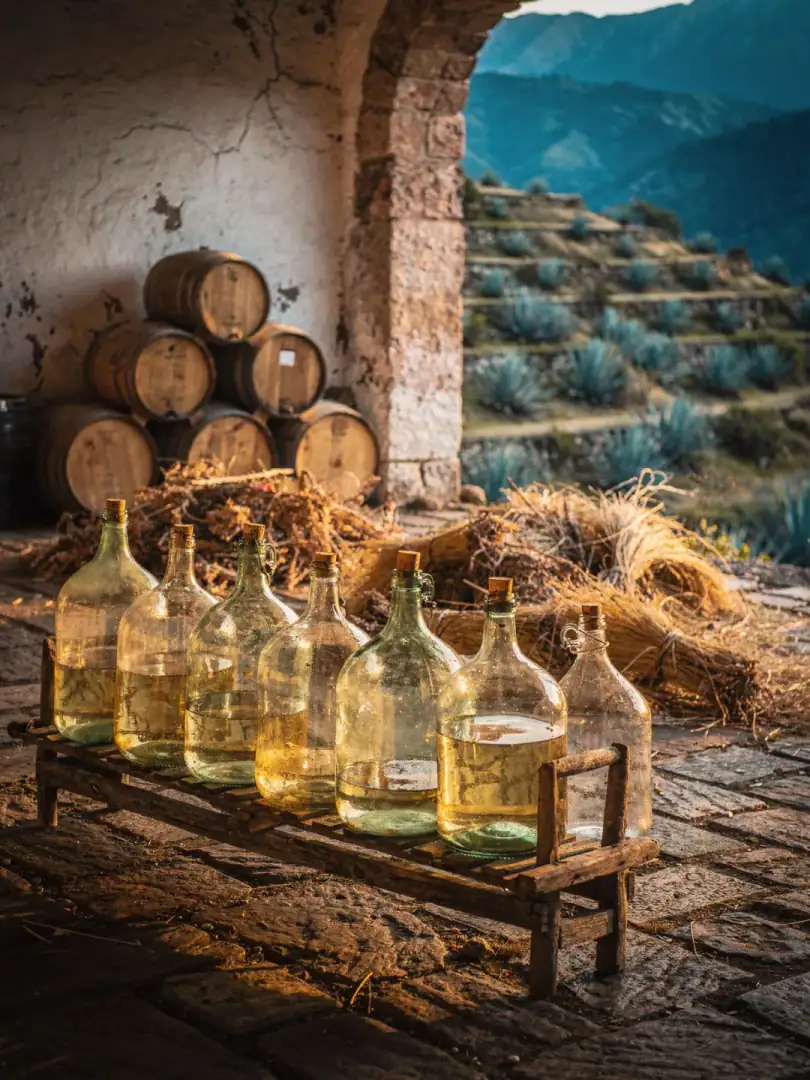
Even so, the NOM-070-SCFI-2016 standard recognizes aged classes for Mezcal too. Reposado ages briefly, Añejo for at least one year in wood, and Extra Añejo requires at least three years. There's also the special category Madurado en Vidrio, matured in glass demijohns instead of wood. Anyone putting one of these terms on a label must have actually observed the aging period. This sets Mezcal apart from abocamiento, the sweetening and flavoring of Tequila, which need not be disclosed.
Some palenques in the region nonetheless age part of their production in glass demijohns. These sit in a shaded spot in the courtyard for months or even years. The Mezcal changes slowly through exposure to light and oxygen, but it never takes on the woody character of a barrel. Many connoisseurs of the Sierra Sur actually prefer this in-between stage to an Añejo.
Anyone wanting to try the region's wild agave varieties will therefore almost always find them young and clear in the glass. In the Sierra Sur, that's considered a mark of quality, not a compromise. The character of Tobalá or Madrecuixe is meant to come through unfiltered, with no barrel to mask or smooth it over. That way, each variety remains recognizable in its own right.