Origin & Protection
Region & History
Long before Tequila existed here, another drink flowed through this valley: Pulque. This milky, tangy, fermented agave juice was already being drunk in Jalisco before the Spanish arrived. The colonial administration banned the distilling of agave spirits for a time, as it competed with Spanish taxes on wine and brandy. It wasn't until 1758 that José Antonio de Cuervo received a piece of land in Tequila. There he planted agave for a drink the authorities barely tolerated.
His descendant José María Guadalupe de Cuervo asked King Carlos IV for permission to officially sell his distilled "Vino Mezcal." The royal license is usually dated to 1795. It's considered the birth of the oldest continuously operating distillery in Latin America. Vicente Albino Rojas, who married into the family, later named the operation "La Rojeña." To this day it stands in the middle of the town of Tequila and belongs to the Cuervo heirs.
A few streets away, Cenobio Sauza bought the distillery "La Antigua Cruz" in 1873. In 1888 he renamed it "La Perseverancia." Sauza was the first to call the spirit made from Blue Agave "Tequila," rather than "Mezcal Wine." He was also the first to export it to the United States. This renaming marks the moment when the name of the place broke away from the name of the drink. Today, that same distinction is exactly what separates Tequila legally from every other agave spirit.
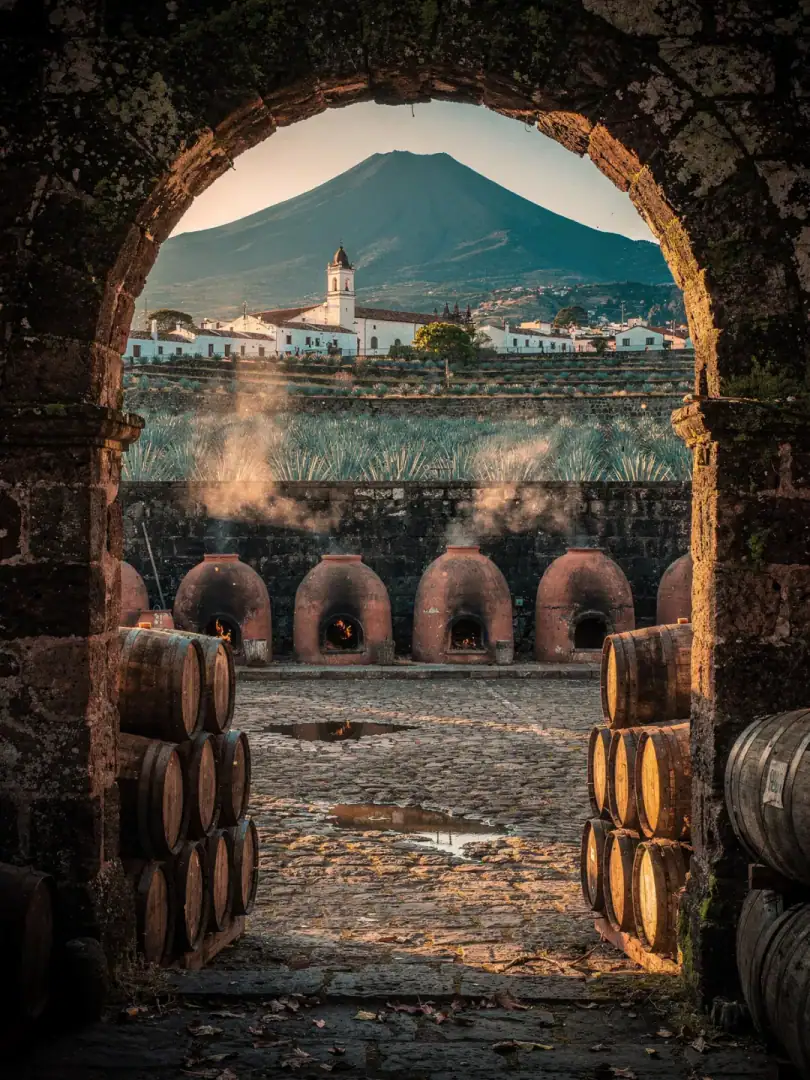
In 1974, the Mexican state declared Tequila a protected designation of origin. Since then, 181 municipalities across five states have been allowed to carry this name. The valley around the town of Tequila forms its historic core. In 2006, UNESCO added the "Paisaje Agavero" to its World Heritage list. The area covers more than 35,000 hectares, stretching between the slopes of the volcano and the gorge of the Río Grande de Santiago. It includes the town centers of Tequila, Amatitán, El Arenal, Magdalena, and Teuchitlán. Anyone driving through this valley today sees global corporations and family businesses standing side by side on the same protected ground.