Earthy, Sharp, Green
Tasting
Anyone tasting a Tequila from the Valle de Tequila usually notices the earth first. Then come peppery, herbaceous notes, often with a green, almost bell-pepper-like sharpness. This sharpness comes from the agave's fast ripening. Sweetness tends to recede into the background, compared to the softer, stewed-fruit notes found in some highland bottlings.
Three distilleries from the valley make for a great comparison: the massive La Rojeña, where José Cuervo produces its Tequila. There's the storied La Perseverancia from Sauza. And there's the small Fortaleza, which claims to bottle entirely without additives. All three represent the same region and the same agave. Yet their journey from field to bottle differs at nearly every step. Anyone who tastes all three in succession will clearly notice the difference between industry and craft.
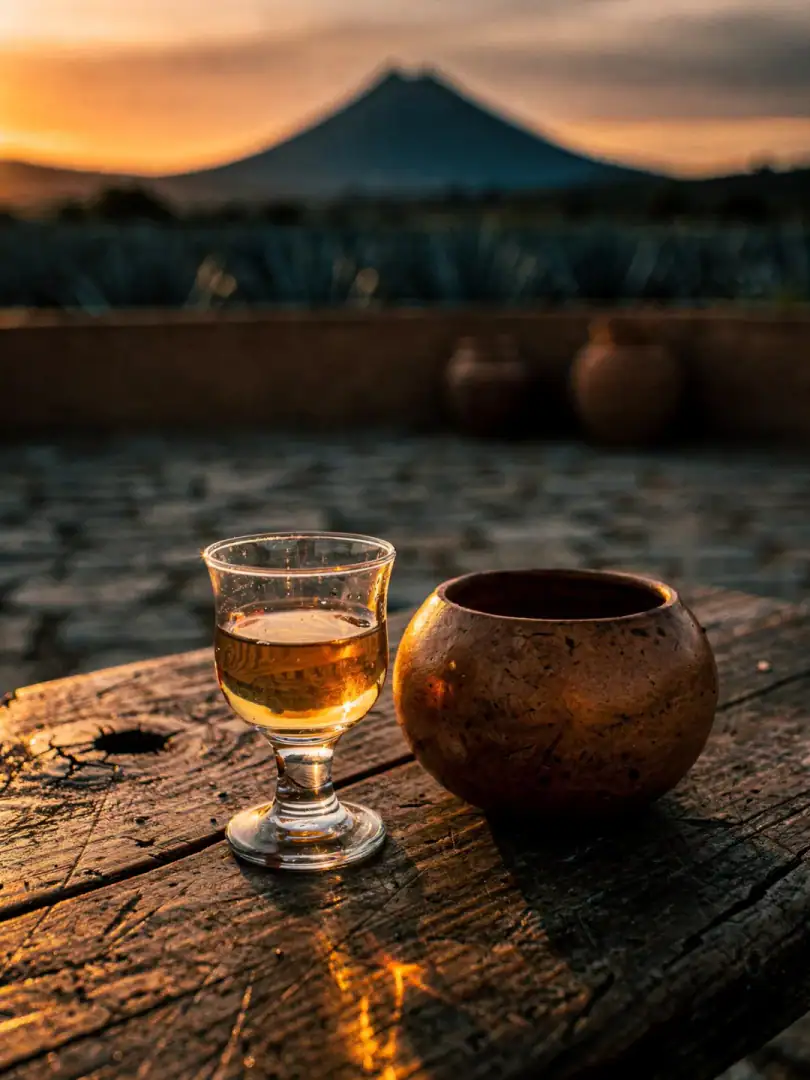
Traditionally, Tequila is drunk from a copita, a narrow, tulip-shaped glass that concentrates the aromas. Or you drink it from a caballito, the small, tall glass meant for a quick sip. The jícara, a hollowed-out gourd, predates both. It dates back to the days when Pulque was the drink of choice here.
Tasting requires little: swirl the glass briefly, smell it before you even take a sip. Then hold a small sip in your mouth for a while, rather than knocking it back like a shot. This reveals whether earth, pepper, or fruit dominates. It also reveals whether the Tequila came from the autoclave or the tahona. With a bit of practice, both are easy to tell apart.